The post-magnetization process shifts the magnetization step to after final assembly, thereby avoiding the entire series of complications associated with ”magnetized operations.” Magnetization is performed in a single batch only after the rotor has been pressed into the stator, dynamic balancing is complete, and even after the housing has been sealed, which significantly streamlines the production line layout. However, a significant cost has been shifted to the magnetization process itself—since the entire unit is already housed inside the casing, magnetization with the magnetic circuit closed requires a much higher magnetic field strength, posing a challenge to both the magnetizer’s capacity and the fixture design; moreover, if the casing is not shielded, nearby sensitive components may be damaged.
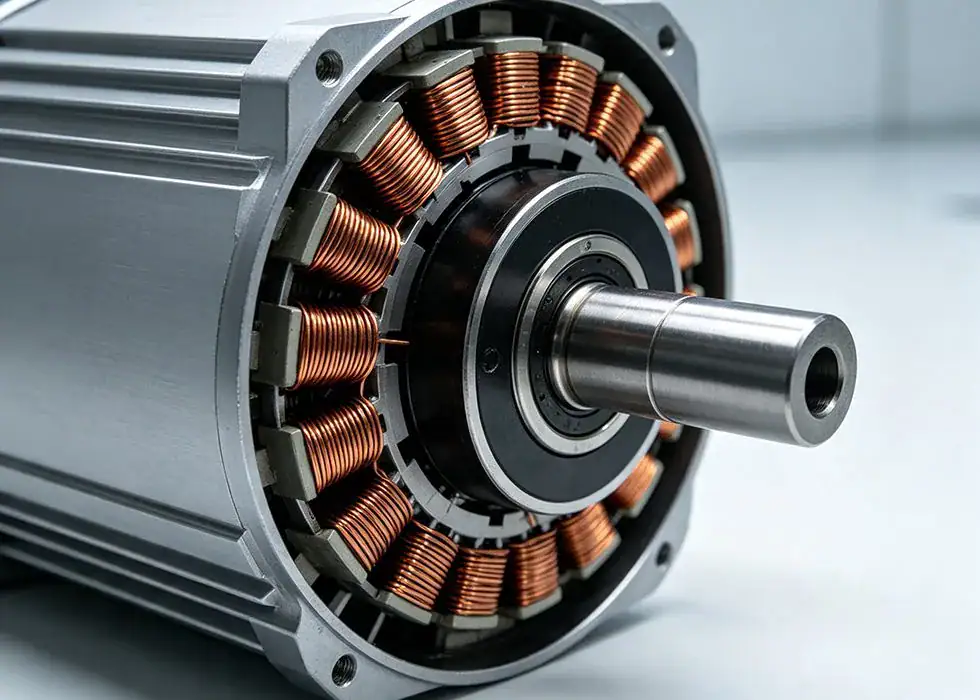
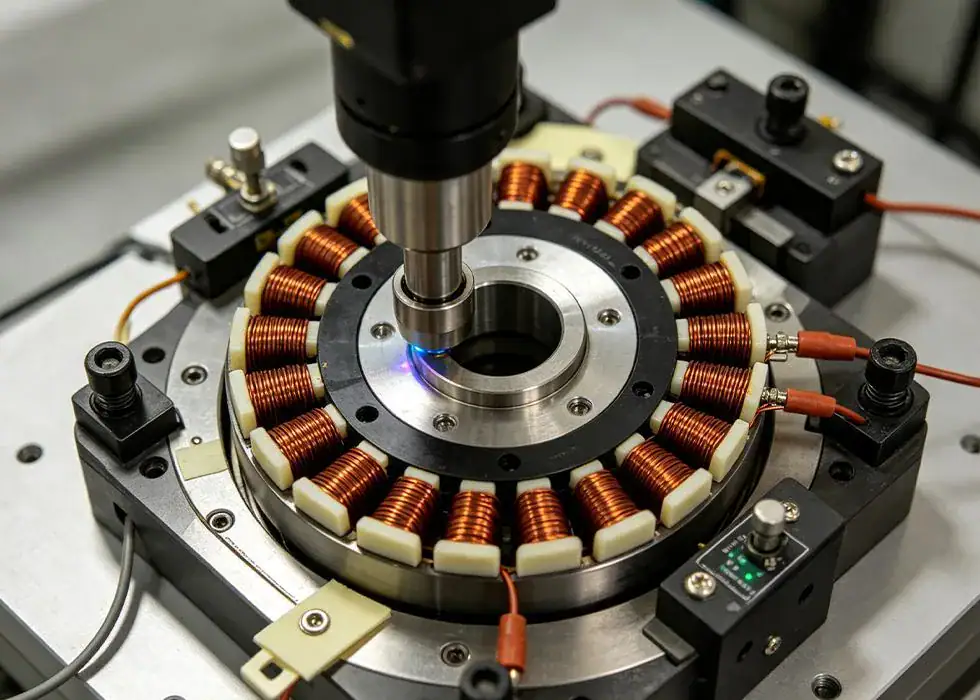
Jiuju Axial Flux Motor Magnetizing
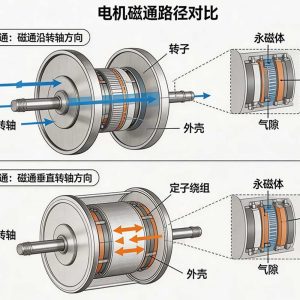
In terms of industry experience, the data varies, but the underlying pattern has always been evident. Based on our observations of various products—including those with the same magnetic circuit—axial magnetization is generally more difficult than radial magnetization. However, this is not a universal conclusion; for products with high output, a large number of poles, very few poles, or maximum wire gauge, magnetizing in the axial direction first is actually more cost-effective.
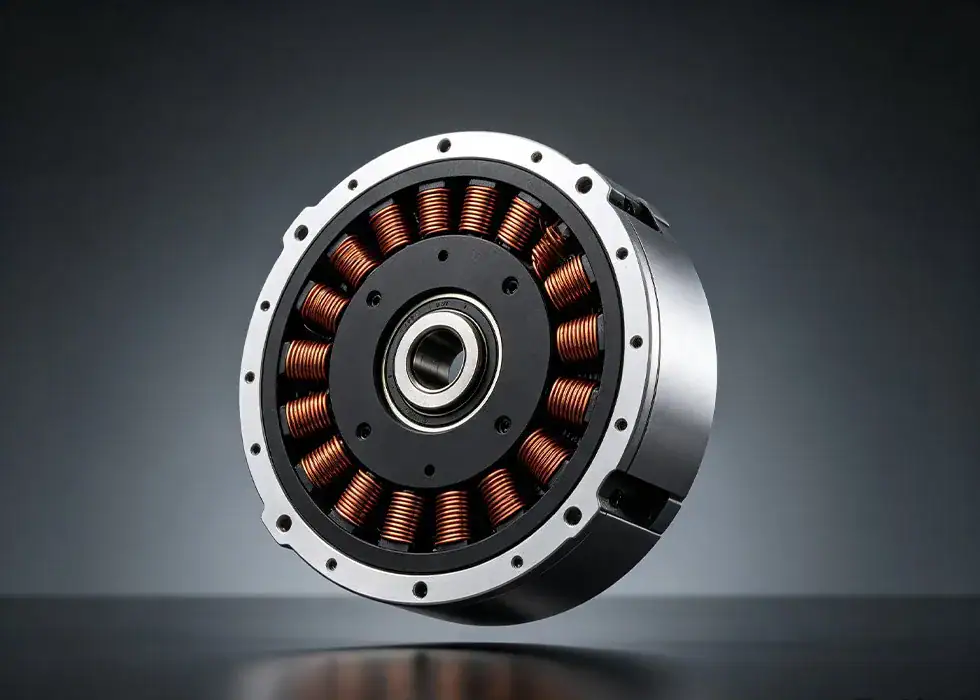
Jiuju Axial Flux Motor Products
The phenomena observed by Jiuju during the debugging of such business scenarios have also been confirmed: generally speaking, once the sequence is selected, the entire production line is configured accordingly. On the pre-magnetization line, none of the three workstations—tension control, magnetic isolation, and cleaning—can be omitted; on the post-magnetization line, the focus is on ensuring the uniformity and equivalent flux control of the magnetizer, rather than simply relying on a single piece of equipment to get the job done.
Jiuju Automation provides automated production lines for servo motors, enabling precise alignment of rotors and stators, integrated encoders, and EOL testing. These systems are widely used in the fields of industrial automation and robotics.
Jiuju Automation provides automated assembly solutions for drive motors in new energy vehicles, integrating key processes such as winding, magnet insertion, magnetization, and testing to ensure high efficiency, high consistency, and full traceability throughout the entire process.
There is no universal architecture in engineering. Axial flux is more suitable for space-sensitive, lightweight-first scenarios; the radial motor remains the first choice for cost-sensitive, high-volume scenarios. The essence of selection is the degree of match with the application scenario.
 Jiuju Automation





 Español
 Français
 Deutsch (Sie)
 हिन्दी