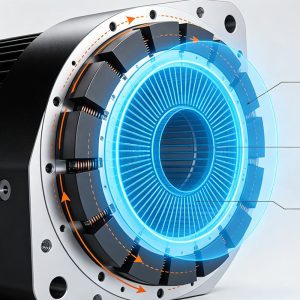
The most intuitive feature of an axial-flux motor is its "short and wide" pancake shape, entirely different from the slender cylinder of a conventional radial motor. Whether this shape is an advantage or a disadvantage depends on what system it is placed into.
Axial-Flux-Motor-Industrial-Product-Specification
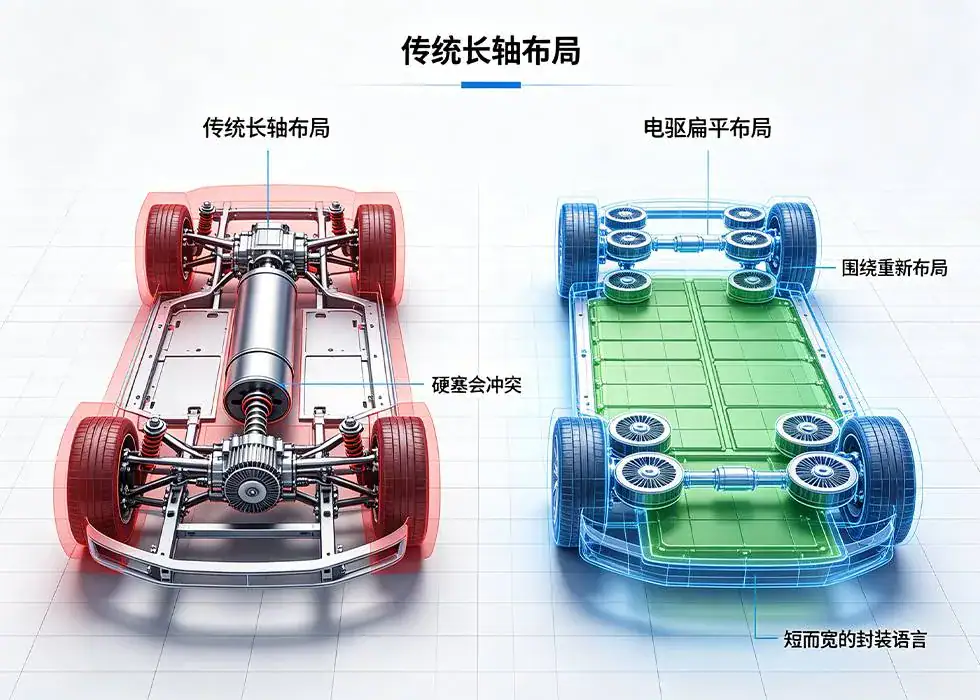
Forcing it into a conventional fuel-vehicle chassis — an envelope reserved for a slender engine and a long shaft drive — is indeed awkward: the radial dimension is easily squeezed by surrounding components and it may not even fit. But the problem is not the motor; it is using the wrong packaging approach. The old platform was not designed for it, so forcing it in naturally creates obstacles everywhere.
Conventional Long-Shaft Layout
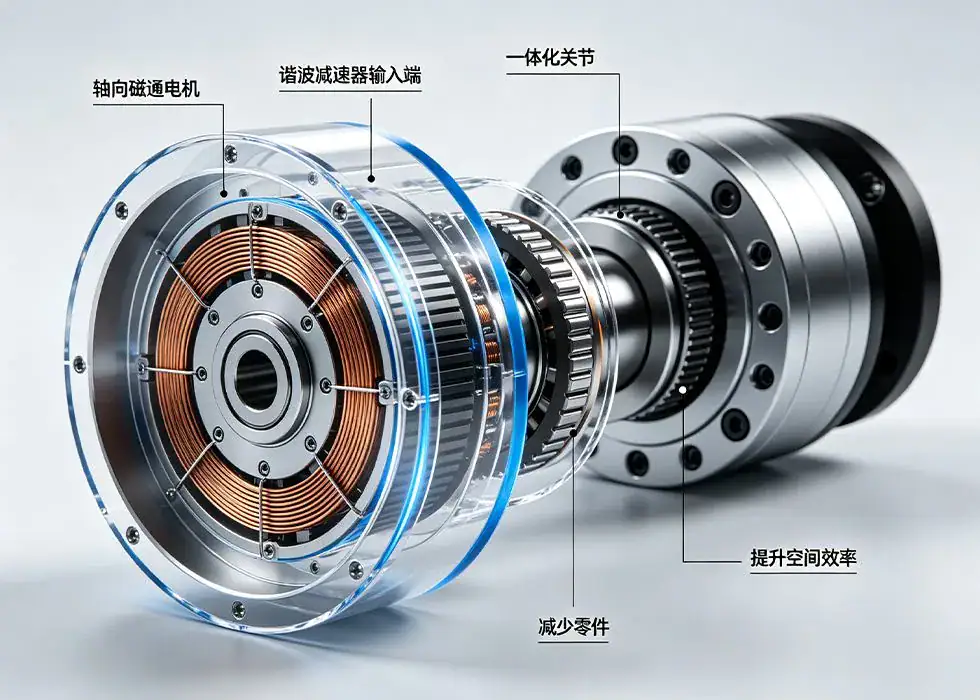
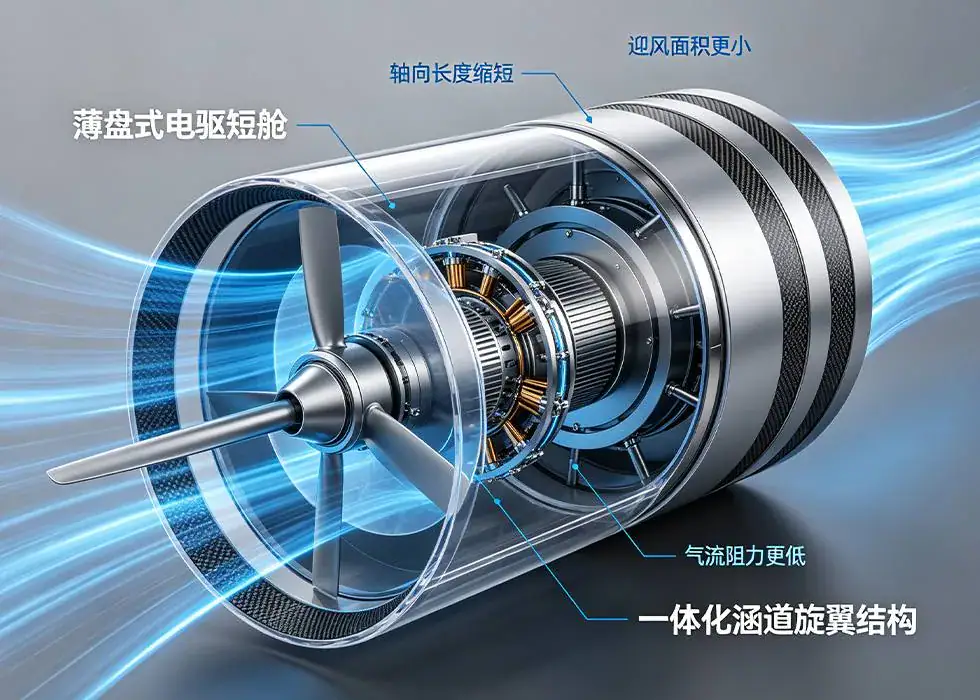
On a dedicated electrified platform, "flat" turns from a disadvantage into an advantage. Low-altitude aircraft need to stuff motors into ducts and tilt-rotor nacelles where the shorter the axial length the better, and a disc motor can greatly reduce frontal area and air resistance; robot joints want to fuse the motor directly into the input of a harmonic or RV reducer, and a disc structure makes exactly an ultra-thin integrated actuator, saving intermediate connectors; and for converting commercial vehicles to electric or upgrading to hybrid, a flat motor can be sandwiched directly between the flywheel housing and the gearbox, or even built into the axle hub, without sacrificing wheelbase or cargo space at all.
Thin-Disc Axial-Flux Motor
In other words, flat is not a defect but another packaging language. Whether it can be used depends on whether the whole vehicle or machine is re-laid-out around it. The same motor, on a different platform, has completely different value. In cooperating on such projects, Jiuju has seen that customers who can exploit the flat advantage have basically reserved the space in advance; conversely, projects forcing it into an old chassis often keep struggling over the radial dimension. Motor form and system packaging have always been one and the same.
The shipping area outside the workshop was a hive of activity. After multiple rounds of full-machine commissioning, simulated mass-production validation, and factory quality inspection, a Jiuju DC motor automatic assembly line completed all factory-out procedures, was loaded onto trucks on schedule, and is about to depart for the customer's production base, helping the customer's project advance production implementation on plan.
Jiuju Automation provides high-precision automatic assembly lines for axial flux motors, covering processes such as stator winding, magnet assembly, rotor balancing, and final product testing. These lines are suitable for applications in drones, new energy vehicles, and industrial drives. The company holds over 256 patents and is ISO 9001 certified...
The effective magnetic force acts at the outer-diameter edge, so at the same speed the magnets endure far higher centrifugal stress than in a slender radial motor. Under high-speed conditions, how the magnets are firmly fixed to the rotor disc is a key point of structural design.
A multi-pole architecture brings a high-frequency fundamental; at 10,000 rpm the fundamental frequency can reach several kHz. Traditional IGBTs suffer soaring switching losses and severe heating — it is the MHz-class switching capability of SiC MOSFETs that truly matches high-frequency multi-pole axial flux motors.
Axial-flux motors offer significant performance advantages, but mass production requires overcoming three major challenges: air gap precision, thermal management, and cost consistency. This article analyzes the root causes and solutions for each of these challenges.
 Jiuju Automation








 Spanish
 French
 German
 Hindi