 Jiuju Automation


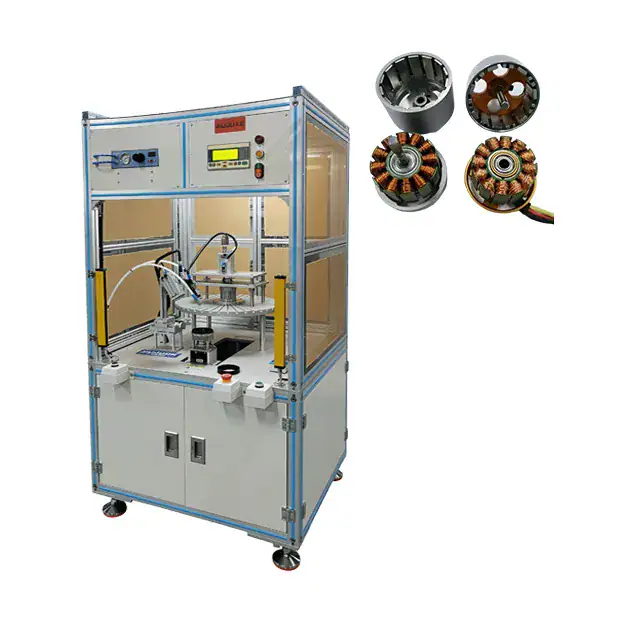
Detailed parameters of motor magnetizer
- Product Name:Motor Magnetizer
- Work efficiency:second magnetization
- Design Advantage:Non-standard customization according to the product on demand
- Realization function:Magnetometer Magnetic Detection
- Operator:1 person
- Basic parameters:380V, 220V 50/60A
- Process:Integral automatic magnetization table magnetic detection
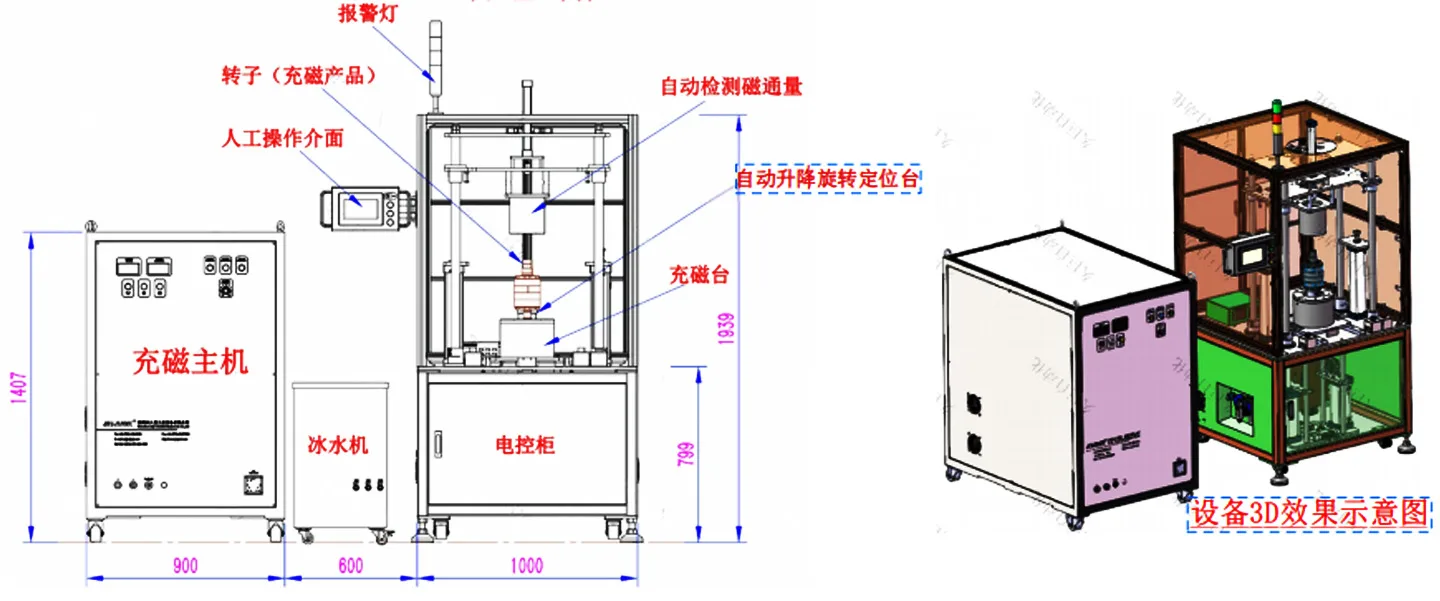
Product Overview:
To realize the permanent magnetization process of all kinds of permanent magnetic materials, through the power host to store electrical energy, and then through the transistor control circuit, the coil of the spiral tube instantaneous discharge, generating ultra-strong current, the formation of ultra-strong magnetic field, into and complete the instantaneous magnetization of the permanent magnetic materials, to achieve the permanent magnetization of magnetic materials. It is easy to operate, fast and stable, and is widely used in the magnetization of all kinds of magnetic materials. It is worth noting that the Gutenberg editor requires the theme features block support, which is also WordPress in 5.0 after the theme development of the core features do not have one, support Gutenberg block the more the theme, the more you can typeset a richer interface.
Program Description:
Program by manual loading and unloading. The equipment can realize automatic rotary positioning of rotor, magnetization and automatic detection of magnetic flux. The outer size of the equipment is subject to the final physical object!
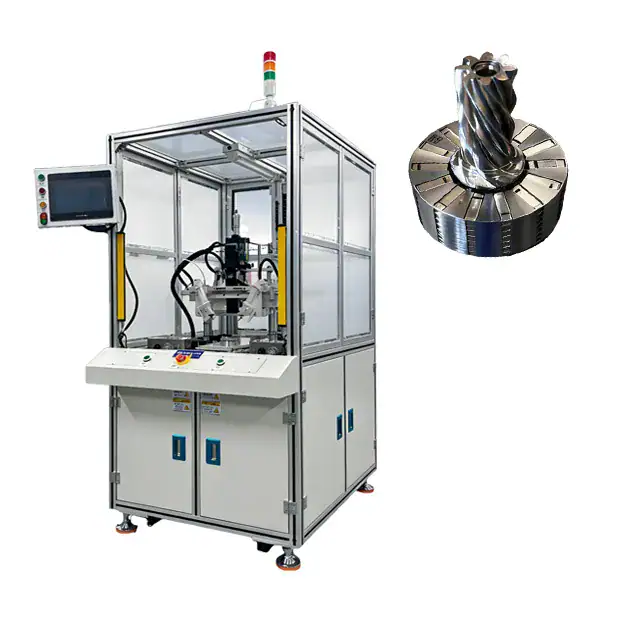
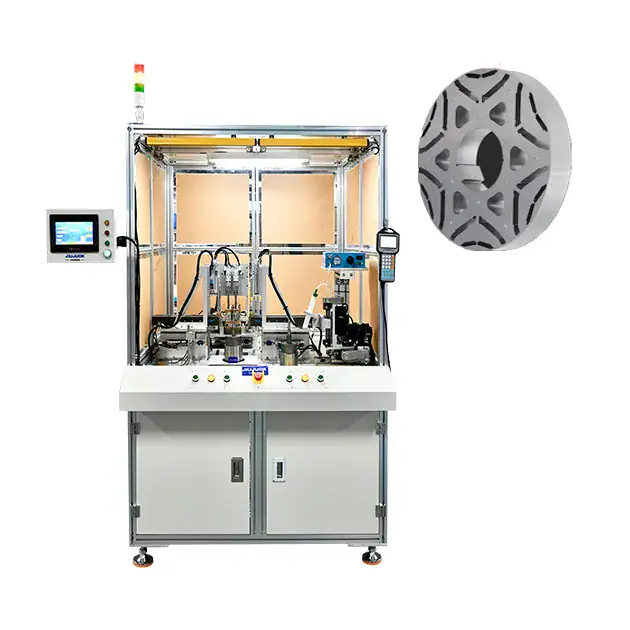
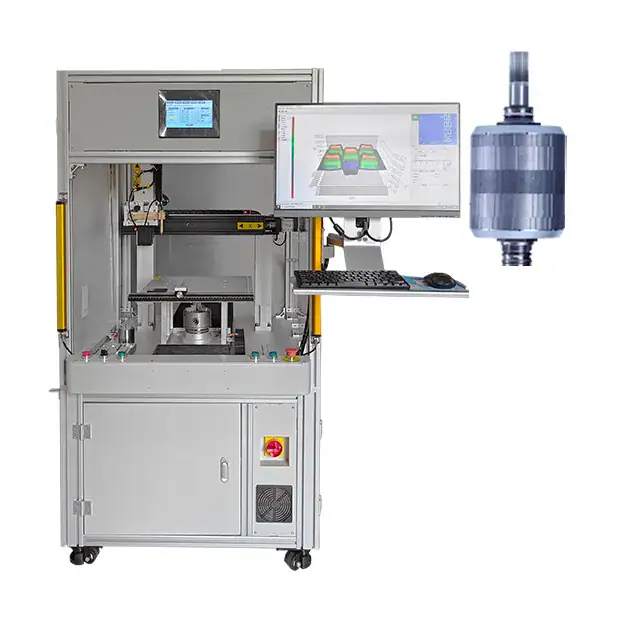
Motor automation equipment recommendation
Recommendation
Frequently Asked Questions
Common questions on selection, process and delivery. To learn more, contact us directly.
Q1. Will this magnetizer work with our rotor specifications?
Coil and locating fixture are configured against your rotor's outer diameter, pole count and magnet grade, covering both inner-rotor and outer-rotor structures. Send us the drawing or a sample and we will first confirm whether the magnetic circuit suits full-body magnetization, then propose a configuration.
More motor equipment FAQsQ2. How do we confirm the field is up to spec after magnetizing?
A flux detection station follows the magnetizing station. The rotor indexes automatically and every pole is read, so out-of-tolerance parts are rejected and each rotor carries its own flux record instead of relying on sampling.
More motor equipment FAQsQ3. Do we need a new machine when the rotor changes?
No. The change is mainly the locating fixture and coil, plus recalling the matching parameter set on the HMI. Mechanical adjustment is only involved when the outer diameter or pole count falls far outside the current range.
More motor equipment FAQsQ4. Can it magnetize multi-pole rotors, and what changes with pole count?
Yes. Pole distribution is defined by the coil and the locating fixture, so changing pole count mainly means changing the fixture and recalling the matching parameter set, while the machine itself stays as is. Consistent orientation across poles comes from fixture location, and the flux station then reads every pole after magnetizing.
More motor equipment FAQsQ5. Is this a stand-alone machine or does it connect to a production line?
Both work. The standard form is a stand-alone station with manual loading, while magnetizing and flux detection run inside the machine. If it has to sit inside an existing line, the interface is agreed at proposal stage against the cycle time and handling method of the neighbouring stations.
More motor equipment FAQsOnline Message
Online Message
 Spanish
 French
 German
 Hindi