Axial-flux motors are inherently a bit better at heat dissipation. A radial motor's heat must first pass through the slot insulation and stator core before reaching the outer water jacket, with substantial thermal resistance; an axial-flux motor's stator winding is exposed on a flat disc, so the cooling medium can spray directly onto the winding surface, or a water-cooling plate can be placed right against it — a short path with high efficiency.
Jiuju Motor Machinery
Oil cooling and direct-contact water cooling both work on this type of motor, which is also part of its confidence in achieving high power density. Compared with a radial motor that routes a cooling water path around the housing, an axial-flux motor can immerse the winding directly in the cooling medium, taking heat exchange up a level. Only when heat can get out can the high heat generated by high torque be suppressed; otherwise, no matter how good the motor is, it must derate after a while.
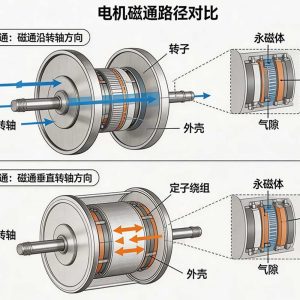
Schematic of Complete Axial-Flux Motor
But the flat structure brings another problem: sealing. A large-diameter flat sealing ring has to withstand hot-cold cycling and slight micro-deformation of the housing, and is more prone to leakage than the small-bore seal of a cylindrical motor. As temperature cycles, the seal and housing expand and contract together and gaps appear; once coolant leaks out, winding insulation is directly threatened.
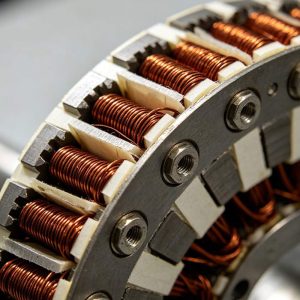
Partial Structure of Stator and Rotor
So in high-end solutions the seal groove is often made as a double-seal structure, and the material must be an oil-resistant, fluorine-resistant specialty rubber, using two lines of defence to minimize leakage risk. Heat dissipation and sealing — one pushes forward, the other must back it up. On related lines, Jiuju is quite strict about the flatness of the sealing surface and the assembly torque: once coolant leaks in, even the best thermal design is useless. The more such motors move toward high power and oil cooling, the more weight the sealing process carries. In a word, heat dissipation gives it the confidence of high power density, while sealing determines how long that confidence can last.
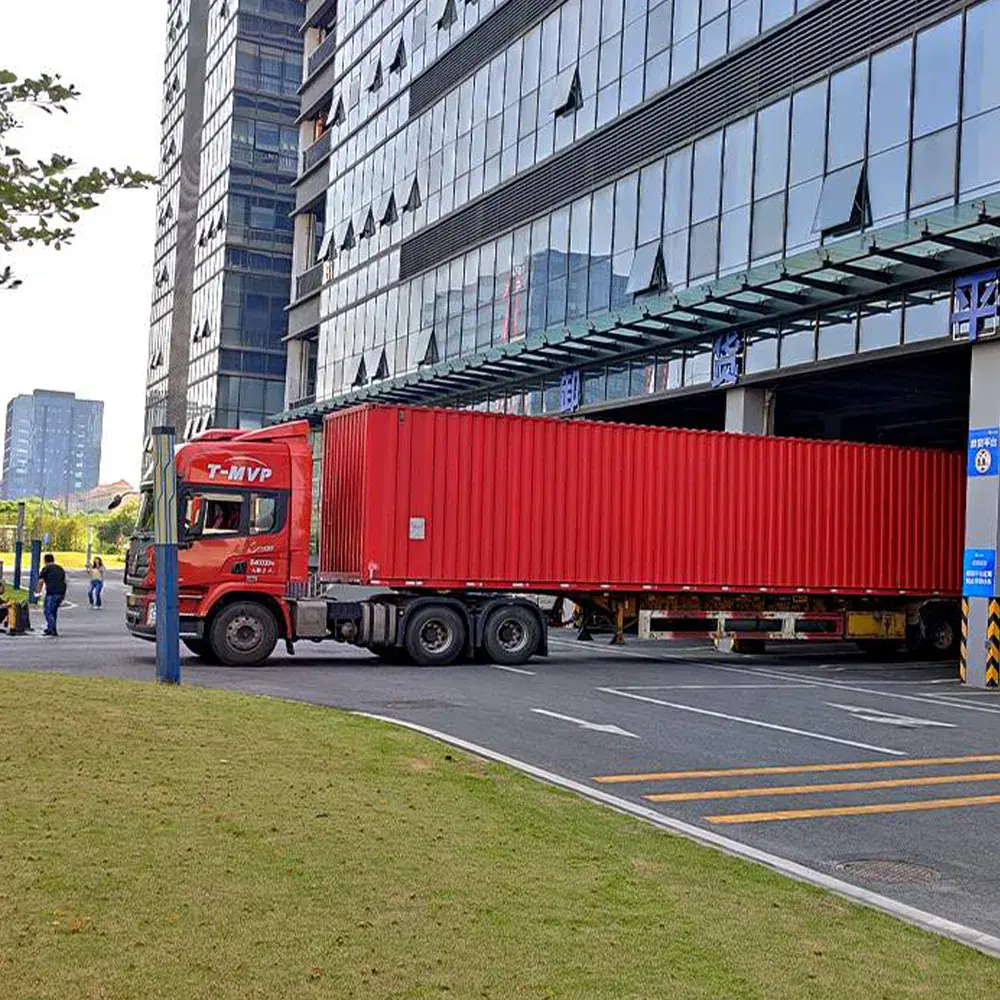
The shipping area outside the workshop was a hive of activity. After multiple rounds of full-machine commissioning, simulated mass-production validation, and factory quality inspection, a Jiuju DC motor automatic assembly line completed all factory-out procedures, was loaded onto trucks on schedule, and is about to depart for the customer's production base, helping the customer's project advance production implementation on plan.
Magnetic flux must pass axially through the disc-shaped stator; traditional lamination stacking fails, and grain-oriented silicon steel ring-milled with slots destroys grain orientation. The stator and windings become the hardest nut to crack in axial flux mass production.
Jiuju Automation provides high-precision automatic assembly lines for axial flux motors, covering processes such as stator winding, magnet assembly, rotor balancing, and final product testing. These lines are suitable for applications in drones, new energy vehicles, and industrial drives. The company holds over 256 patents and is ISO 9001 certified...
There is no universal architecture in engineering. Axial flux is more suitable for space-sensitive, lightweight-first scenarios; the radial motor remains the first choice for cost-sensitive, high-volume scenarios. The essence of selection is the degree of match with the application scenario.
The stator and rotor are separated by a sub-millimeter air gap, and there is an axial attractive force of several metric tons between the magnets on both sides and the iron core. If the force on the air gap becomes uneven, the attractive force on one side increases exponentially, posing a severe challenge to the rigidity of the bearings and the housing.
 Jiuju Automation






 Spanish
 French
 German
 Hindi