Winch motors are the core power components of lifting and traction equipment; the precision of rotor magnet bonding directly determines the motor’s power output efficiency, operational smoothness, and overall service life. During the rotor magnet assembly process, misalignment of the magnetic plates can cause a disordered and uneven distribution of the internal magnetic field, leading to quality issues such as motor vibration, excessive operating noise, and insufficient output torque. Prolonged operation under these conditions can also accelerate wear on internal components, resulting in structural damage to the motor and significantly increasing equipment failure rates and maintenance costs. Given the unique structural characteristics of winch motor rotors, it is possible to comprehensively prevent misalignment defects in the rotor magnetic plates through three key approaches—equipment adaptation, process optimization, and standardized operations—thereby ensuring a high yield rate for magnet assembly and maintaining the quality of motor production.
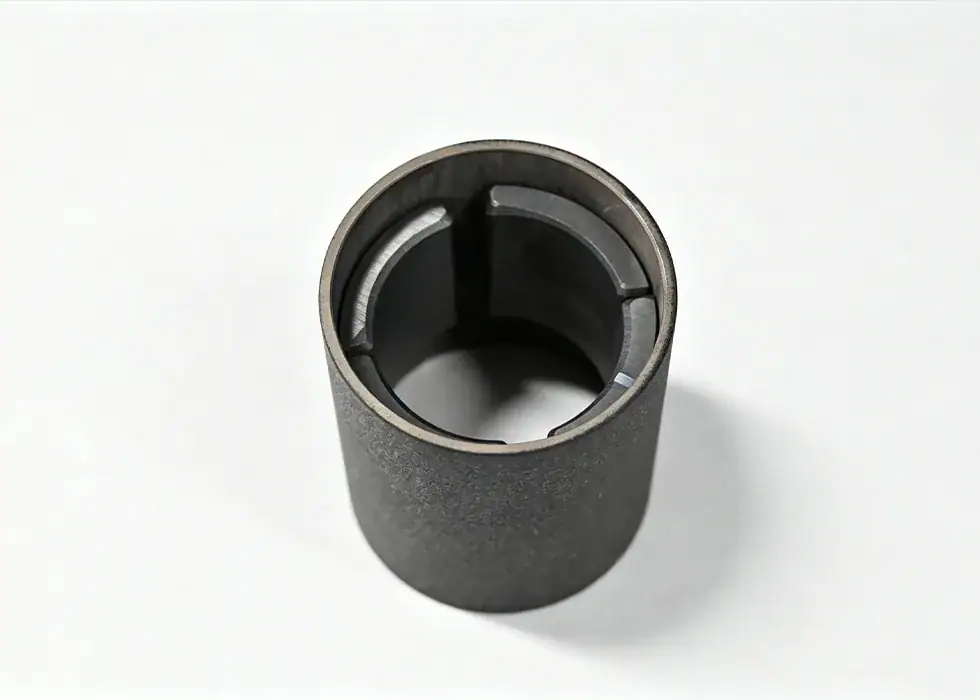
Finished Motor Drawing
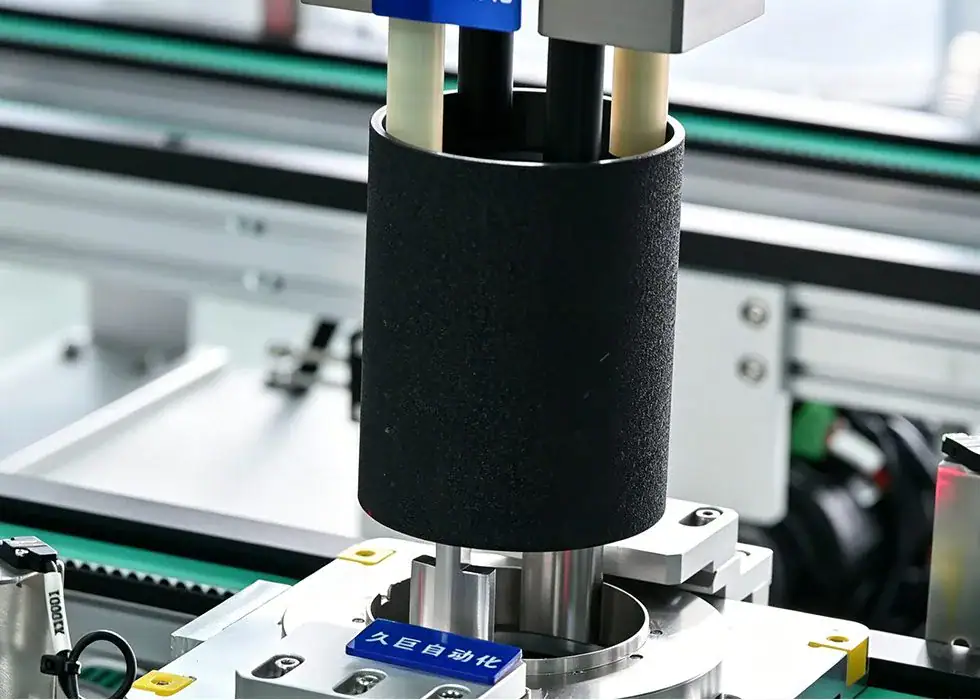
Proper equipment compatibility is essential for preventing magnetic disc misalignment. Since winch motor rotors typically feature irregular, non-standard shapes, generic magnet-bonding equipment cannot meet the requirements for precise positioning; therefore, it is necessary to use specialized magnet-bonding equipment designed for the specific model, along with matching positioning fixtures. Specialized fixtures can securely lock and secure the rotor in place, completely eliminating issues such as rotor wobbling or misalignment during the magnet application process. At the same time, the equipment must be equipped with a high-precision guidance mechanism to precisely define the trajectory for magnet application, guiding the magnets to adhere to preset standard positions. This avoids positioning deviations caused by manual application, thereby eliminating the risk of magnet misalignment at the source through the equipment itself.
Preset Trajectory Fitting
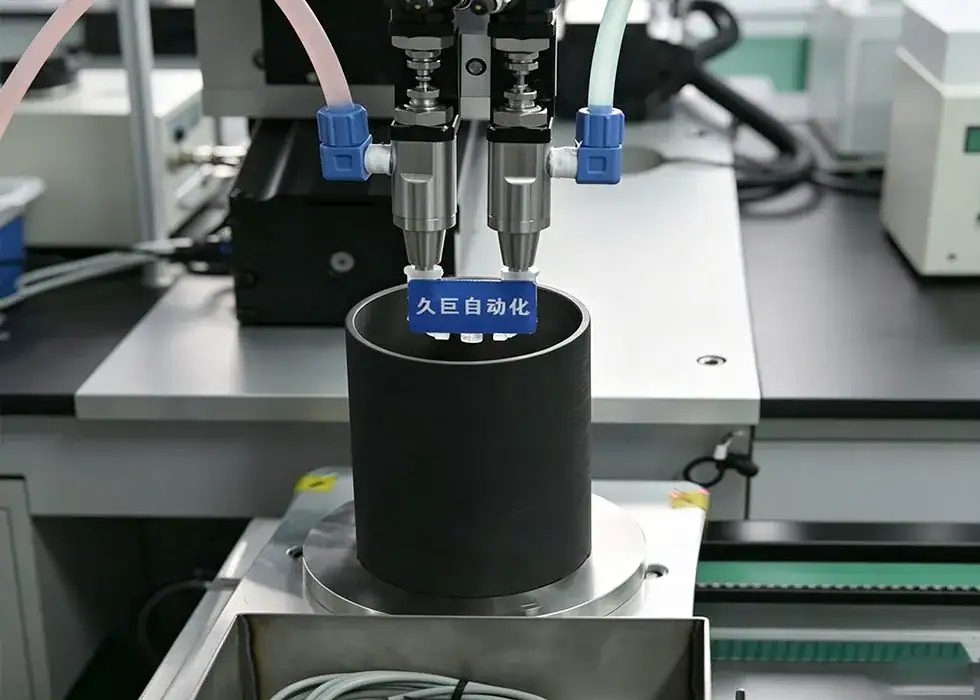
Process optimization is the key to controlling the precision of magnetic disc bonding, with a focus on three critical steps: adhesive application, pressing, and magnetic disc bonding. The adhesive application stage must ensure uniform, metered, and controlled application to guarantee consistent adhesive layer thickness across the rotor’s bonding surface, thereby preventing force imbalances, misalignment, or warping of the magnetic discs caused by uneven adhesive distribution, localized buildup, or gaps. The pressing stage employs a constant-pressure stabilization control system to eliminate issues such as excessive or insufficient pressure, or uneven force distribution, ensuring that the magnetic discs bond tightly to the rotor with precise positioning, free from misalignment or warping. At the same time, based on the structure and operating conditions of the winch motor rotor, the magnetic plate bonding sequence is scientifically optimized to avoid issues such as magnetic interference between adjacent plates and positioning conflicts, thereby steadily improving the bonding precision of each magnetic plate.
Proper operating procedures are a critical safeguard for ensuring the quality of magnet bonding. All magnet bonding operators must undergo systematic professional training to become proficient in equipment operation, process standards, and quality requirements, and must strictly adhere to standardized procedures. Before magnet bonding, thoroughly clean the rotor bonding surface of dust, adhesive residue, impurities, and other foreign matter. Simultaneously, inspect each magnet disc individually for appearance and flatness to prevent impurities or defective discs from affecting bonding accuracy. During the bonding process, handle the magnet discs with care, align and bond them smoothly, and avoid external contact or or jostling that could cause positional shifts. Immediately after completion, conduct a self-inspection of appearance and precision to promptly identify and fine-tune issues such as skewing or misalignment, ensuring that the magnet attachment quality of every rotor meets standards and strictly controlling the product defect rate at the operational level.
Jiuju Automation has designed a magnet insertion machine for the assembly of integrated permanent magnet (IPM) rotors and surface-mount magnets, ensuring precise pole spacing and high production efficiency.
Jiuju Automation provides automated assembly solutions for drive motors in new energy vehicles, integrating key processes such as winding, magnet insertion, magnetization, and testing to ensure high efficiency, high consistency, and full traceability throughout the entire process.
In response to the needs of the low-altitude economy and the power requirements of drones, Jiuju Automation has launched an automated production line for drone motors, improving thrust-to-weight ratio and consistency, and helping drone OEMs reduce costs through mass production.
Jiuju Automation provides automated production lines for servo motors, enabling precise alignment of rotors and stators, integrated encoders, and EOL testing. These systems are widely used in the fields of industrial automation and robotics.
 Jiuju Automation




 Spanish
 French
 German
 Hindi