Many people encounter this dilemma when selecting a motor: two permanent magnet synchronous motors with nearly identical external dimensions and rated torque can have significant differences in maximum torque and price. Setting aside factors such as magnets and the stator core,Stator Winding Wire GaugeThis is the key factor behind this difference, and the two types of motors also represent two completely different design philosophies.
I. Wire diameter determines the maximum torque; temperature rise is the key bottleneck
A motor’s maximum torque is determined by its maximum overload current, while the upper limit of the current is constrained by temperature rise. Within the industry, a standard current density of 3–6 A/mm² is set based on heat dissipation conditions; motors with the same heat dissipation structure generally have similar allowable current densities.
At the same current density, the larger the cross-sectional area of the conductor, the higher the maximum current it can carry. According to the motor torque formula T = Kt × I, when the torque coefficients Kt of the two motors are similar,Coarse-wire motorsOvercurrent, and the maximum torque will be much higher than that of a motor with a thin wire...and this is also the main reason for the difference in maximum torque between the two.
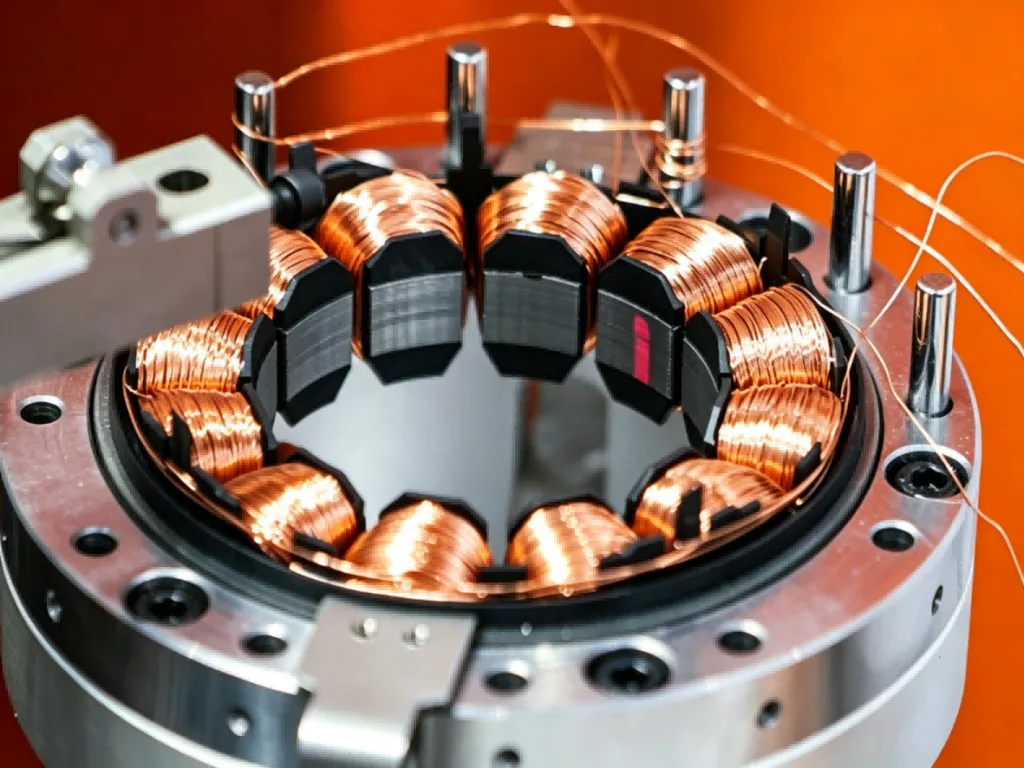
Precision Winding
II. Similar Rated Torques, Achieved Through a Clever Balance of the Number of Windings
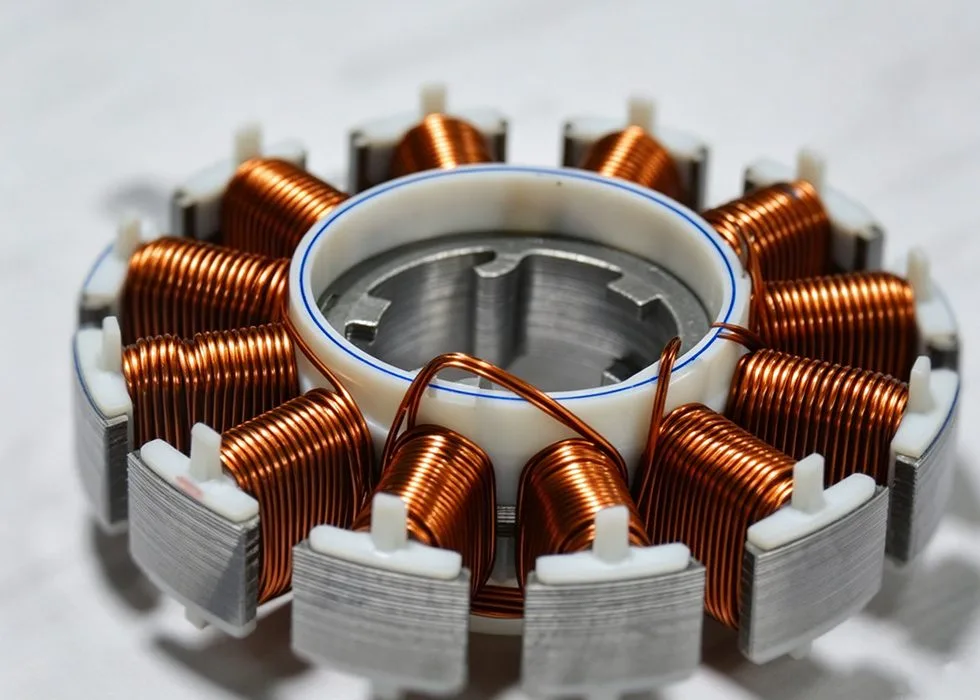
The space in a motor stator slot is limited, and the slot fill rate is relatively fixed. Thicker wire has a larger cross-sectional area, so fewer turns can be wound within the same slot space; thinner wire, on the other hand, allows for more turns to be wound. The increase in wire diameter and the corresponding decrease in the number of turns offset each other, ultimately resulting in the rated output torque and standard operating characteristics of the two motor models being essentially equivalent—which creates the illusion that their parameters are “seemingly identical.”
Jiuju Coreless Motor
III. Price Differences Stem from Actual Material Costs
Copper is a core, high-cost raw material for electric motors. When the slot fill rates are similar, the total amount of copper used in coarse-wire motors far exceeds that in fine-wire motors; as a result, their raw material costs are higher, and their selling prices are naturally higher. In contrast, fine-wire motors use less copper, have lower costs, and offer better value for money. Summary of Model Selection
Coarse-thread Motor DeviationHigh Performance, High Overload Capacity, suitable for applications with high startup loads and shock conditions; fine-wire motors are primarily designed forCost Control...Suitable for applications with steady loads and no need for high instantaneous torque. When selecting a motor, do not rely solely on its appearance and rated parameters; you must understand its internal winding structure to choose the right motor.
Jiuju Automation provides automated assembly solutions for drive motors in new energy vehicles, integrating key processes such as winding, magnet insertion, magnetization, and testing to ensure high efficiency, high consistency, and full traceability throughout the entire process.
Jiuju Automation provides CNC motor winding machines and stator winding production lines suitable for brushless, servo, series-wound, and transformer coils, ensuring full slot fill and consistent turn-to-turn consistency.
Jiuju Automation provides CNC motor winding machines and stator winding production lines suitable for brushless, servo, series-wound, and transformer coils, ensuring full slot fill and consistent turn-to-turn consistency.
Jiuju Automation provides CNC motor winding machines and stator winding production lines suitable for brushless, servo, series-wound, and transformer coils, ensuring full slot fill and consistent turn-to-turn consistency.
 Jiuju Automation







 Spanish
 French
 German
 Hindi