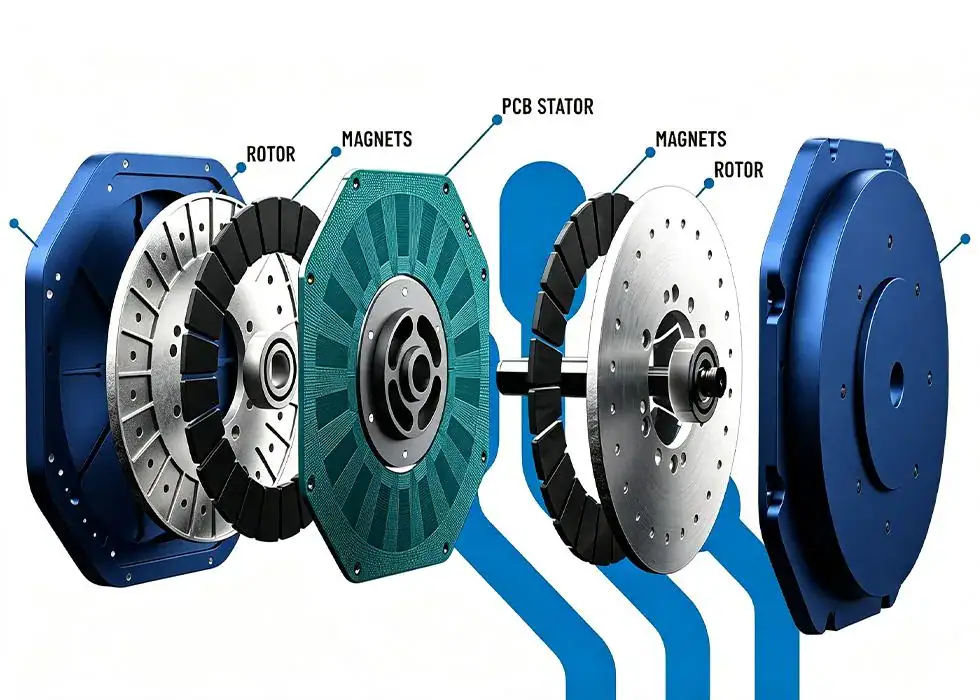
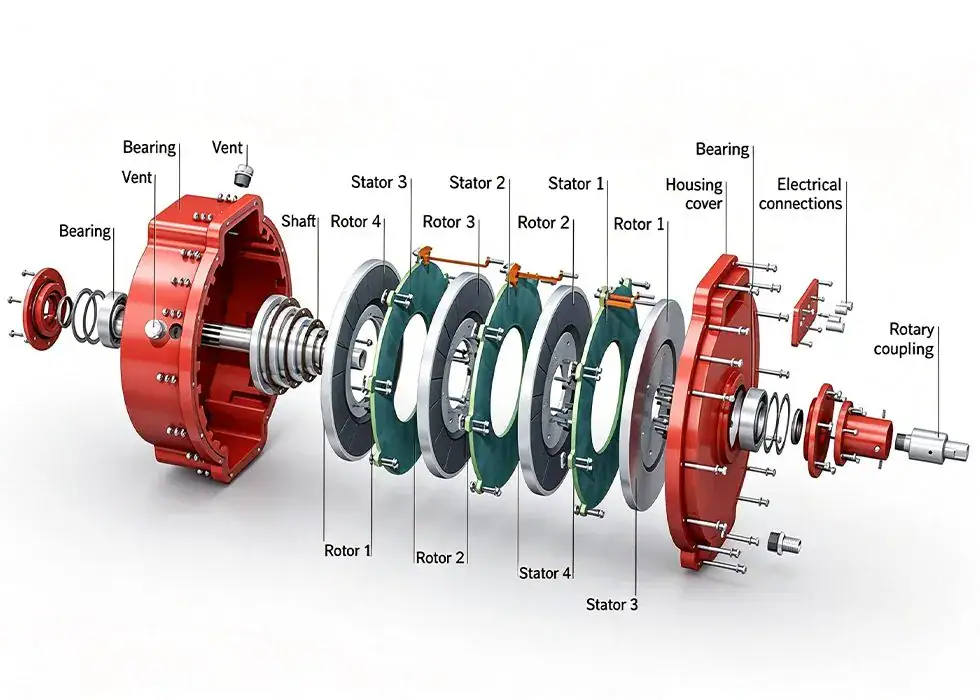
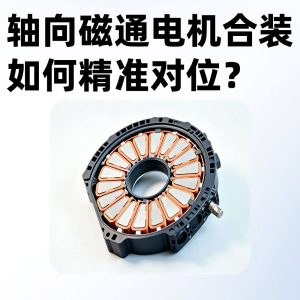
As motor technology continues to evolve, PCB motors—an innovative offshoot of axial flux motors—are gradually gaining attention within the industry. Their core feature is the replacement of the traditional iron-core stator with a printed circuit board (PCB), with the windings directly fabricated on the PCB. Together with the permanent magnet rotors on both sides, which generate axial magnetic flux, they form a “sandwich”-style disc-shaped structure. Additionally, multiple layers of stator modules can be stacked according to power requirements to expand output capacity.
PCB-Based Axial Flux Motors with a Sandwich Structure
In terms of operating principle, PCB motors are similar to traditional axial-flux motors: permanent magnets generate an axial magnetic field that interacts with the current in the PCB stator windings to produce electromagnetic torque that drives the rotor to rotate. Changes in structural design give them several distinct advantages in terms of performance and manufacturing.
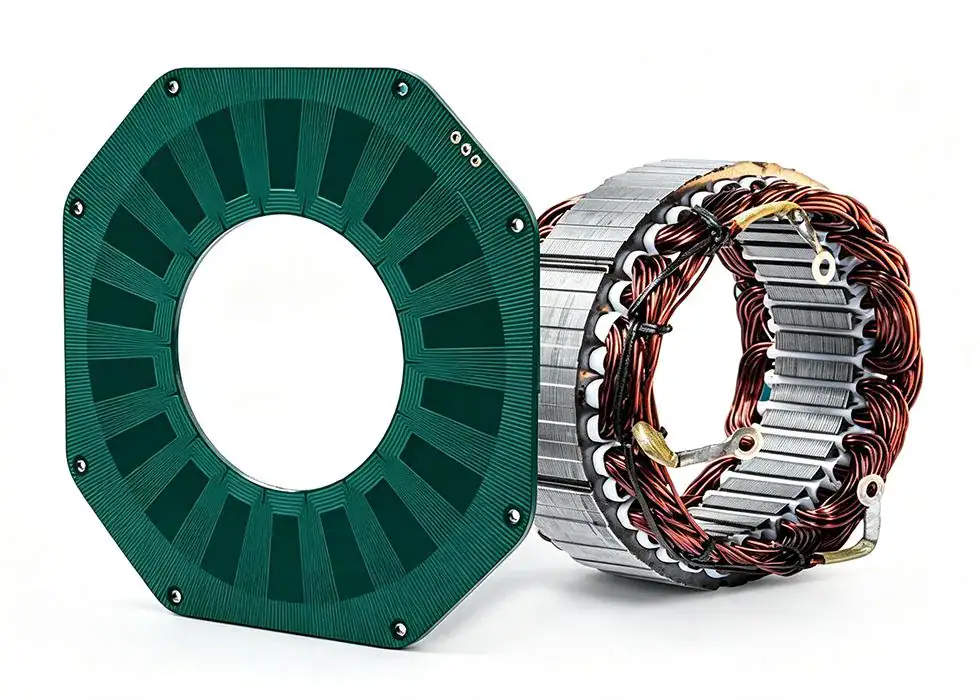
PCB-Based Axial Flux Motors
First, it offers higher energy conversion efficiency. The layout of the PCB stator windings can be precisely optimized using circuit design software, reducing end losses and interference between windings, thereby improving the motor’s overall energy efficiency. Second, it achieves significant weight reduction. By eliminating the traditional, bulky iron core structure, the overall weight of the motor is substantially reduced, making it better suited for weight-sensitive applications. Third, it operates quietly. Without the core’s cogging effect, electromagnetic noise and vibration are significantly reduced during operation, enabling near-silent operation. Fourth, it offers superior reliability. The stator windings are integrally molded with the PCB, and the manufacturing process is highly automated, effectively eliminating common failures associated with traditional windings, such as loosening and poor contact. Fifth, it offers high design flexibility. PCB stator solutions can be quickly customized to meet power and size requirements, shortening product iteration cycles.
PCB-Based Stator Motors
From a manufacturing perspective, PCB motors have broken away from the traditional production paradigm of motors that rely on stamped iron cores and manual winding. The stator can be mass-produced on a large scale and with high precision, just like a standard printed circuit board, significantly simplifying the manufacturing process and improving production efficiency.
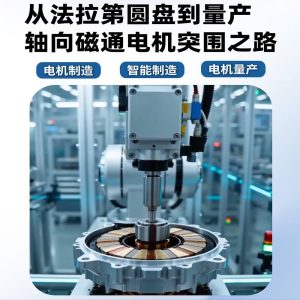
As a new type of motor design, the large-scale implementation of PCB motors still requires the simultaneous upgrade of supporting assembly processes. Controlling the coaxiality of multi-layer stators and rotors, ensuring air gap uniformity, and maintaining precision in rotor magnet assembly are all critical factors that affect final performance. To meet the assembly requirements of these disc-type motors, Jiuju offers automated assembly solutions tailored for PCB motors. These solutions cover core processes such as the precision mounting of rotor magnets, the laminated assembly of the stator and rotor, and in-line performance testing. They ensure assembly precision and product consistency during mass production, providing the necessary process and equipment support for the industrialization of this new motor technology.
The shipping area outside the workshop was a hive of activity. After multiple rounds of full-machine commissioning, simulated mass-production validation, and factory quality inspection, a Jiuju DC motor automatic assembly line completed all factory-out procedures, was loaded onto trucks on schedule, and is about to depart for the customer's production base, helping the customer's project advance production implementation on plan.
Jiuju Automation provides high-precision automatic assembly lines for axial flux motors, covering processes such as stator winding, magnet assembly, rotor balancing, and final product testing. These lines are suitable for applications in drones, new energy vehicles, and industrial drives. The company holds over 256 patents and is ISO 9001 certified...
Jiuju Automation provides high-precision automatic assembly lines for axial flux motors, covering processes such as stator winding, magnet assembly, rotor balancing, and final product testing. These lines are suitable for applications in drones, new energy vehicles, and industrial drives. The company holds over 256 patents and is ISO 9001 certified...
A fully developed automated motor assembly line can replace a large number of workers, with production capacity and consistency far exceeding those of traditional methods. This video explains the challenges of manual assembly and the key advantages of automated production lines.
A multi-pole architecture brings a high-frequency fundamental; at 10,000 rpm the fundamental frequency can reach several kHz. Traditional IGBTs suffer soaring switching losses and severe heating — it is the MHz-class switching capability of SiC MOSFETs that truly matches high-frequency multi-pole axial flux motors.
 Jiuju Automation







 Spanish
 French
 German
 Hindi