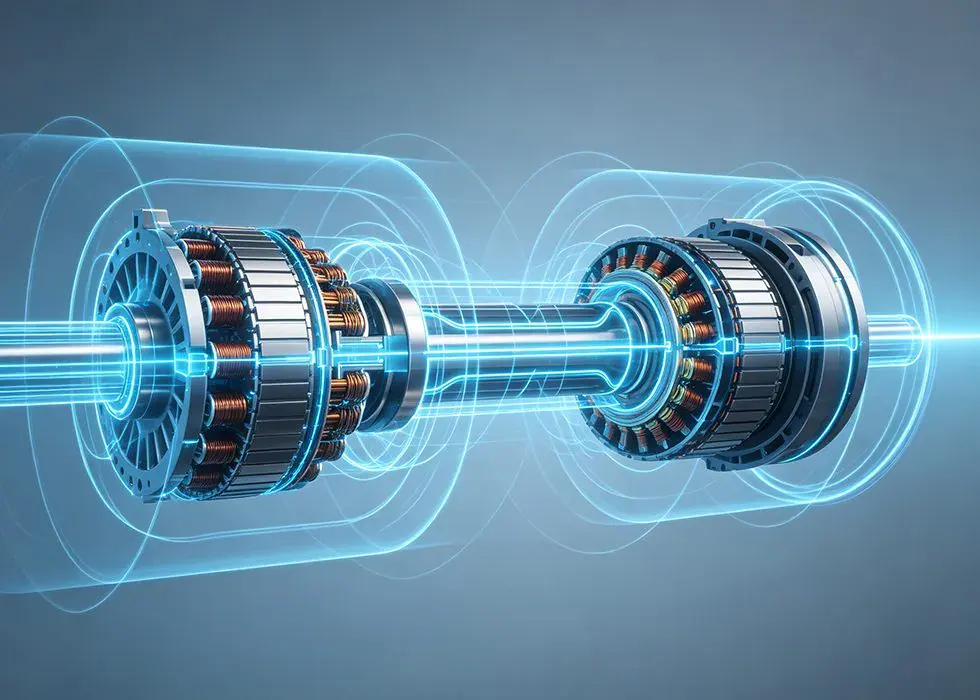
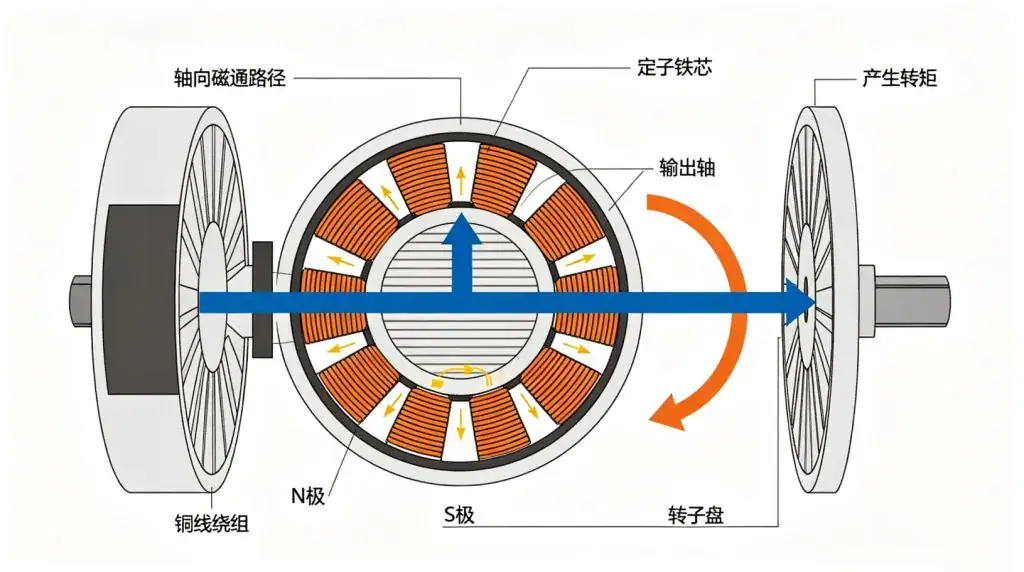
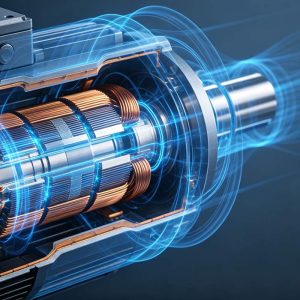
Over the past two years, the hottest technological trend in the electric drive industry has undoubtedly been the axial flux motor. Resembling a “flat cake” in shape, these motors are only one-third as thick as traditional motors yet offer power densities 30% to 50% higher, making them the core power option for high-end electric vehicles, hub-drive systems, eVTOL flying cars, and robotic joints.
However, there is an awkward reality in the industry: prototypes are everywhere, but mass production is rare. While prototypes with impressive performance continue to emerge from laboratories, only a handful of players—such as YASA, which was acquired by Mercedes-Benz, and China’s Panhu Power—have actually met automotive standards and achieved stable mass production. The core reason lies in the insurmountable gap between prototypes and mass production.
Flux Motor
The prototype phase focuses on “optimum performance at a single point” and enjoys three major advantages unattainable in mass production: no cost constraints on materials, allowing for the unrestricted use of N52EH neodymium-iron-boron and SMC soft magnetic composite materials; precision relies on manual craftsmanship—including slow-wire cutting, surface grinding, and even hand scraping by master craftsmen—with individual fine-tuning to ensure uniform air gaps; and performance is evaluated based solely on peak values, without the need to consider 100,000-kilometer durability or temperature rise under continuous high loads.
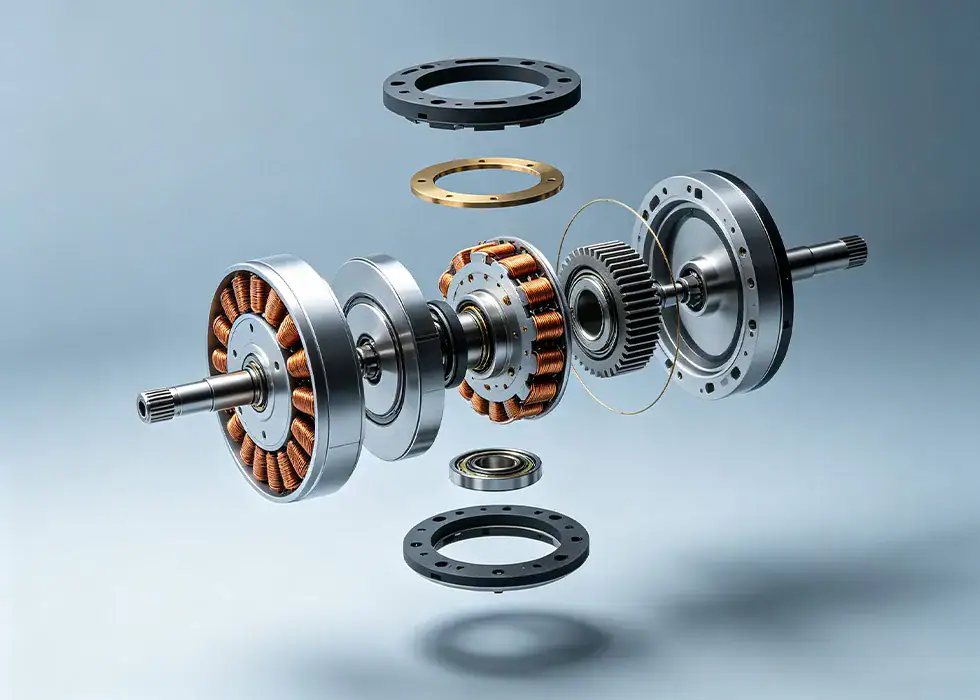
Marked Disassembly of an Axial Flux Motor
Mass production means that all tolerances are eliminated, and four major obstacles stand in the way. First, there is zero tolerance for micron-level air gaps. In axial motors, the air gap between parallel surfaces is typically only 0.5 to 1.5 millimeters, and uniformity must be controlled within ± several tens of microns; In a sandwich-type structure, the magnetic attraction between the stator and rotor can reach nearly one metric ton when they are close together; even the slightest tilt during assembly can cause the motor to scrape against the housing and seize up. Second, automated equipment has blind spots. Existing production lines are mostly designed for cylindrical radial motors; the flat structure, coil-wound windings, and thin, brittle magnetic steel laminations of axial motors all require entirely new equipment solutions, and the strong magnetic field environment also interferes with robotic gripper operations. Third, heat dissipation is extremely challenging. With the stator sandwiched between the two rotors like a “roast pork bun,” heat cannot escape easily; under sustained high loads, the magnetic steel undergoes irreversible demagnetization once it exceeds 120°C. Fourth, the supply chain for high-performance materials is costly, and there are significant challenges regarding mass production stability and price pressures for SMC, high-grade silicon steel, and high-temperature-resistant insulation materials.
Jiuju Axial Flux Motor for UAVs
Currently, Mercedes-Benz YASA is already being used in AMG all-electric models, and hub-mounted motors have achieved deliveries in the tens of thousands in the commercial vehicle sector, indicating that the industry is gradually crossing the mass-production threshold. However, over the next 5 to 8 years, the market is likely to remain dominated by radial flat-wire motors for volume production, while axial flux motors will continue to target the high-end market.
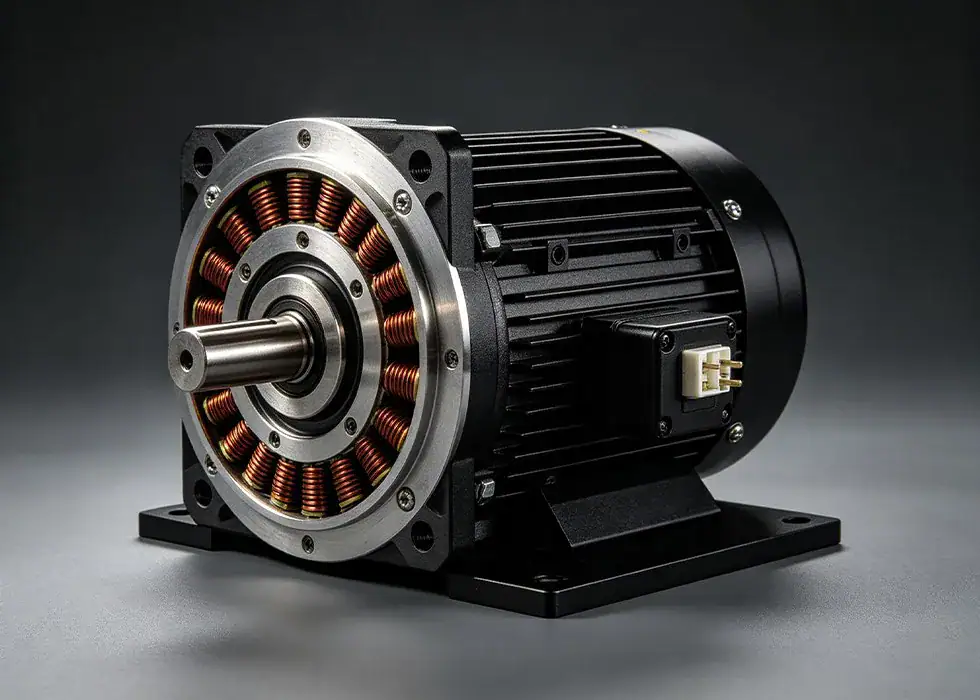
Axial Flux Motor
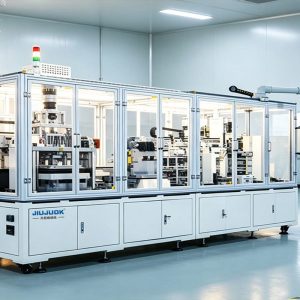
Prototypes focus on electromagnetic design, while mass production hinges on system capabilities. To address the challenges of automated assembly and precision control in the mass production of axial motors, Jiuju offers automated assembly and magnetization solutions tailored for disc-type motors, covering core processes such as precision magnet mounting, force-position co-assembly of the stator and rotor, and online air gap inspection. By using servo force control to gradually release strong magnetic attraction, these solutions ensure micron-level assembly precision and mass-production consistency, providing the process and equipment support needed for axial flux motors to transition from prototypes to large-scale mass production.
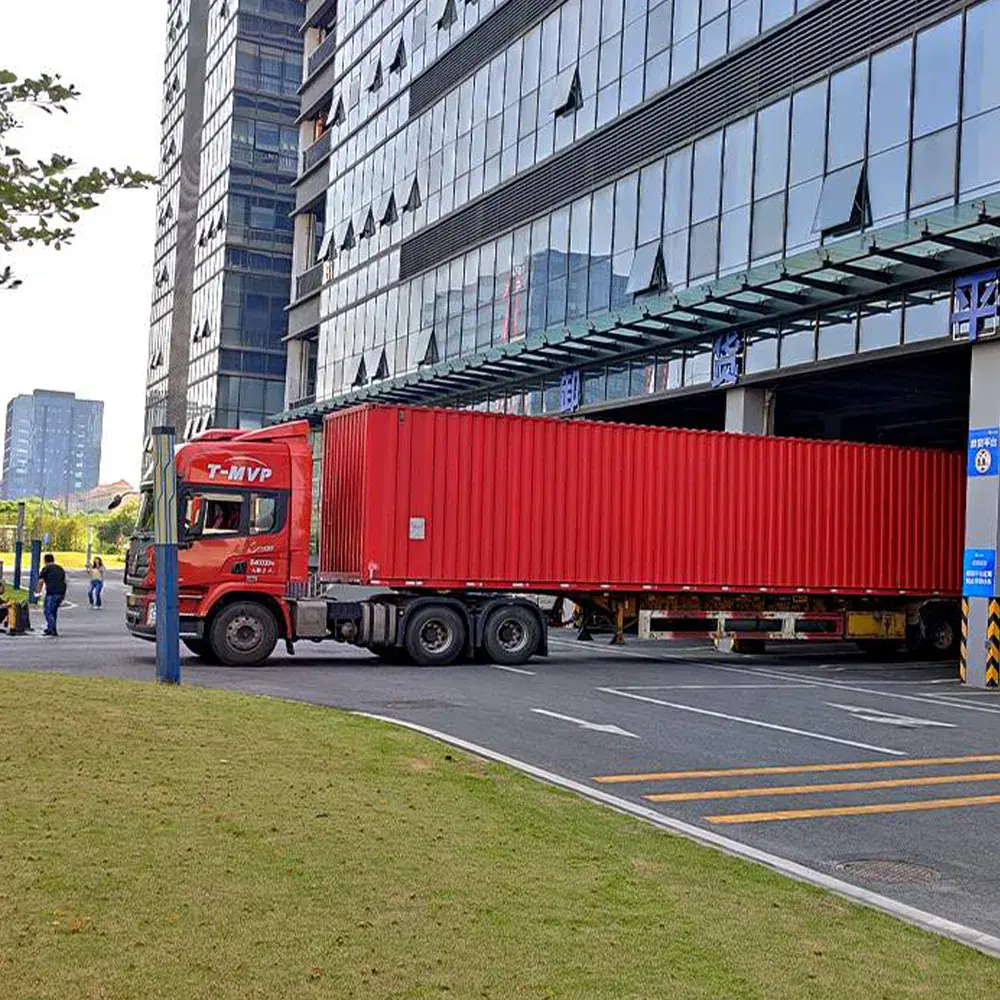
The shipping area outside the workshop was a hive of activity. After multiple rounds of full-machine commissioning, simulated mass-production validation, and factory quality inspection, a Jiuju DC motor automatic assembly line completed all factory-out procedures, was loaded onto trucks on schedule, and is about to depart for the customer's production base, helping the customer's project advance production implementation on plan.
While new energy vehicles and robots are stealing the spotlight, industrial applications such as elevator traction machines, fans, and water pumps are quietly adopting axial flux motors. Here, the focus isn’t on flashy specifications, but on electricity bills and reliability at scale.
While new energy vehicles and robots are stealing the spotlight, industrial applications such as elevator traction machines, fans, and water pumps are quietly adopting axial flux motors. Here, the focus isn’t on flashy specifications, but on electricity bills and reliability at scale.
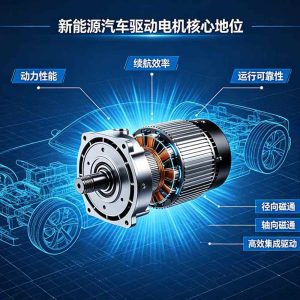
Jiuju Automation provides automated assembly solutions for drive motors in new energy vehicles, integrating key processes such as winding, magnet insertion, magnetization, and testing to ensure high efficiency, high consistency, and full traceability throughout the entire process.
A multi-pole architecture brings a high-frequency fundamental; at 10,000 rpm the fundamental frequency can reach several kHz. Traditional IGBTs suffer soaring switching losses and severe heating — it is the MHz-class switching capability of SiC MOSFETs that truly matches high-frequency multi-pole axial flux motors.
 Jiuju Automation





 Spanish
 French
 German
 Hindi