 Jiuju Automation

轴向磁通电机技术突破背后,制造工艺如何破局
241轴向磁场电机也常被称为轴向磁通电机,是当前电驱领域关注度较高的技术方向,在汽车驱动、低空经济、工业机器人关节等场景均有应用探索。
View Full VersionWhen people talk about new energy vehicles, most first think of words like battery and range, but what really determines whether a car is good to drive is the drive motor hidden in the chassis. As the core of the "three electrics" system, it converts electrical energy into kinetic energy; how fast the car accelerates, how efficiently it uses power and how smoothly it drives are almost entirely up to it. Selection is never a single-point optimum but a repeated trade-off among efficiency, cost and reliability. Precisely for this reason, the drive motor has always been a top priority for R&D investment by major automakers and the supply chain.

In recent years, drive-motor technology has iterated very quickly. Permanent-magnet synchronous motors have become the absolute mainstream thanks to high efficiency and small size; flat copper-wire windings fill the stator slots more completely with copper, improving heat dissipation and output; multi-phase motors trade more windings for higher reliability and smoothness; permanent-magnet-assisted synchronous reluctance motors try to approach comparable performance with less rare earth; and routes such as switched reluctance and hub motors each excel in specific scenarios. At the same time, the motor is no longer an isolated component but is increasingly bound with the controller and reducer, moving from a "three-in-one" toward deep integration; cutting-edge directions such as axial-flux motors, high-voltage platforms and SiC devices also keep raising the ceiling of power density, turning "smaller, lighter, more efficient" into reality step by step. These directions ultimately all point to longer range and a better driving experience.
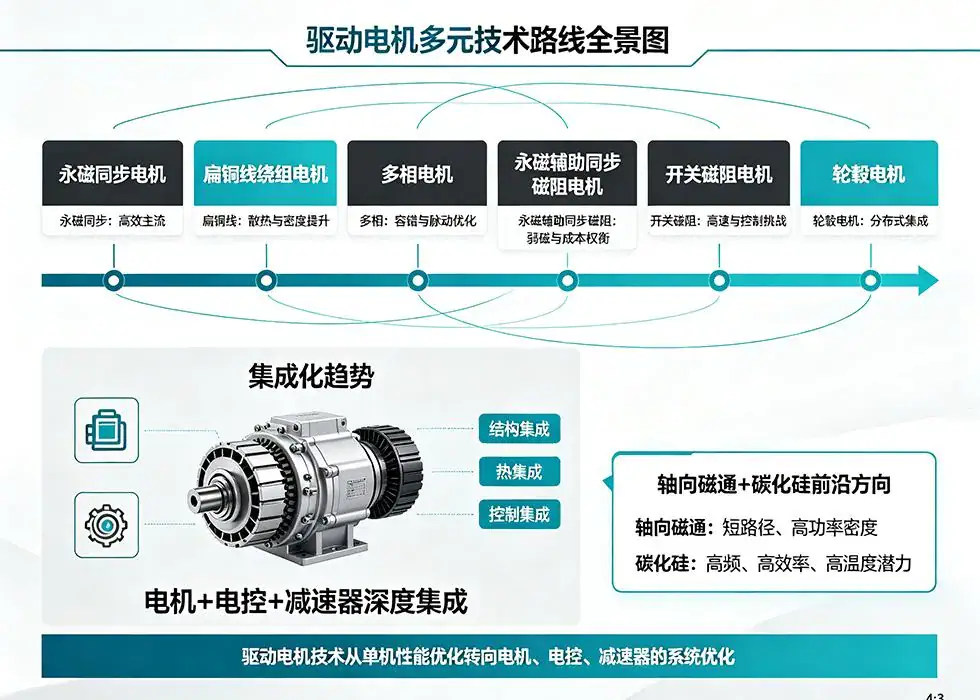
But no matter how advanced the technology, it must ultimately land on "being manufacturable and made consistently". From drawing to rolling off the line, a motor passes through a series of precision processes — magnetizing, magnet insertion, stator winding, end welding — and the precision and consistency of every link determine whether the designed performance can truly be delivered. This is also the field Jiuju Automation has long cultivated: this equipment company focused on intelligent motor manufacturing builds automated equipment and assembly lines around key processes such as magnetizing, loading/unloading and precision magnet insertion, covering the full flow from stator and rotor to the assembly, and uses digital control to make the line more stable and traceable, providing an overall solution for the large-scale production of new-energy drive motors so that cutting-edge designs land reliably as qualified products.
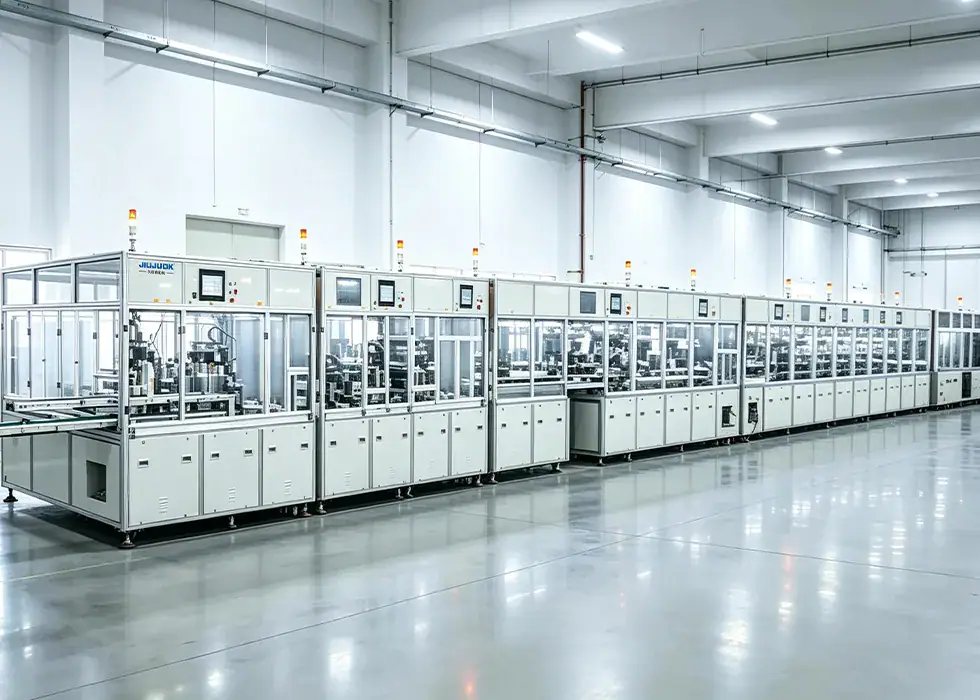
It is foreseeable that future drive motors will evolve along two parallel routes: "higher performance" and "higher efficiency, lower cost" — one pursuing extreme power density, the other putting every kilowatt-hour to best use. Whichever route, design and manufacturing are equally important: good design sets the ceiling, good manufacturing sets the floor. Whether the "heart" of new energy can beat more powerfully often lies in those invisible efforts on the production line.

又是一年月圆时至,秋风送桂香,阖家庆团圆。在浓浓的中秋氛围中,久巨始终坚守智造初心,企业每一份成长与收获,都离不开全体同事的勤恳付出与同心并肩。
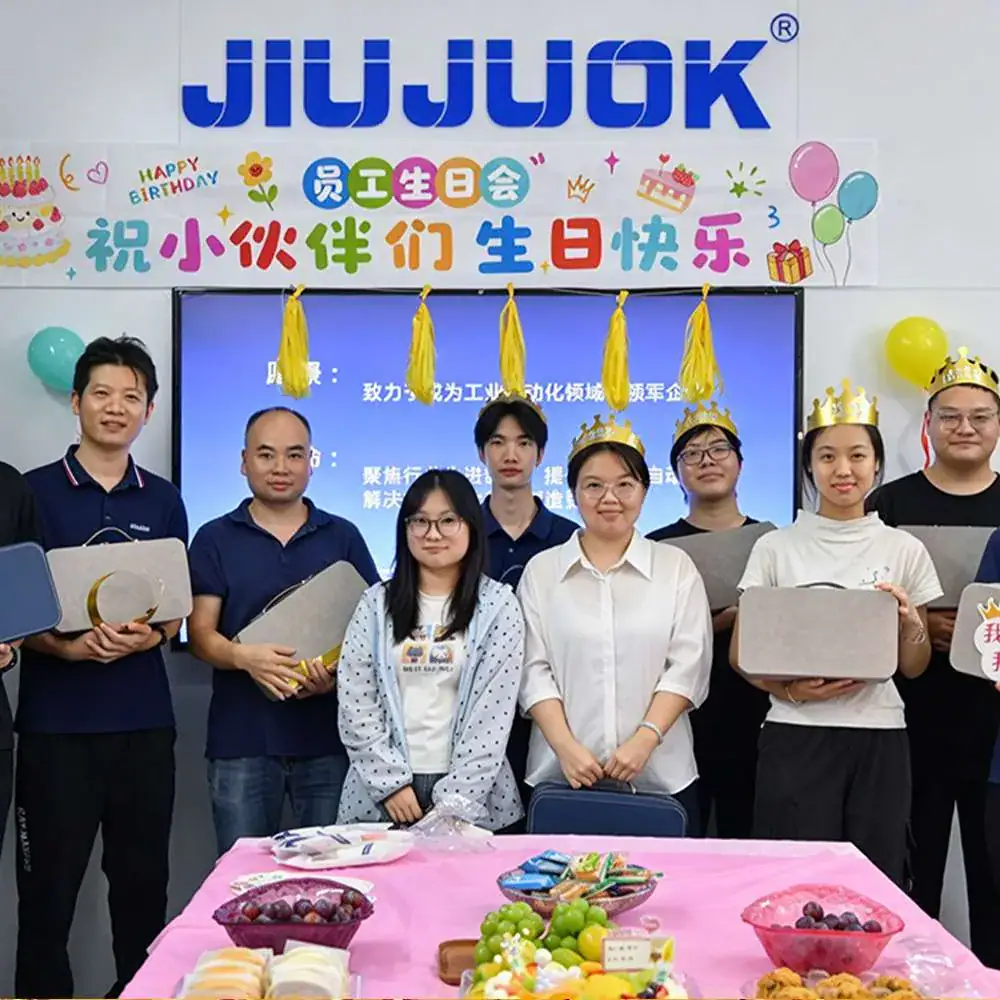
时光缓缓流淌,岁月镌刻成长。为感谢全体伙伴一路并肩同行,传递公司人文关怀,久巨 7‑9 月员工集体生日会温情如约而至。
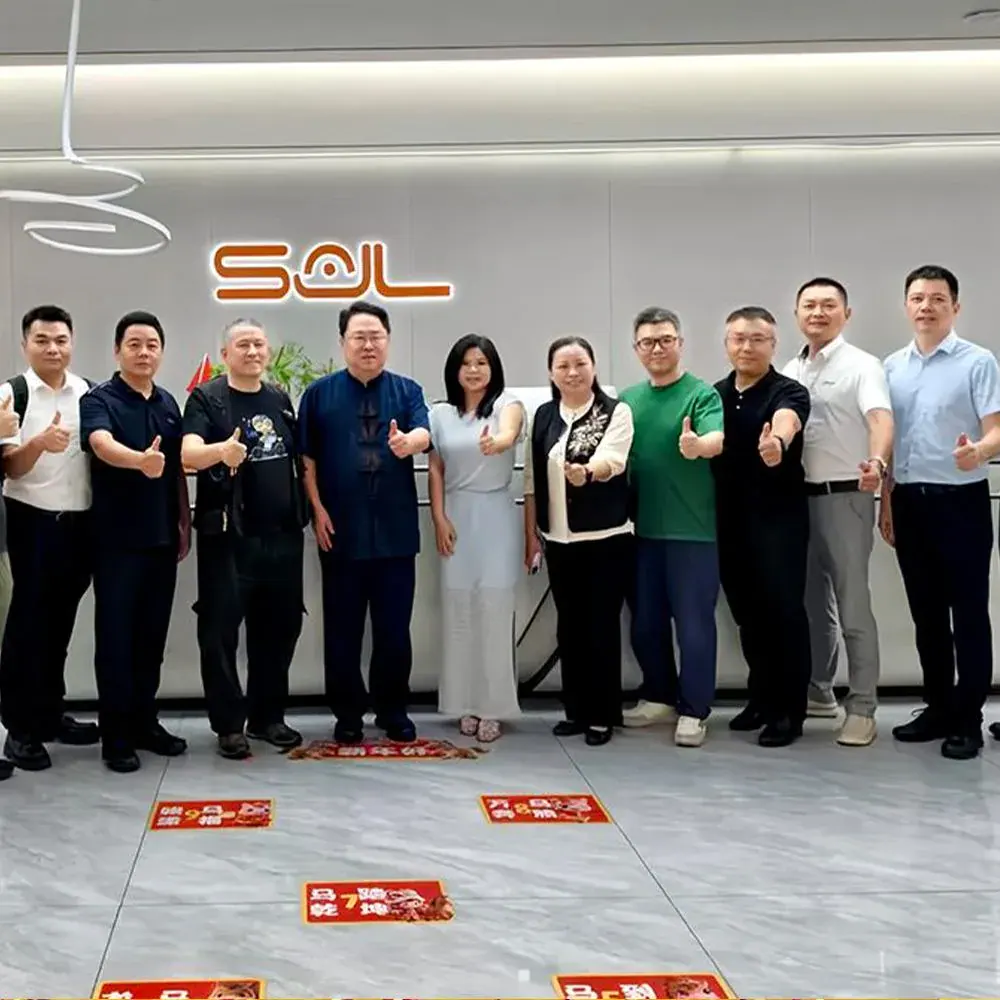
金秋送爽,月满中秋。为增进会员企业交流,凝聚行业发展合力,深圳市音响行业协会中秋会员联谊会于 9 月 18 日在会员单位深圳盛佳丽电子圆满举办。

The shipping area outside the workshop was a hive of activity. After multiple rounds of full-machine commissioning, simulated mass-production validation, and factory quality inspection, a Jiuju DC motor automatic assembly line completed all factory-out procedures, was loaded onto trucks on schedule, and is about to depart for the customer's production base, helping the customer's project advance production implementation on plan.
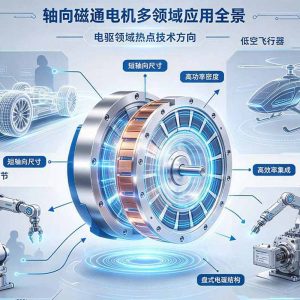
轴向磁场电机也常被称为轴向磁通电机,是当前电驱领域关注度较高的技术方向,在汽车驱动、低空经济、工业机器人关节等场景均有应用探索。
View Full Version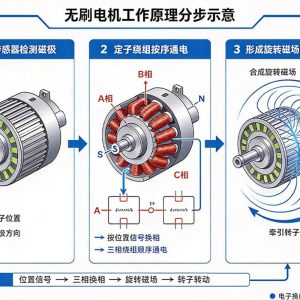
无刷直流电机以电子换向替代机械碳刷,凭借高效率、低噪音、长寿命、可控性强等优势,广泛应用于航模、工业装备、汽车电子等领域。
View Full Version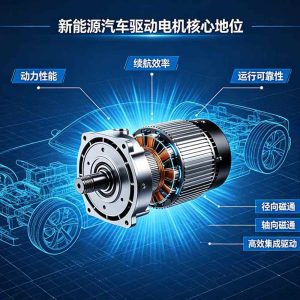
A multi-pole architecture brings a high-frequency fundamental; at 10,000 rpm the fundamental frequency can reach several kHz. Traditional IGBTs suffer soaring switching losses and severe heating — it is the MHz-class switching capability of SiC MOSFETs that truly matches high-frequency multi-pole axial flux motors.
View Full Version
A multi-pole architecture brings a high-frequency fundamental; at 10,000 rpm the fundamental frequency can reach several kHz. Traditional IGBTs suffer soaring switching losses and severe heating — it is the MHz-class switching capability of SiC MOSFETs that truly matches high-frequency multi-pole axial flux motors.
View Full Version Chinese Chinese
 English
 Spanish
 French
 German
 Arabic
 Russian
 Hindi
 Korean
 Thai
 Vietnamese