The fan motor industry has one distinctive feature: high volume, low margins, and a focus on efficiency. When a production line is operating at high capacity, every additional stoppage costs money.
However, the assembly lines at most fan motor factories come to a halt far too frequently. The problem lies with the hoppers. The shallow hoppers commonly used in the industry run dry after only a short while, requiring the line to stop and refill them more than a dozen times per shift. Each stoppage lasts several minutes, which adds up to nearly an hour per shift spent waiting for material to be loaded into each machine.
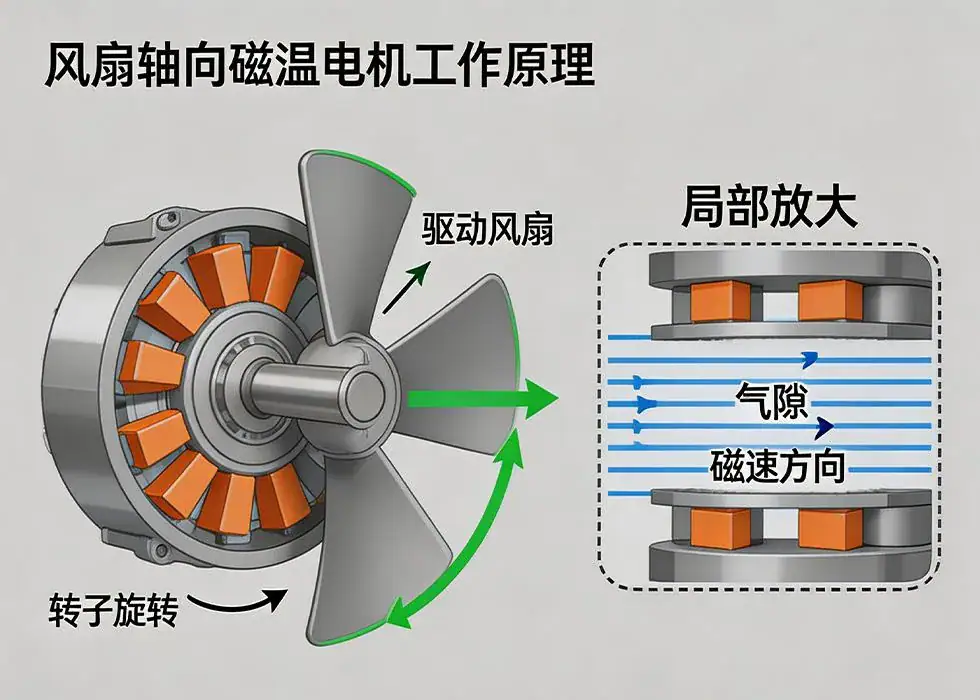
Working Principle of the Jiuju Fan Axial Flux Motor
Jiuju's solution to this problem is very straightforward:Upgrade the silo from a shallow-layer to a deep-layer three-dimensional structure. With the same floor space, material storage capacity increases several-fold, single-run operation time extends to over an hour, and the number of refills per shift is cut in half. Workers no longer need to be tied to a single machine; one person can oversee multiple machines at the same time, allowing the workshop to maintain the same output with fewer workers.
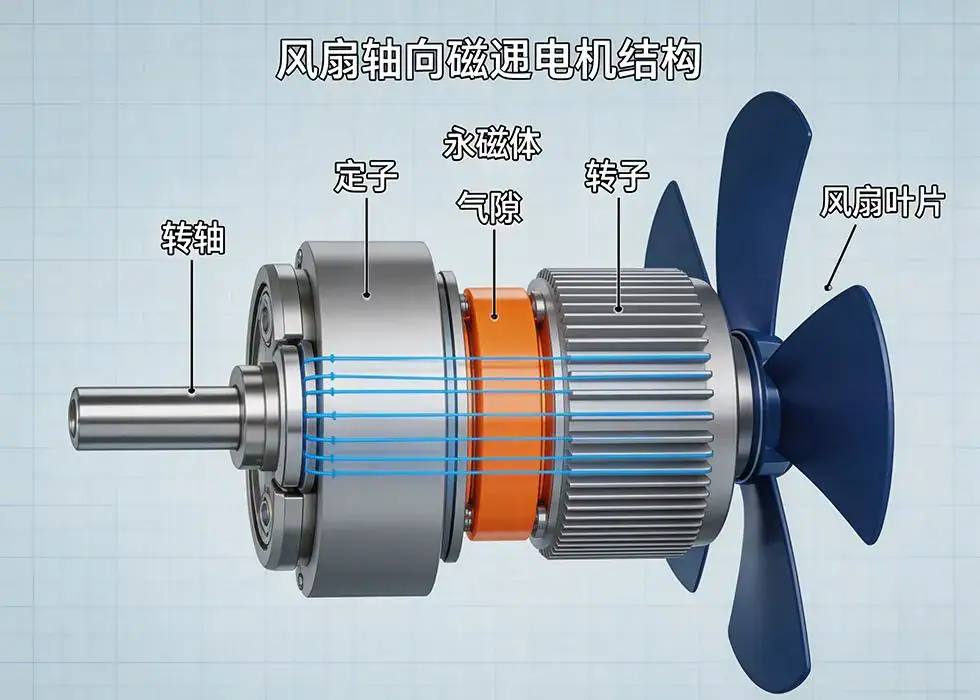
Jiuju Fan Axial Flux Motor Structure
Once production volume increases, another issue that’s easily overlooked is missed defects. By the afternoon, workers get tired during manual assembly; visual inspections rely on a quick glance, and quality checks by touch depend on experience, leading to a decline in consistency. Jiuju Equipment has installed in-line inspection systems after every key process: CCD vision systems check for excess, insufficient, or missed adhesive application; a 100% inspection station measures bearing and coil heights; and a dynamometer measures the finished product’s torque and rotational speed. All testing is performed in-line, eliminating the need for manual measurement, record-keeping, and judgment. As a result, our yield rate remains stable at an industry-leading level, and our defect rate is extremely low.
When it comes to fan motor production, it all comes down to operating rates and consistency. Cutting the number of material changes in half, having one person oversee multiple machines, and stabilizing yield rates are faster solutions than hiring more staff. Jiuju’s Dongguan factory offers equipment break-in demonstrations and can provide production line solutions free of charge.
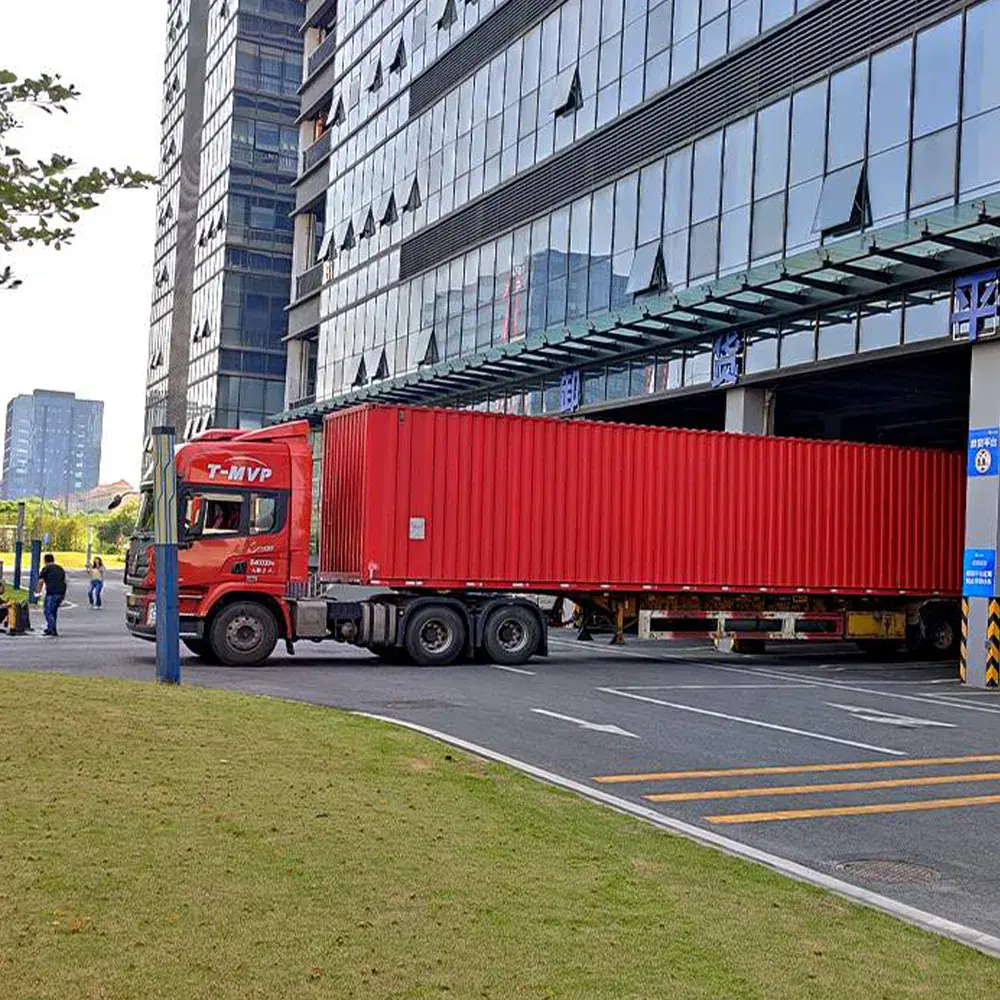
The shipping area outside the workshop was a hive of activity. After multiple rounds of full-machine commissioning, simulated mass-production validation, and factory quality inspection, a Jiuju DC motor automatic assembly line completed all factory-out procedures, was loaded onto trucks on schedule, and is about to depart for the customer's production base, helping the customer's project advance production implementation on plan.
Jiuju Automation provides automated assembly solutions for drive motors in new energy vehicles, integrating key processes such as winding, magnet insertion, magnetization, and testing to ensure high efficiency, high consistency, and full traceability throughout the entire process.
Jiuju Automation provides automated assembly solutions for drive motors in new energy vehicles, integrating key processes such as winding, magnet insertion, magnetization, and testing to ensure high efficiency, high consistency, and full traceability throughout the entire process.
The stator winding is exposed on a flat disc, giving a short heat path so oil or water cooling can be applied directly; however, large-diameter flat seals are more prone to leakage under hot-cold cycling, demanding higher sealing quality.
In response to the needs of the low-altitude economy and the power requirements of drones, Jiuju Automation has launched an automated production line for drone motors, improving thrust-to-weight ratio and consistency, and helping drone OEMs reduce costs through mass production.
 Jiuju Automation





 Spanish
 French
 German
 Hindi