The rotor of an axial flux motor is fitted with a ring of permanent magnets. Determining when to ”energize” this ring of magnets is an unavoidable sequencing issue in production line planning: should magnetization occur before assembly, or after assembly?
The pre-magnetization approach is the traditional method, which means it is much easier for suppliers to adapt to. The magnetization quality can be controlled independently, and the testing methods are well-established. However, the complexity of assembling magnetized parts should not be underestimated: the magnets attract and repel one another, requiring precise force control during handling and positioning; magnetized workpieces cannot be placed on conveyor belts, making demagnetization and isolation extremely labor-intensive; and the parameters for several stages—such as shaft electroplating and anodizing—are also highly susceptible to magnetic field interference.
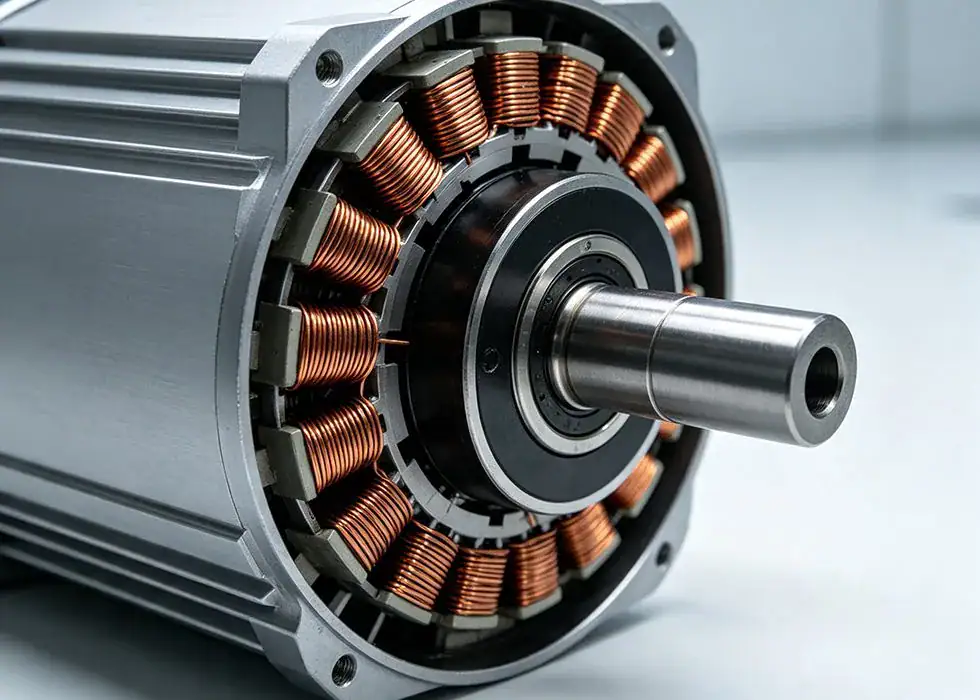
Jiuju Axial Flux Motor Images
The post-magnetization process shifts the magnetization step to after final assembly, thereby avoiding the entire series of complications associated with ”magnetized operations.” Magnetization is performed in a single batch only after the rotor has been pressed into the stator, dynamic balancing is complete, and even after the housing has been sealed, which significantly streamlines the production line layout. However, a significant cost has been shifted to the magnetization process itself—since the entire unit is already housed inside the casing, magnetization with the magnetic circuit closed requires a much higher magnetic field strength, posing a challenge to both the magnetizer’s capacity and the fixture design; moreover, if the casing is not shielded, nearby sensitive components may be damaged.
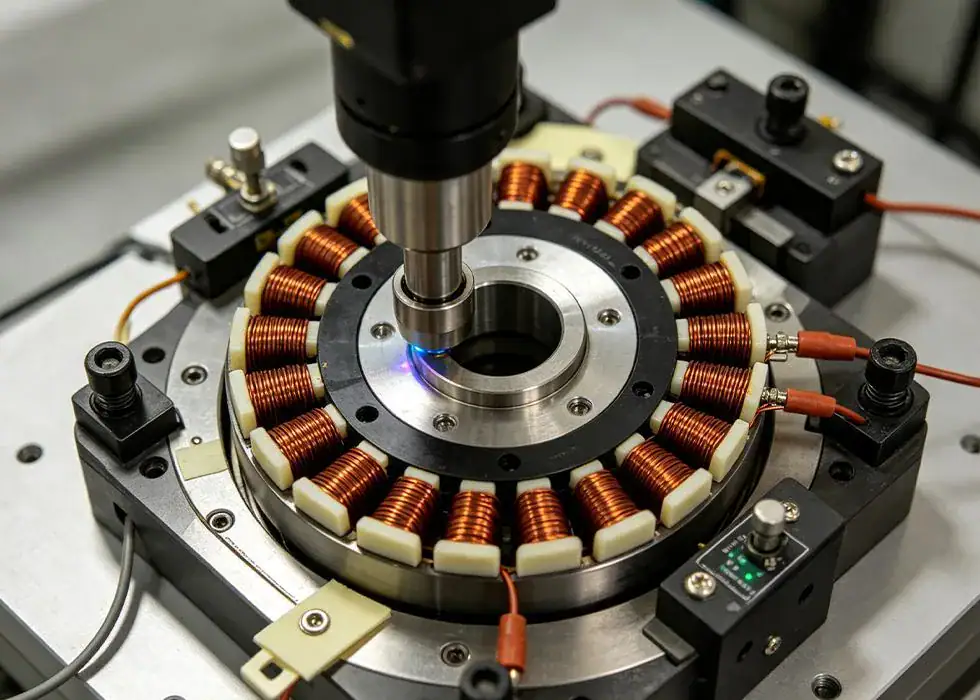
Jiuju Axial Flux Motor Magnetizing
In terms of industry experience, the data varies, but the underlying pattern has always been evident. Based on our observations of various products—including those with the same magnetic circuit—axial magnetization is generally more difficult than radial magnetization. However, this is not a universal conclusion; for products with high output, a large number of poles, very few poles, or maximum wire gauge, magnetizing in the axial direction first is actually more cost-effective.
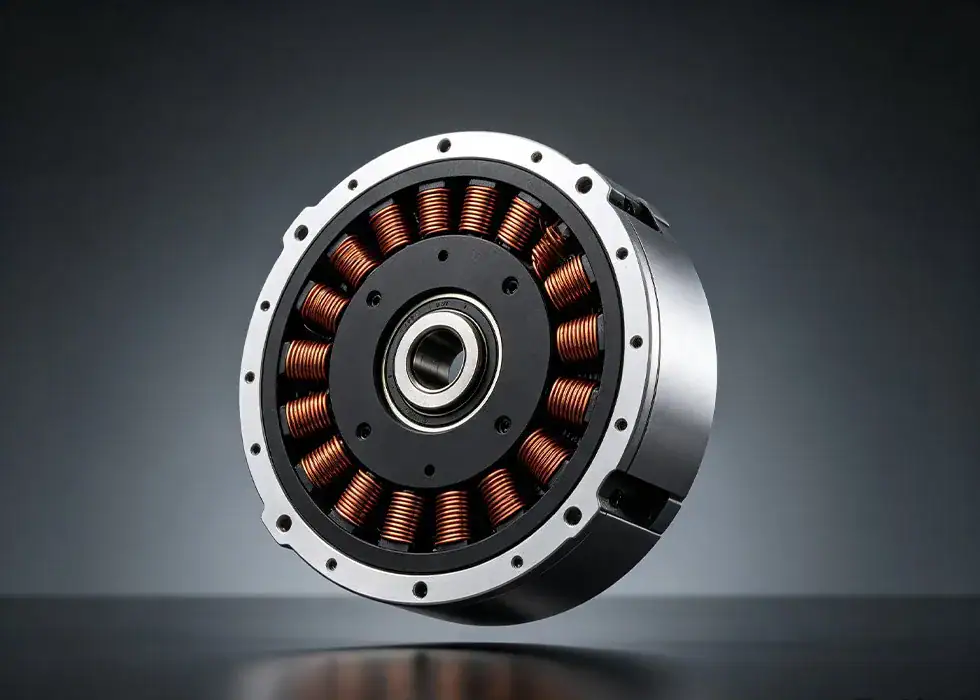
Jiuju Axial Flux Motor Products
The phenomena observed by Jiuju during the debugging of such business scenarios have also been confirmed: generally speaking, once the sequence is selected, the entire production line is configured accordingly. On the pre-magnetization line, none of the three workstations—tension control, magnetic isolation, and cleaning—can be omitted; on the post-magnetization line, the focus is on ensuring the uniformity and equivalent flux control of the magnetizer, rather than simply relying on a single piece of equipment to get the job done.
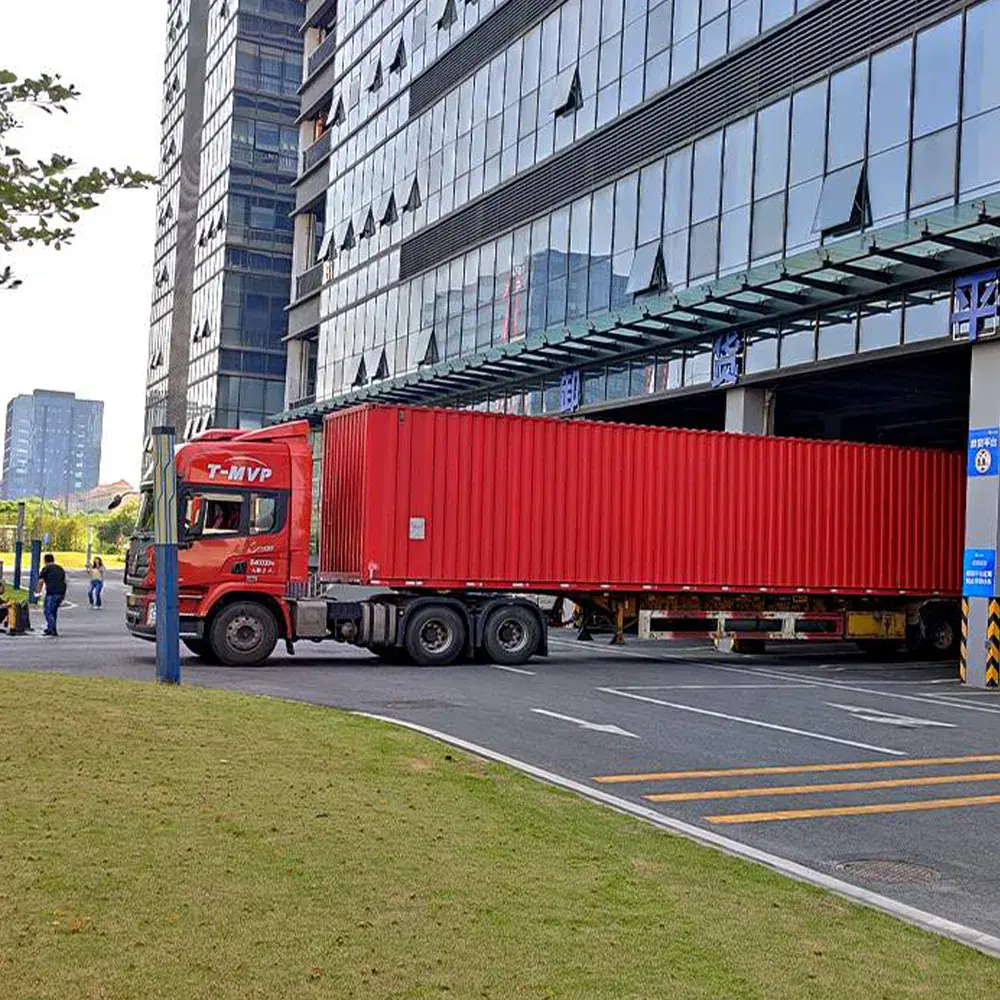
The shipping area outside the workshop was a hive of activity. After multiple rounds of full-machine commissioning, simulated mass-production validation, and factory quality inspection, a Jiuju DC motor automatic assembly line completed all factory-out procedures, was loaded onto trucks on schedule, and is about to depart for the customer's production base, helping the customer's project advance production implementation on plan.
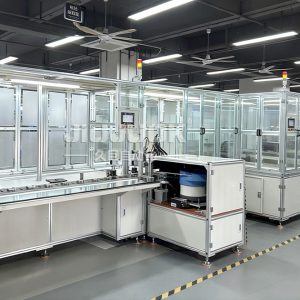
Jiuju Automation provides automated assembly solutions for drive motors in new energy vehicles, integrating key processes such as winding, magnet insertion, magnetization, and testing to ensure high efficiency, high consistency, and full traceability throughout the entire process.
A multi-pole architecture brings a high-frequency fundamental; at 10,000 rpm the fundamental frequency can reach several kHz. Traditional IGBTs suffer soaring switching losses and severe heating — it is the MHz-class switching capability of SiC MOSFETs that truly matches high-frequency multi-pole axial flux motors.
Jiuju Automation provides automated assembly solutions for drive motors in new energy vehicles, integrating key processes such as winding, magnet insertion, magnetization, and testing to ensure high efficiency, high consistency, and full traceability throughout the entire process.
 Jiuju Automation




 Spanish
 French
 German
 Hindi