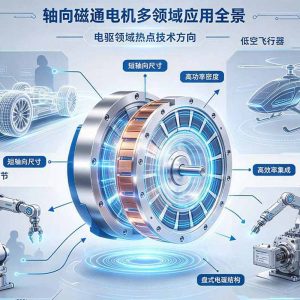
Almost no one denies the advantages of axial-flux motors: at the same outer diameter and magnetic pull, torque can be considerably higher than a radial motor's, the axial size is shorter, and both power density and torque density look better. But the reality is that the mainstream of global electric drives is still the cylindrical radial motor, and this landscape has barely moved for decades. That the technically superior side has been slow to rise is itself worth asking about.
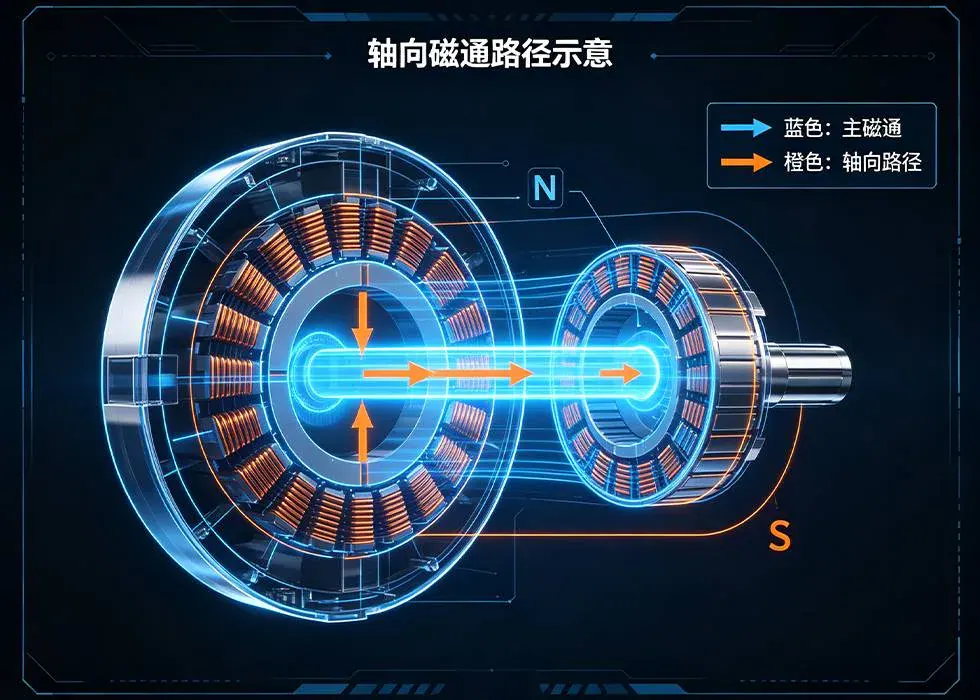
Schematic of Axial-Flux Path
The reason lies not in technology but in inertia. The first inertia is "people". University textbooks, finite-element simulation tools and industry standards are almost all built around radial motors, and generation after generation of motor engineers have circled within cylindrical air gaps and slot-tooth layouts from the day they entered the field. They know radial slot-tooth design and cylindrical air-gap calculation inside out, but switching to the completely new logic of flat magnetic circuits and radial stator teeth means overturning years of mental inertia, with no small learning cost.
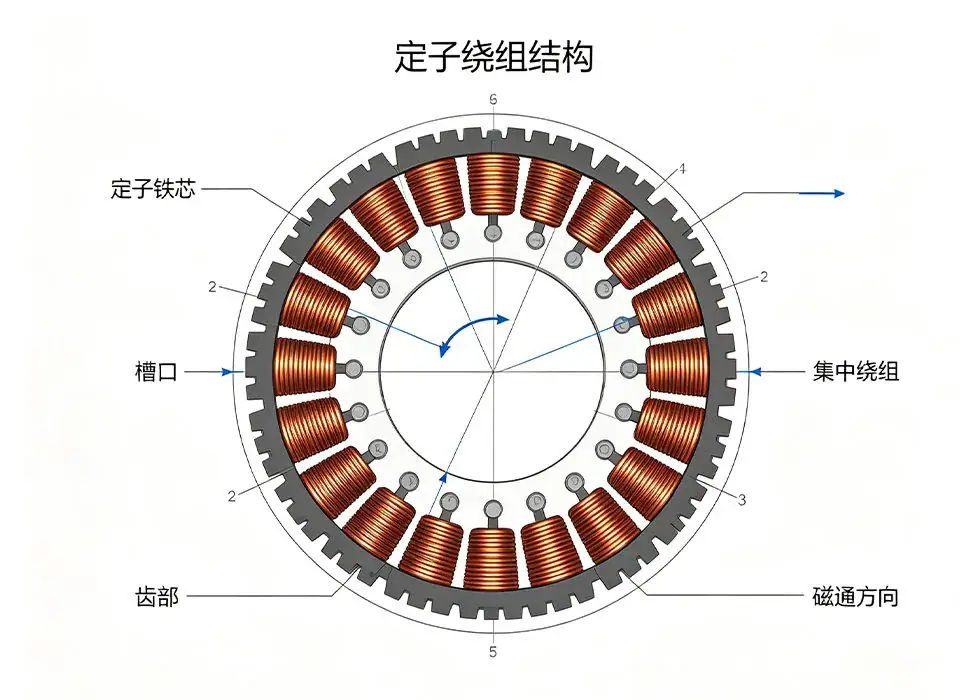
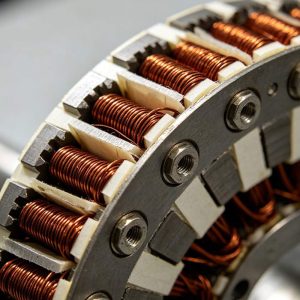
Stator Winding Structure
The second inertia is "money". Radial motors have long been highly automated in stamping, lamination, winding and hairpin forming, and the capital invested in the industrial chain runs into hundreds of billions of dollars, with production lines, moulds and quality-inspection systems already in place. Switching to axial flux means most of these assets become obsolete, requiring equipment to be re-developed and process standards to be re-established — the account simply does not add up.
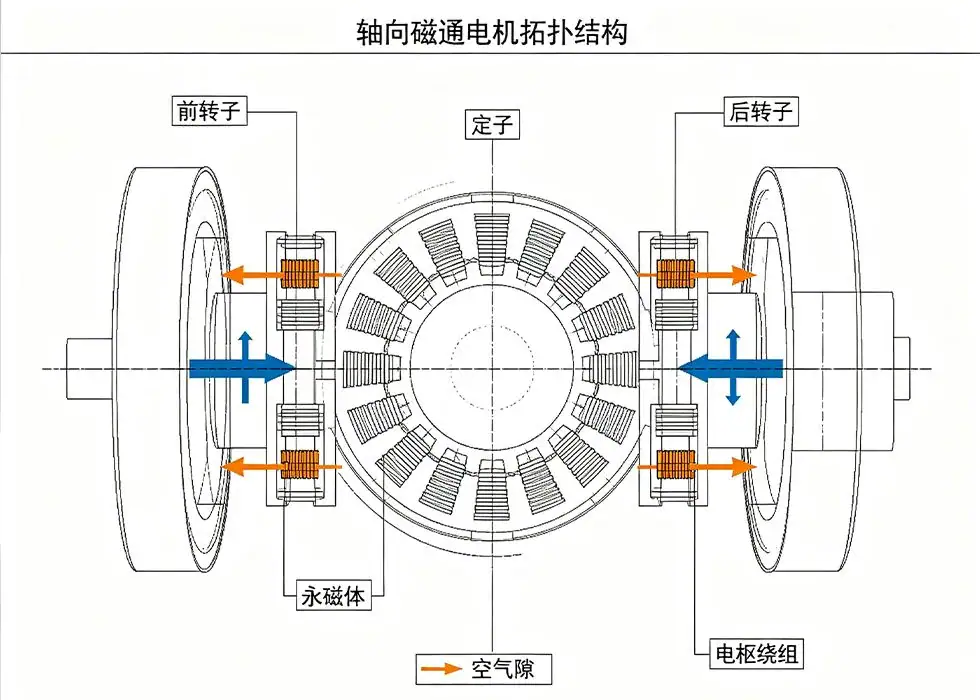
Axial-Flux Motor Topology
So in the past only cost-insensitive scenarios such as racing and aerospace were willing to experiment. But a turning point is emerging: with SiC devices maturing, soft magnetic composites advancing, and landmark M&A by leading companies, axial flux is moving from a "laboratory option" to a "mass-production candidate".
The shipping area outside the workshop was a hive of activity. After multiple rounds of full-machine commissioning, simulated mass-production validation, and factory quality inspection, a Jiuju DC motor automatic assembly line completed all factory-out procedures, was loaded onto trucks on schedule, and is about to depart for the customer's production base, helping the customer's project advance production implementation on plan.
Magnetic flux must pass axially through the disc-shaped stator; traditional lamination stacking fails, and grain-oriented silicon steel ring-milled with slots destroys grain orientation. The stator and windings become the hardest nut to crack in axial flux mass production.
Axial-flux motors offer significant performance advantages, but mass production requires overcoming three major challenges: air gap precision, thermal management, and cost consistency. This article analyzes the root causes and solutions for each of these challenges.
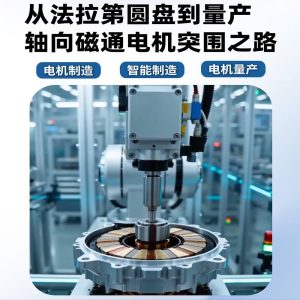
A fully developed automated motor assembly line can replace a large number of workers, with production capacity and consistency far exceeding those of traditional methods. This video explains the challenges of manual assembly and the key advantages of automated production lines.
 Jiuju Automation






 Spanish
 French
 German
 Hindi