To squeeze torque density to the limit, the air gap of an axial-flux motor is made very small, often at the millimetre level or less. The problem is that once the motor runs at full load, the internal temperature can jump from room temperature to over 100°C, while the aluminium housing, steel shaft, copper winding and NdFeB magnets each have very different expansion coefficients — their thermal expansion is simply not on the same wavelength.
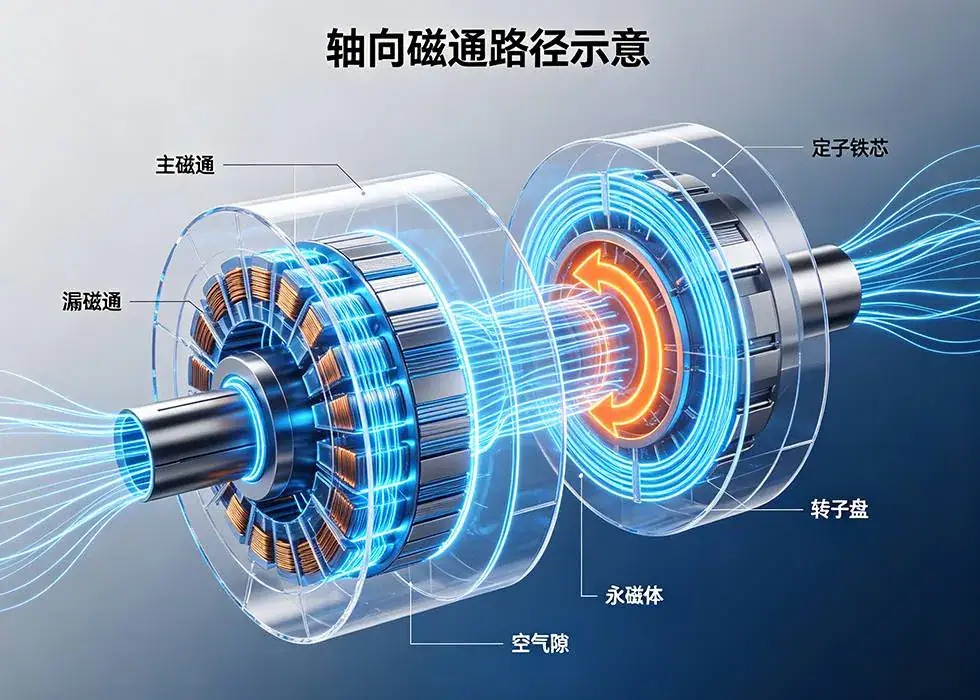
Schematic of Axial-Flux Path
Two problems then arise: the aluminium housing expands faster and may widen the axial gap; a larger gap raises magnetic reluctance and drops torque. Conversely, the rotor shaft elongates when heated, and if axial positioning has not left enough margin it will push directly against the stator and cause rubbing. These two risks, in opposite directions, must both be resolved within the same structure.
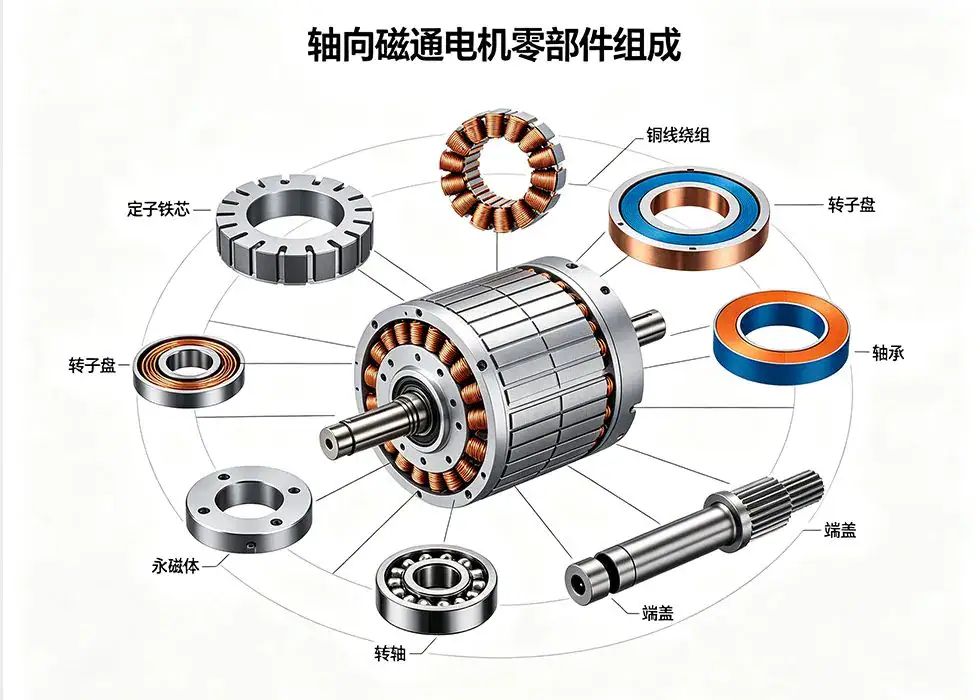
Component Composition of Axial-Flux Motor
This job cannot rely on experience alone; thermal-mechanical coupling analysis must be done at the design stage to match the expansion coefficients of each part's material, and then "thermal-compensation preload" and axial floating margins must be reserved. In plain terms, this is leaving headroom for thermal expansion and contraction so the air gap always stays within a safe window across hot-cold cycles.
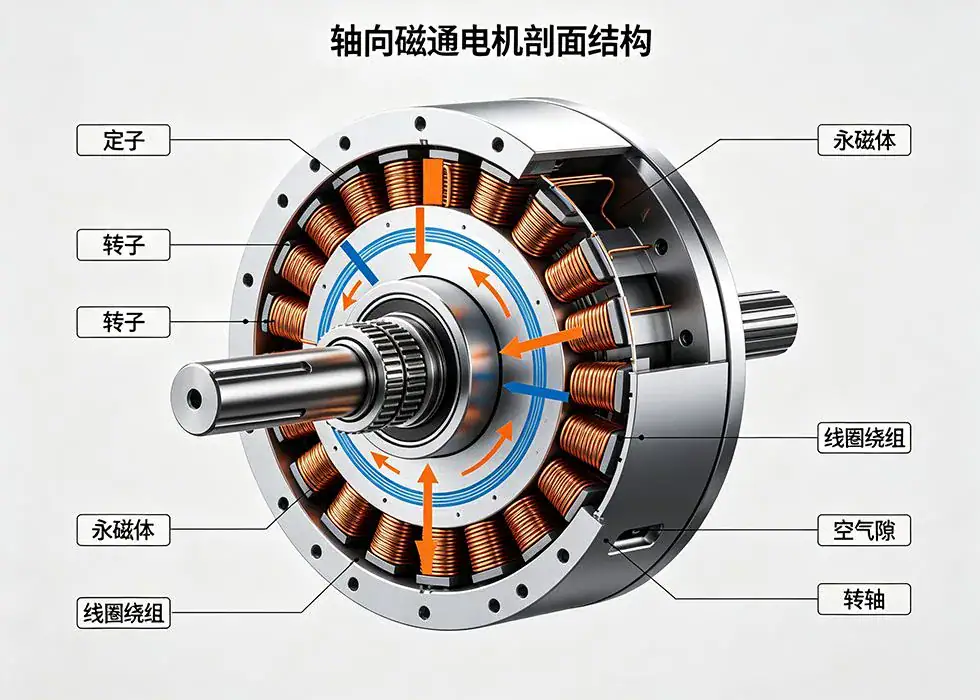
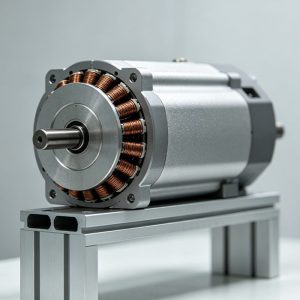
Axial-Flux Motor Cross-Section Structure
Such invisible details often determine whether a motor can be mass-produced stably. Many prototypes run smoothly in the lab, but as soon as they hit the production line and high-temperature full load, problems emerge, often rooted here. A motor with good material matching keeps a steady air gap through repeated hot-cold cycling; a poorly matched one sees the gap drift after a few high-low temperature cycles, performance decays quickly and service life is discounted. In related assembly work, Jiuju pays special attention to axial positioning and preload control — how much floating margin to leave and how much preload to apply must match the design parameters, otherwise a motor that runs well in the lab will stumble on temperature in mass production.
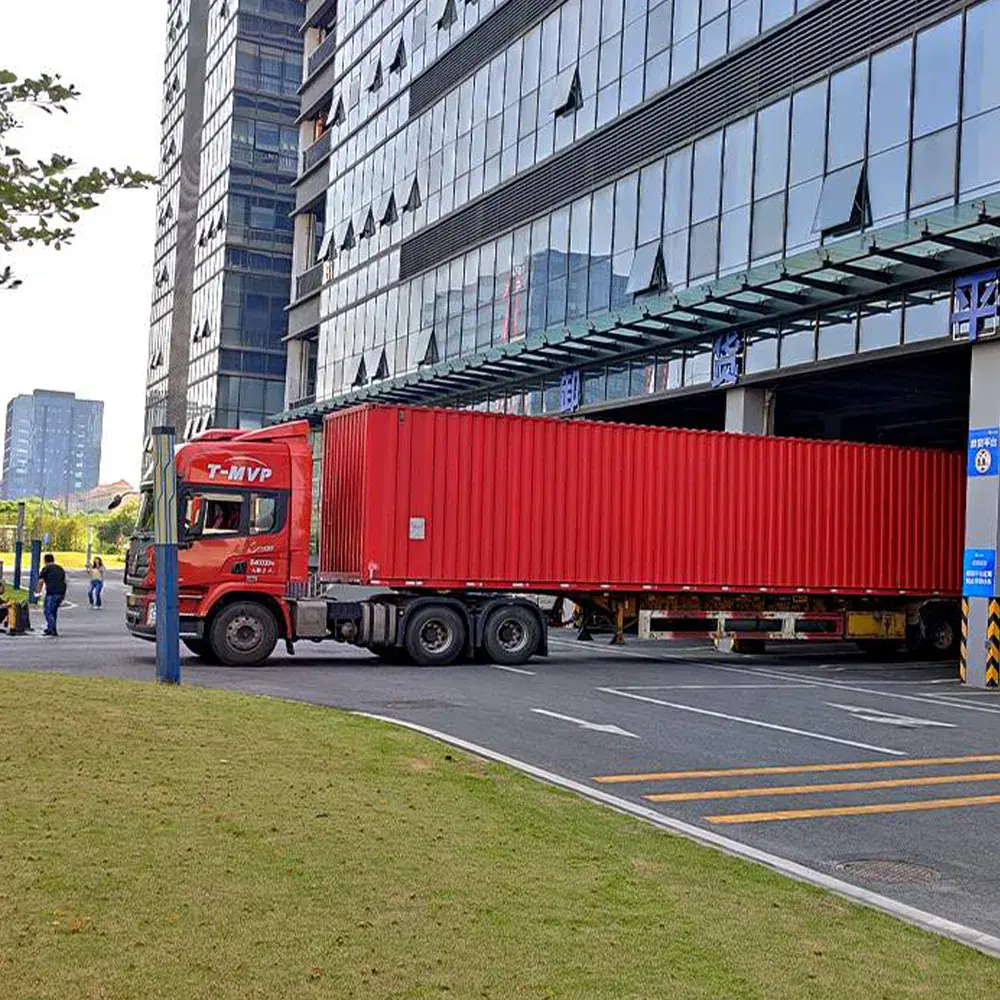
The shipping area outside the workshop was a hive of activity. After multiple rounds of full-machine commissioning, simulated mass-production validation, and factory quality inspection, a Jiuju DC motor automatic assembly line completed all factory-out procedures, was loaded onto trucks on schedule, and is about to depart for the customer's production base, helping the customer's project advance production implementation on plan.
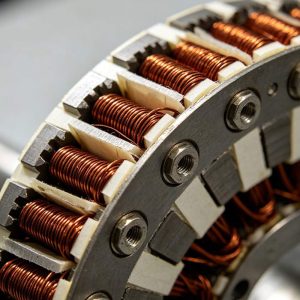
Magnetic flux must pass axially through the disc-shaped stator; traditional lamination stacking fails, and grain-oriented silicon steel ring-milled with slots destroys grain orientation. The stator and windings become the hardest nut to crack in axial flux mass production.
Jiuju Automation provides high-precision automatic assembly lines for axial flux motors, covering processes such as stator winding, magnet assembly, rotor balancing, and final product testing. These lines are suitable for applications in drones, new energy vehicles, and industrial drives. The company holds over 256 patents and is ISO 9001 certified...
While new energy vehicles and robots are stealing the spotlight, industrial applications such as elevator traction machines, fans, and water pumps are quietly adopting axial flux motors. Here, the focus isn’t on flashy specifications, but on electricity bills and reliability at scale.
 Jiuju Automation





 Spanish
 French
 German
 Hindi