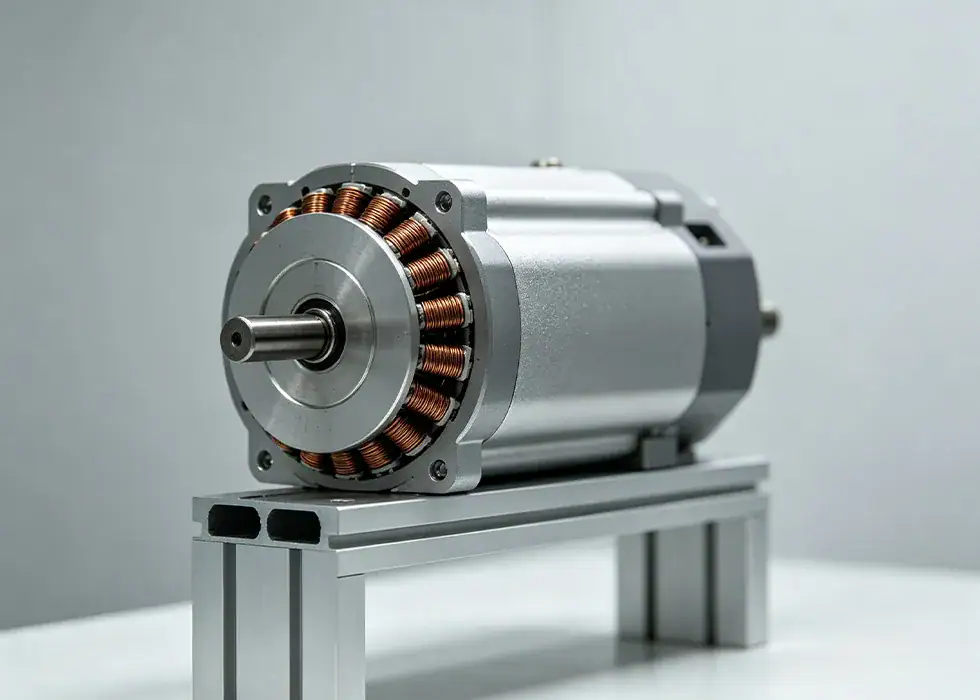
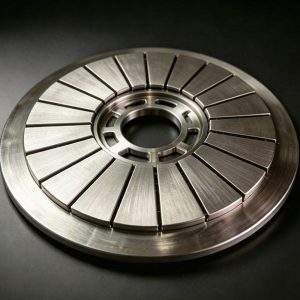
When manufacturing the stator for an axial flux motor, determining how much iron to use is a real challenge. There are generally three approaches in the industry: retaining the complete core (with both teeth and yoke); removing the back yoke and retaining only the tooth sections; or simply not using any iron at all—instead, placing the windings directly in the air gap or using multi-layer printed copper foil.
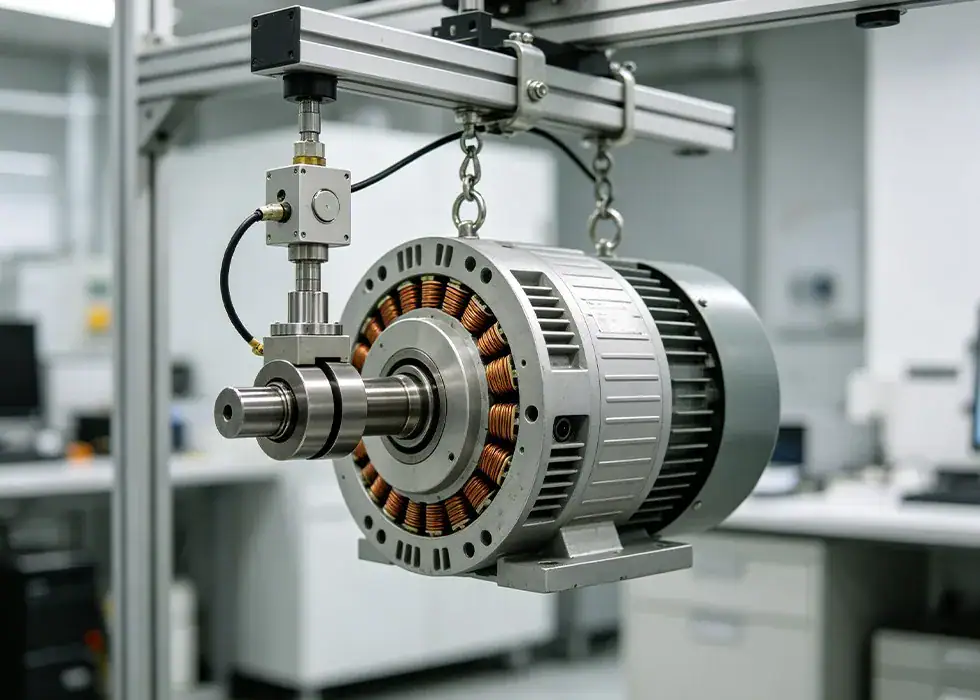
Jiuju Axial Flux Motor Automatic Assembly Line
Let’s start with the benefits of using iron. Iron provides a low-resistance path for magnetic flux; for the same type of magnet, the magnetic flux density in the air gap of a design with an iron core is significantly higher, allowing for some savings in the amount of magnet material used. Iron also has another role that is often overlooked:Hot Channel. The heat generated by the windings is transferred along the teeth to the iron core and then to the end faces, which allows for much more efficient heat transfer than relying solely on the resin.
The benefits of removing the iron are on the other side. With no iron losses, cogging torque virtually disappears, resulting in smoother operation and reduced weight. The trade-off is that the magnetic circuit loses a key component: excitation now relies entirely on the permanent magnets. This requires either thicker magnets or a smaller air gap—neither of which is inexpensive. At the same time, inductance decreases, making it harder to suppress current ripple, so the control side must be adjusted accordingly.
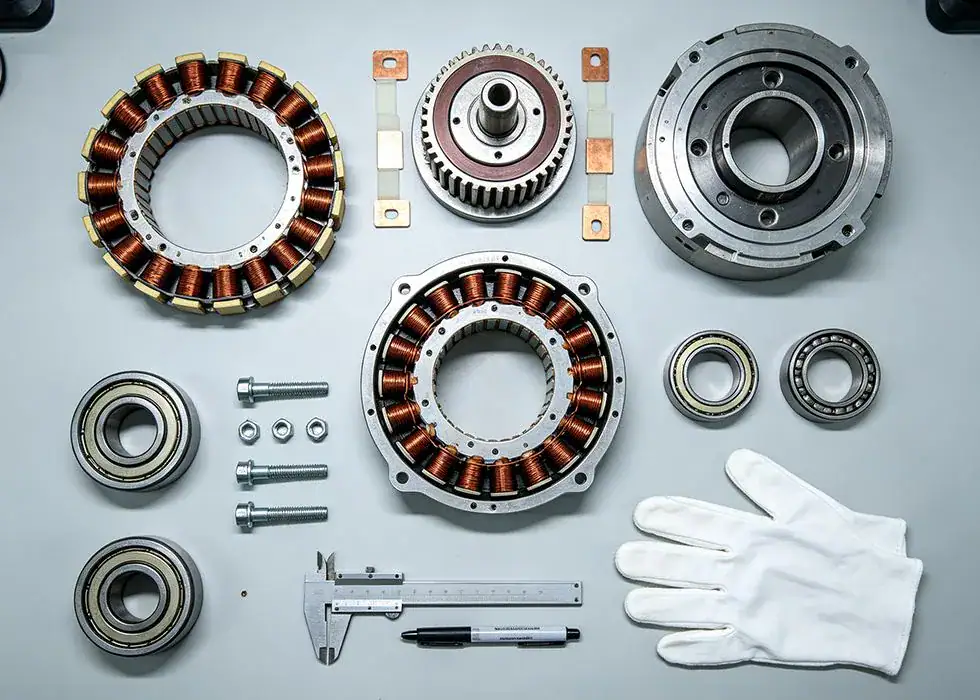
Jiuju Axial Flux Motor Assembly Drawing
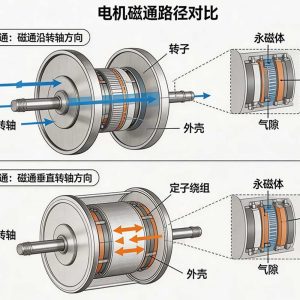
The middle approach—removing the back yoke while retaining the independent tooth segments—is the solution adopted by many mass-production designs. Since the magnetic fluxes of two adjacent rotor discs form mutual loops, the iron in the back yoke is no longer necessary, reducing both weight and iron losses while maintaining magnetic flux density. However, this shifts the challenge to assembly: each ring of independent tooth modules must be individually positioned, and any deviation in the position or height of each one is factored into the air gap calculation, ultimately manifesting as torque fluctuations and noise.
So the choice isn’t simply ”the less iron, the more advanced.” If you want smooth operation, a thin design, and high RPM, you can use less iron; but if you need to withstand sustained high torque, are cost-sensitive, or have poor heat dissipation conditions, you often still need to keep the iron.
Jiuju Axial Flux Motor Automatic Assembly Line
From a manufacturing perspective, these three approaches place entirely different demands on the production line: the full-core method tests strip forming and winding capabilities; the segmented-core method tests module positioning accuracy and fixture repeatability; and the core-less method is more akin to electronics manufacturing, testing interlayer alignment. A common challenge Jiuju faces when developing disc motor assembly solutions is that whenever the stator layout changes, the workstations must be rearranged, making it difficult to reuse the same set of fixtures.
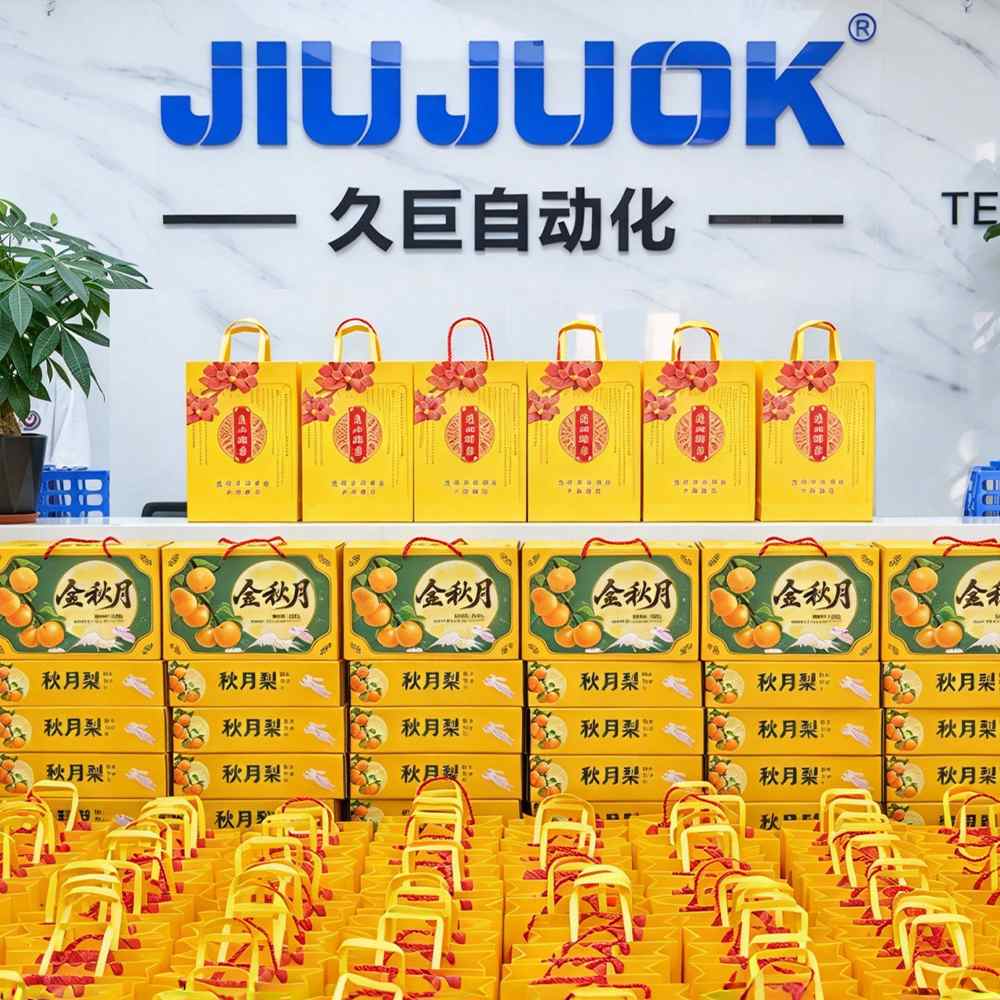
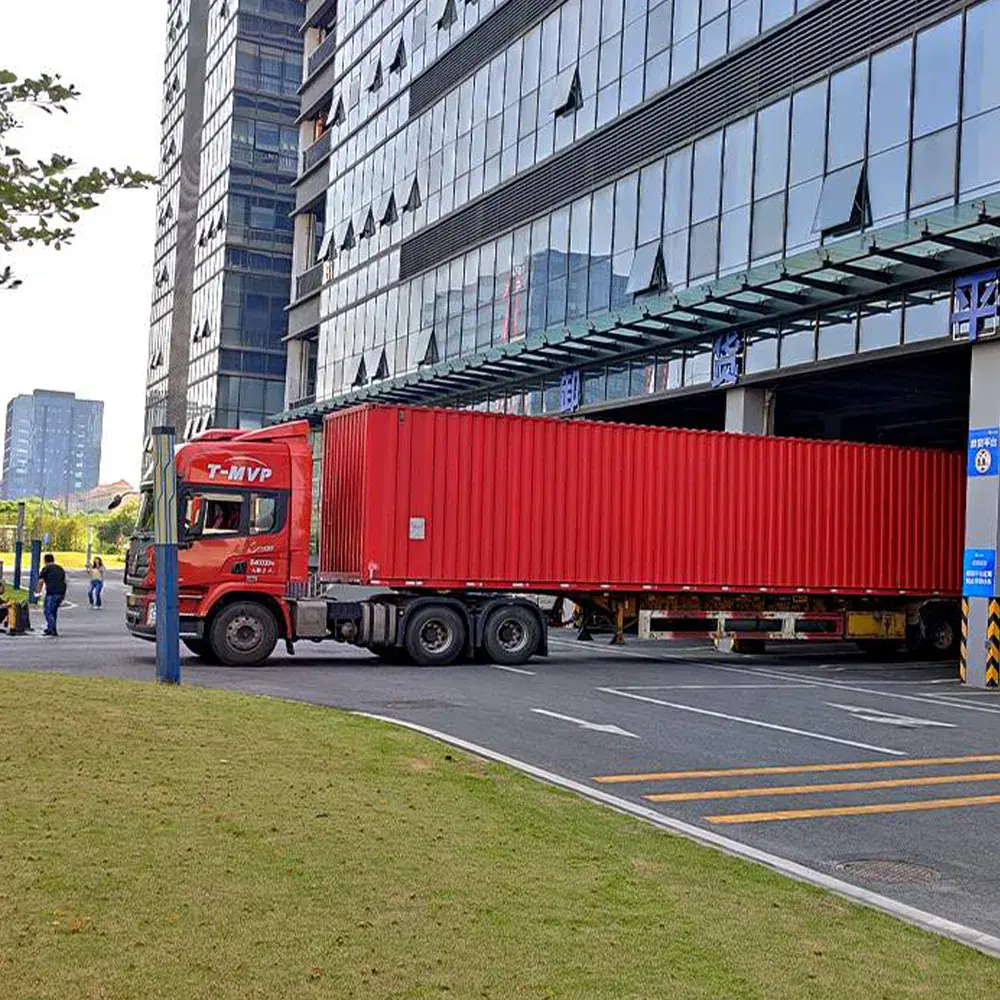
The shipping area outside the workshop was a hive of activity. After multiple rounds of full-machine commissioning, simulated mass-production validation, and factory quality inspection, a Jiuju DC motor automatic assembly line completed all factory-out procedures, was loaded onto trucks on schedule, and is about to depart for the customer's production base, helping the customer's project advance production implementation on plan.
Jiuju Automation provides high-precision automatic assembly lines for axial flux motors, covering processes such as stator winding, magnet assembly, rotor balancing, and final product testing. These lines are suitable for applications in drones, new energy vehicles, and industrial drives. The company holds over 256 patents and is ISO 9001 certified...
There is no universal architecture in engineering. Axial flux is more suitable for space-sensitive, lightweight-first scenarios; the radial motor remains the first choice for cost-sensitive, high-volume scenarios. The essence of selection is the degree of match with the application scenario.
High-performance NdFeB is indeed expensive, but an axial-flux motor's "cost per unit torque" does not lose out. It uses less magnet and copper material, and can even save the system a gearbox or battery capacity, making the overall BOM more cost-effective instead.
Jiuju Automation provides high-precision automatic assembly lines for axial flux motors, covering processes such as stator winding, magnet assembly, rotor balancing, and final product testing. These lines are suitable for applications in drones, new energy vehicles, and industrial drives. The company holds over 256 patents and is ISO 9001 certified...
 Jiuju Automation


 Spanish
 French
 German
 Hindi