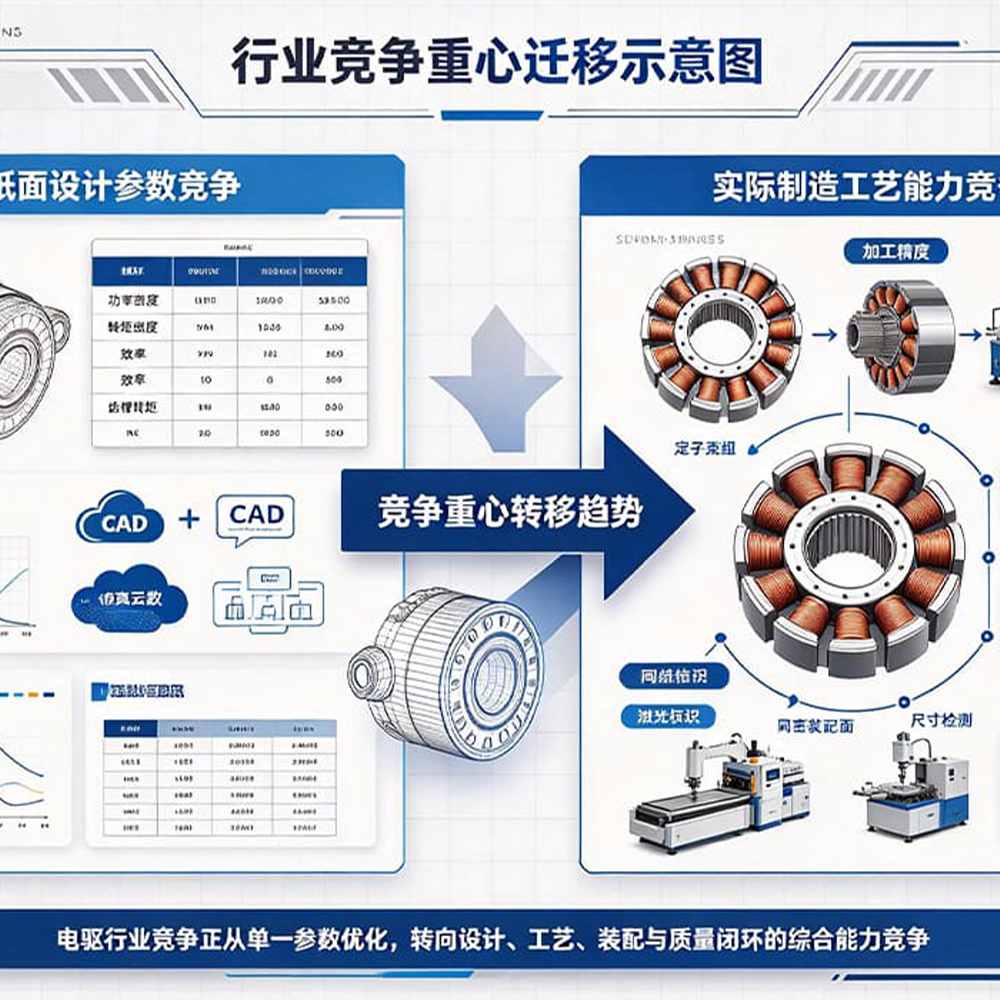
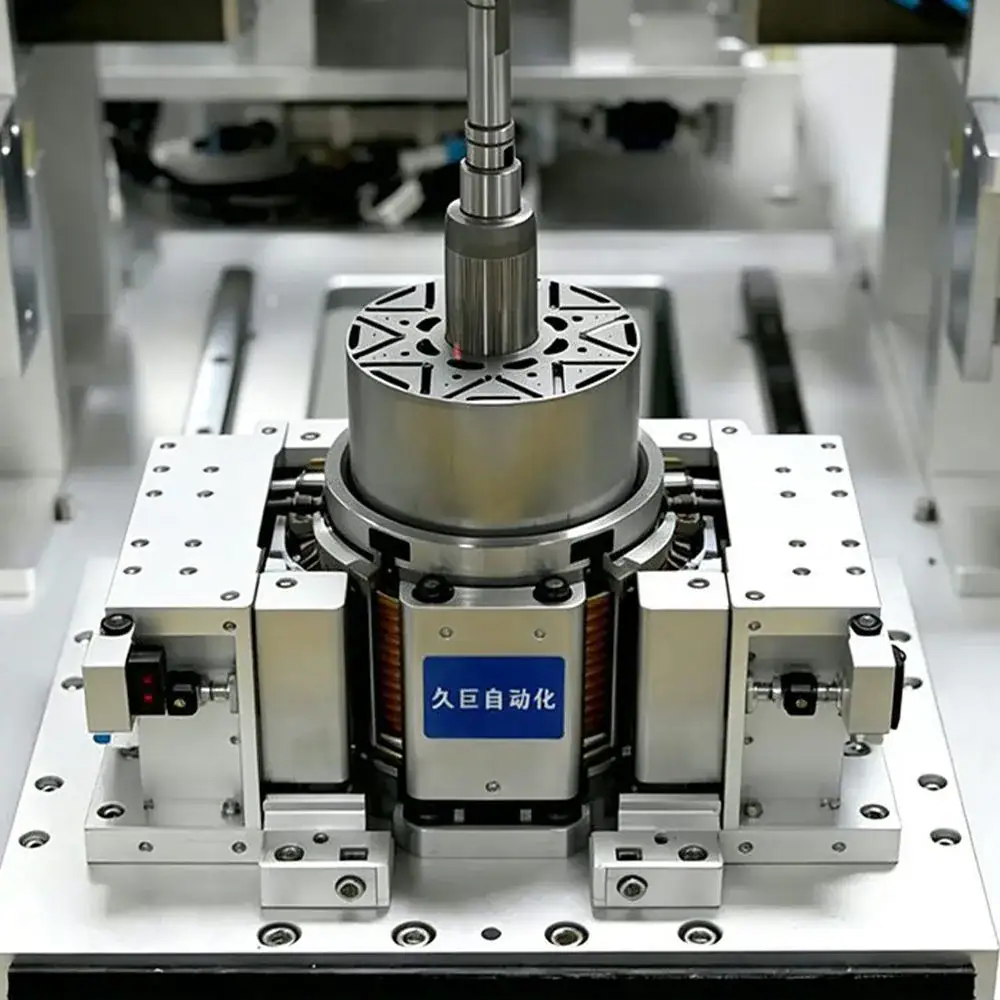
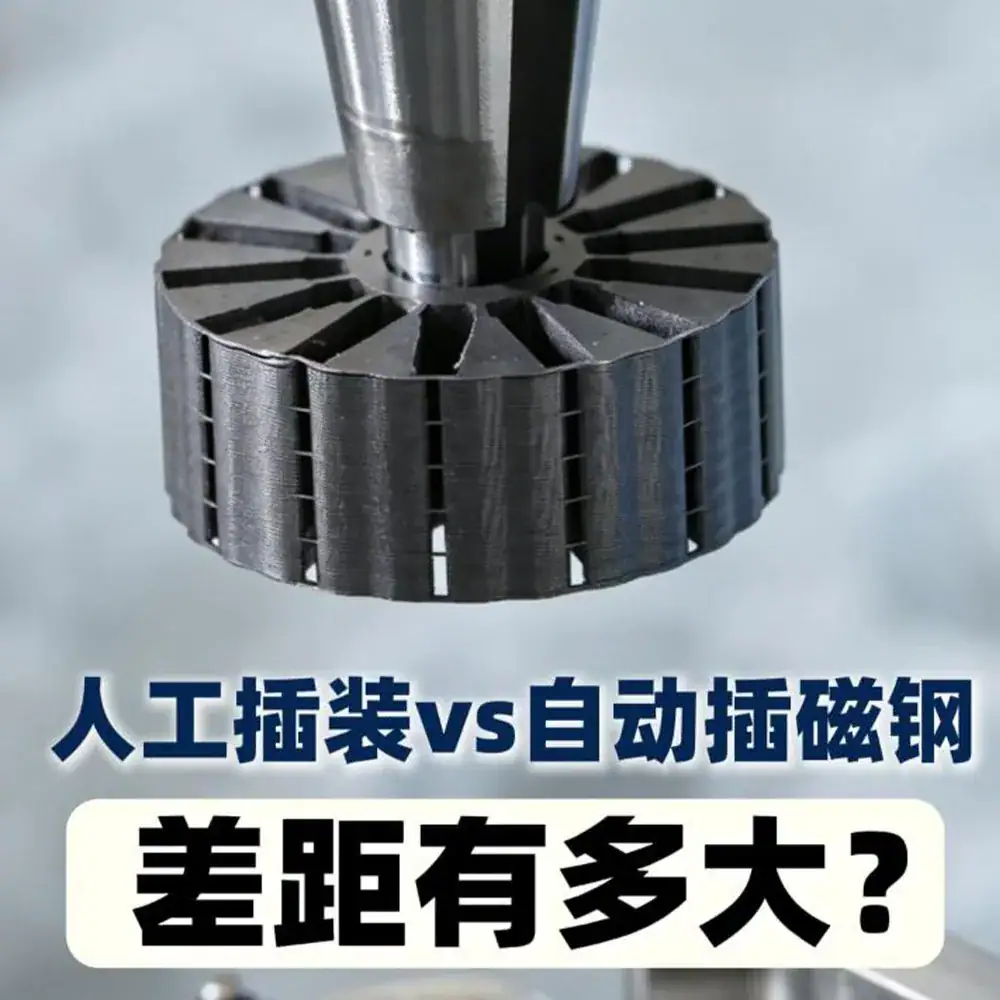
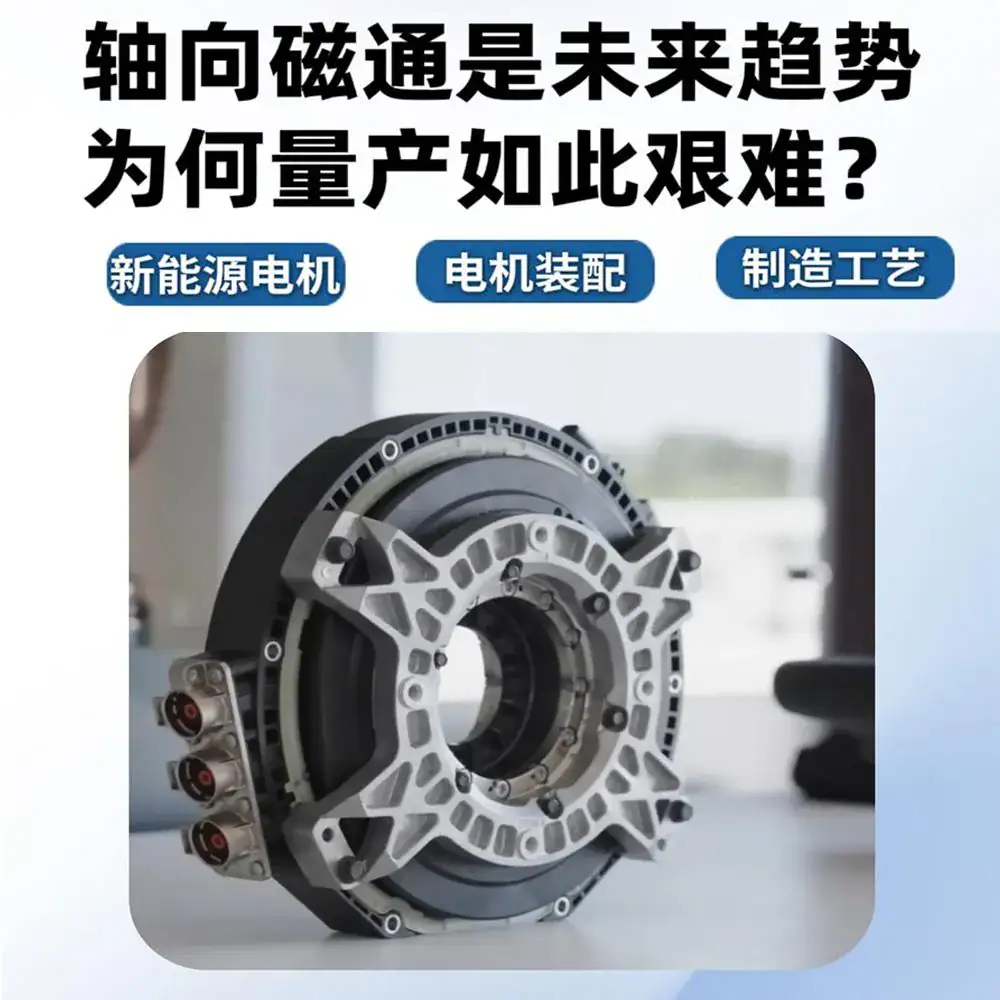
Axial flux motors, with their high power density and compact design, represent an important direction for the development of automotive drive motors; however, significant obstacles to large-scale mass production remain. The assembly of the stator and rotor generates significant axial magnetic attraction, making it difficult to uniformly control the ultra-thin air gap and leading to a high risk of stator sweeping. Magnet assembly is disrupted by strong magnetic repulsion, resulting in easy fragmentation and misalignment of magnetic poles, making it difficult to ensure assembly consistency. At the same time, the wide variety of product specifications imposes stringent requirements on equipment flexibility, positioning accuracy, and in-line inspection. Jiuju Automotive Motors’ automated production line employs servo force control, vision-based positioning, and magnetic suppression buffering processes, combined with in-line air gap and surface magnetic field inspection, to reliably overcome alignment challenges, achieve high-precision assembly, and facilitate the mass production of axial flux automotive motors.
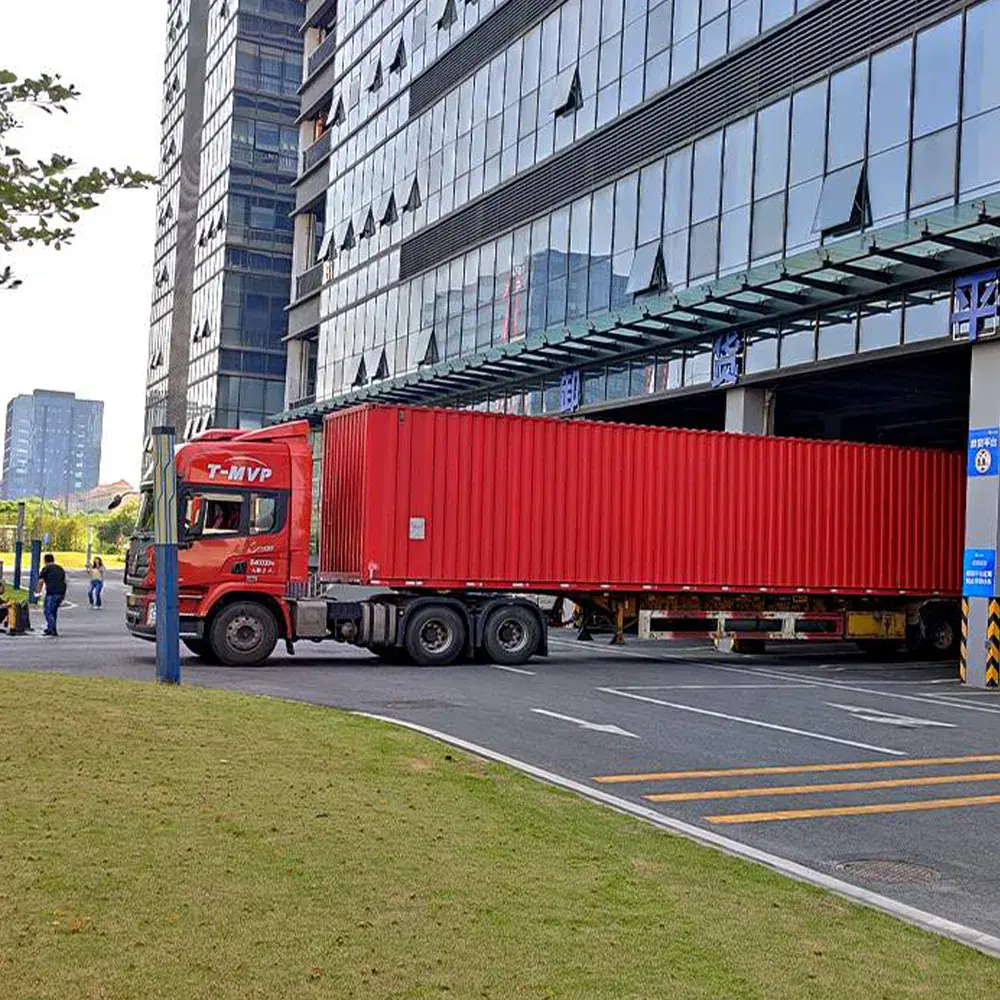
The shipping area outside the workshop was a hive of activity. After multiple rounds of full-machine commissioning, simulated mass-production validation, and factory quality inspection, a Jiuju DC motor automatic assembly line completed all factory-out procedures, was loaded onto trucks on schedule, and is about to depart for the customer's production base, helping the customer's project advance production implementation on plan.
A multi-pole architecture brings a high-frequency fundamental; at 10,000 rpm the fundamental frequency can reach several kHz. Traditional IGBTs suffer soaring switching losses and severe heating — it is the MHz-class switching capability of SiC MOSFETs that truly matches high-frequency multi-pole axial flux motors.
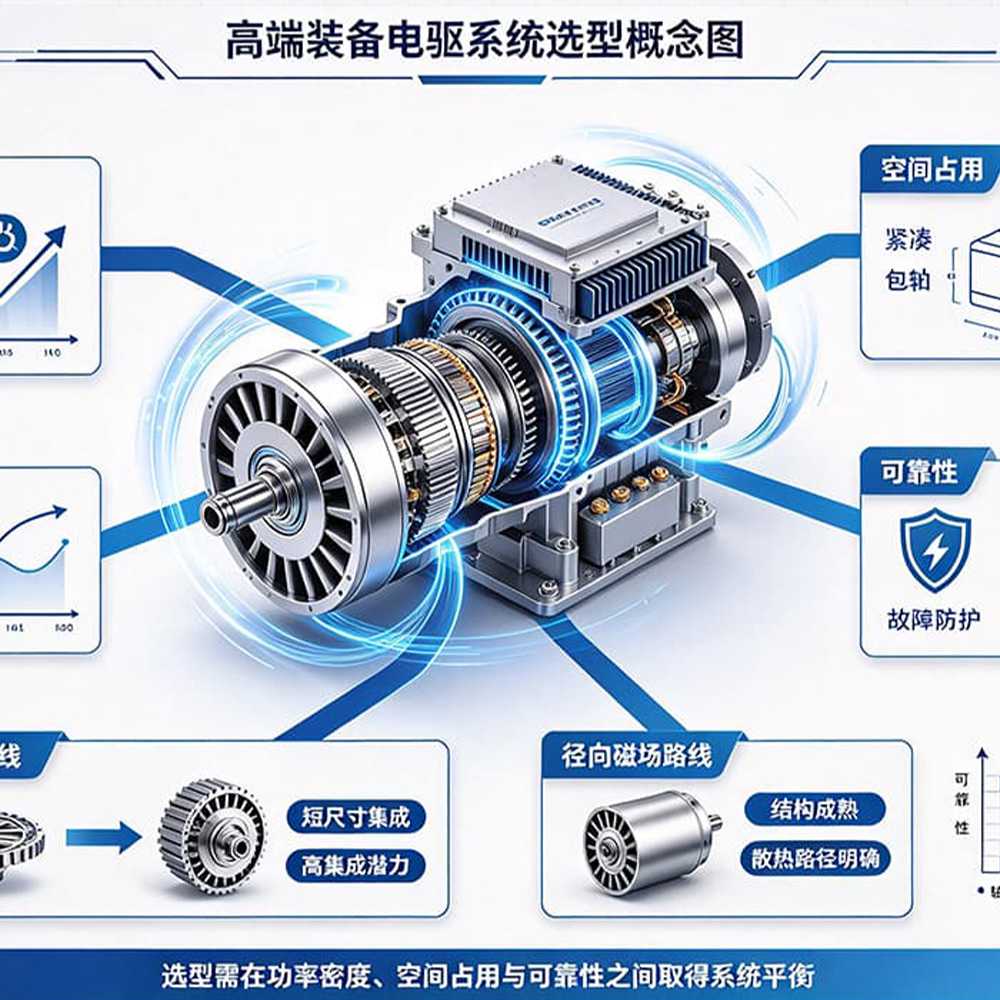
There is no universal architecture in engineering. Axial flux is more suitable for space-sensitive, lightweight-first scenarios; the radial motor remains the first choice for cost-sensitive, high-volume scenarios. The essence of selection is the degree of match with the application scenario.
Axial-flux motors offer significant performance advantages, but mass production requires overcoming three major challenges: air gap precision, thermal management, and cost consistency. This article analyzes the root causes and solutions for each of these challenges.
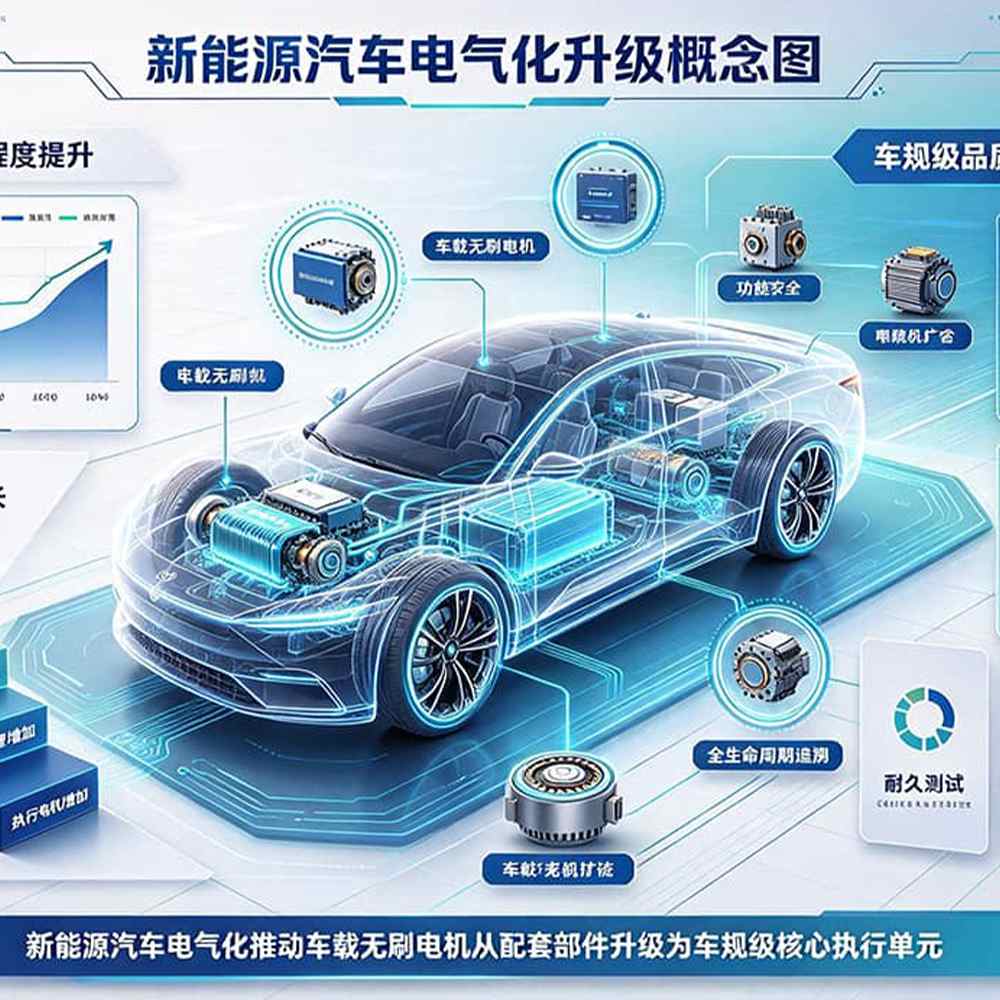
The "short and wide" disc structure is a constraint in a conventional chassis, yet becomes the key to leapfrog integration on a dedicated electrified platform. The same form, two fates - it all depends on the packaging approach.
 Jiuju Automation






 Spanish
 French
 German
 Hindi