To squeeze greater torque from a limited volume, axial-flux motors are often built with a multi-pole architecture — sixteen poles or twenty poles is not unusual. Once the pole count rises, a problem arises: when the motor runs at tens of thousands of rpm, the fundamental frequency of the AC driving it can reach several thousand hertz.
Torque Principle of Multi-Pole Structure
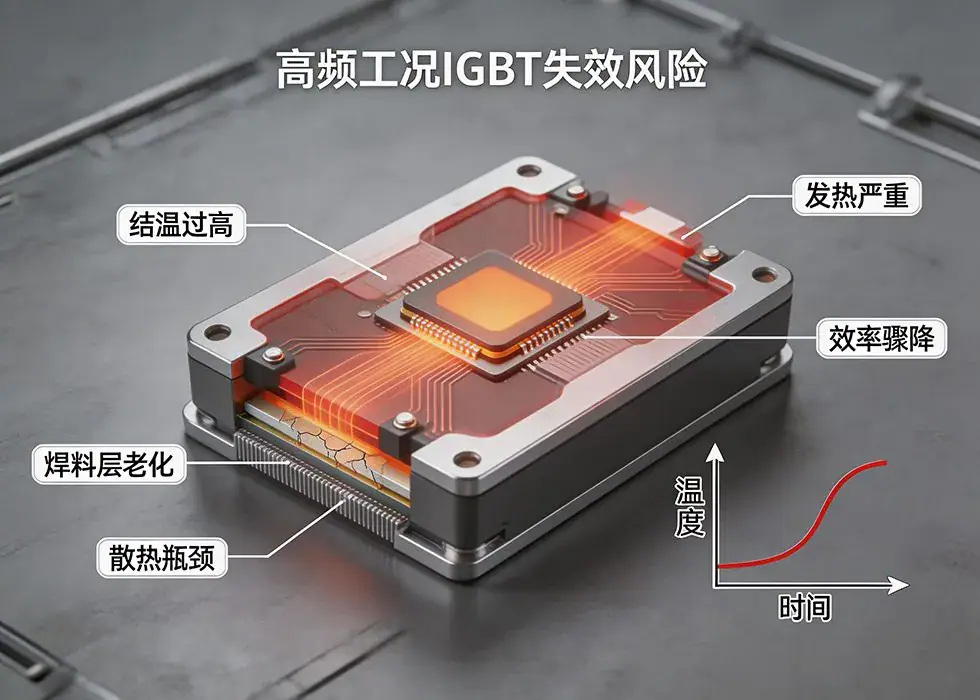
A high fundamental frequency means the inverter must switch on and off extremely fast. Conventional IGBTs see switching losses rise sharply at such high switching frequencies, heating severely and dragging efficiency down — they simply cannot cope. This is also why many axial-flux motor solutions list SiC inverters as standard from the outset.
IGBT Failure Risk under High-Frequency Working Conditions
The advantage of SiC MOSFETs lies exactly here: switching speeds can reach the megahertz level with extremely low switching losses, naturally suiting the drive of high-frequency multi-pole motors. It can be said that the maturity of SiC devices is itself a key piece of the puzzle for axial flux moving toward mass production. From another angle, it is precisely the high-frequency multi-pole demand of axial flux that has in turn driven the rapid adoption of SiC devices in the automotive-grade market — the two reinforce each other.
Evolution of Electric Drive Competition Trends
Conversely, without SiC the multi-pole advantage of axial flux cannot be realized, and the high fundamental frequency becomes a burden instead. Forcing IGBTs to drive it means either heat or lost efficiency — not worth it. So when looking at a solution, it is often not a matter of judging the motor alone but of choosing the motor and the inverter as a pair whose performance must match. In observing how such solutions land, Jiuju has also noticed a trend: motors and controllers are no longer developed separately; many customers put high-frequency multi-pole motors and SiC inverters together for system matching. Competition in electric drives is shifting from single-point performance to overall coordination of "motor + controller".
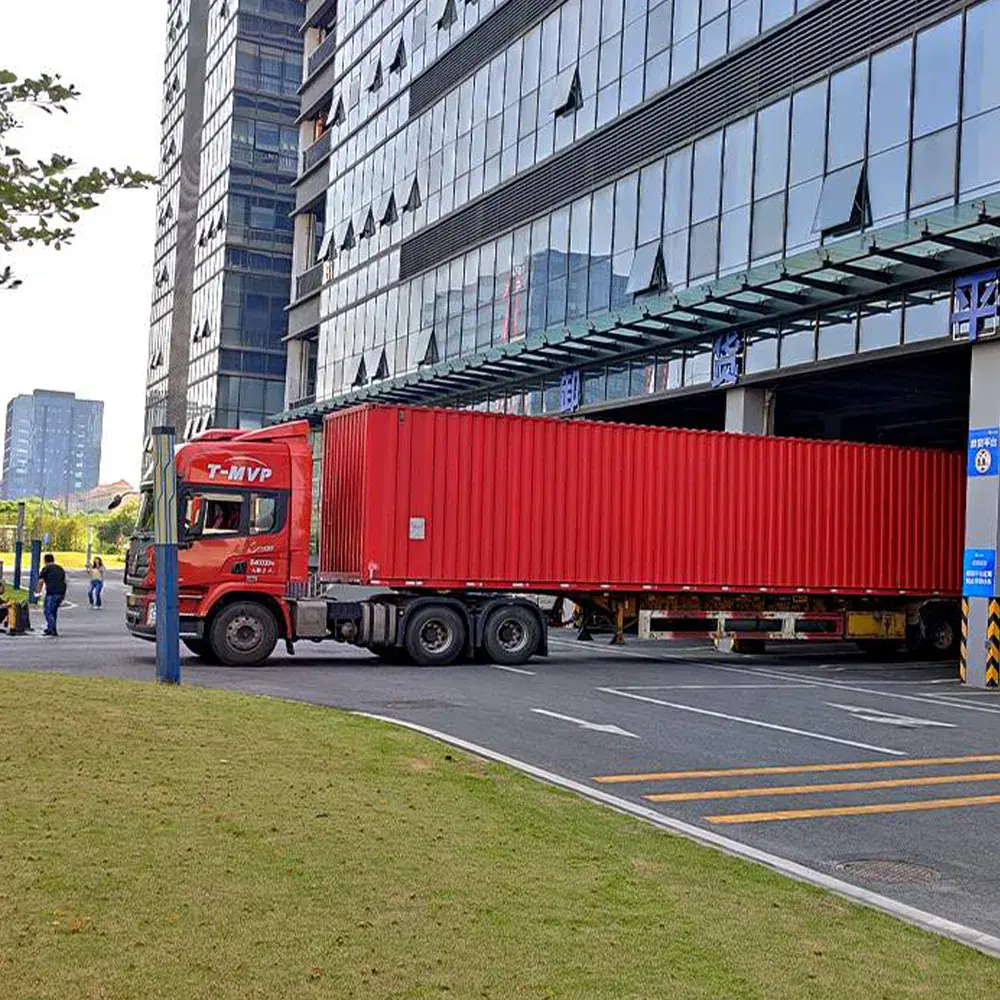
The shipping area outside the workshop was a hive of activity. After multiple rounds of full-machine commissioning, simulated mass-production validation, and factory quality inspection, a Jiuju DC motor automatic assembly line completed all factory-out procedures, was loaded onto trucks on schedule, and is about to depart for the customer's production base, helping the customer's project advance production implementation on plan.
While new energy vehicles and robots are stealing the spotlight, industrial applications such as elevator traction machines, fans, and water pumps are quietly adopting axial flux motors. Here, the focus isn’t on flashy specifications, but on electricity bills and reliability at scale.
Jiuju Automation provides high-precision automatic assembly lines for axial flux motors, covering processes such as stator winding, magnet assembly, rotor balancing, and final product testing. These lines are suitable for applications in drones, new energy vehicles, and industrial drives. The company holds over 256 patents and is ISO 9001 certified...
Robotic joints require high torque, compact size, and light weight; axial flux motors offer unique advantages in scenarios with limited axial space. This article analyzes their suitability and the challenges involved.
Axial-flux motors offer significant performance advantages, but mass production requires overcoming three major challenges: air gap precision, thermal management, and cost consistency. This article analyzes the root causes and solutions for each of these challenges.
 Jiuju Automation







 Spanish
 French
 German
 Hindi