By the end, many want to ask one question: does the axial-flux motor comprehensively beat the radial motor? The answer is no. Engineering has no universal architecture, only whether a scenario fits. The radial motor's position will not be easily shaken. In households' A-segment cars, ordinary fans and home appliances — fields insensitive to space but extremely cost-sensitive with huge output — the mature, cheap and easy-to-build radial motor remains the optimal solution. At volumes running into millions of units, whoever can get the cost lowest and the line most stable wins; no one switches routes for a pain point that does not exist. In other words, the radial motor wins by having already grown together with the industrial system — a depth of accumulation that cannot be overturned in a few years.
Motor Flux Path Comparison
The value of axial flux lies where "every gram counts". In low-altitude aircraft, robot joints, high-performance sports cars, hub drives and commercial-vehicle hybrid upgrades, saving a little weight means more range and saving a centimetre of space means more layout freedom; the gains from high torque density and compact packaging are enough to cover its manufacturing premium.
Multi-Scenario Applications of Axial-Flux Motors
So selection is not about choosing "who is more advanced" but "who is more suitable". Putting the right motor into the right scenario matters far more than chasing a "more advanced" label. True maturity in industry is knowing when to use something and when not to. Between a technology being hyped and being put to good use lies exactly this judgment. When dealing with customers, Jiuju most often says the same thing: first be clear about what the application needs, then discuss which motor automated assembly line to use. Technology has no high or low; only matching has value — that is the line most worth holding in selection.
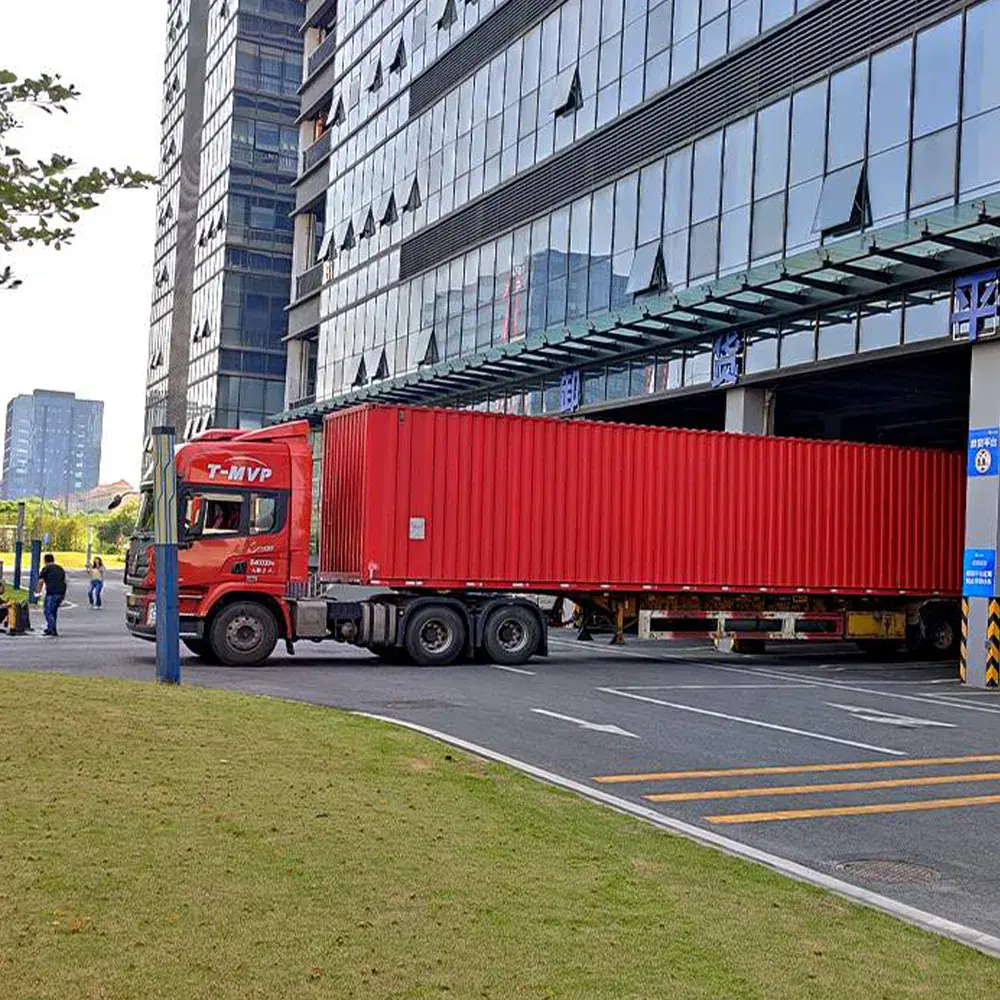
The shipping area outside the workshop was a hive of activity. After multiple rounds of full-machine commissioning, simulated mass-production validation, and factory quality inspection, a Jiuju DC motor automatic assembly line completed all factory-out procedures, was loaded onto trucks on schedule, and is about to depart for the customer's production base, helping the customer's project advance production implementation on plan.
A multi-pole architecture brings a high-frequency fundamental; at 10,000 rpm the fundamental frequency can reach several kHz. Traditional IGBTs suffer soaring switching losses and severe heating — it is the MHz-class switching capability of SiC MOSFETs that truly matches high-frequency multi-pole axial flux motors.
Jiuju Automation provides high-precision automatic assembly lines for axial flux motors, covering processes such as stator winding, magnet assembly, rotor balancing, and final product testing. These lines are suitable for applications in drones, new energy vehicles, and industrial drives. The company holds over 256 patents and is ISO 9001 certified...
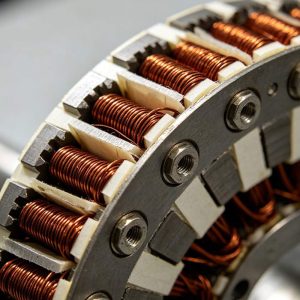
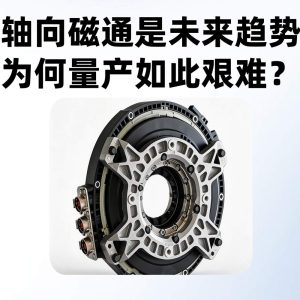
Magnetic flux must pass axially through the disc-shaped stator; traditional lamination stacking fails, and grain-oriented silicon steel ring-milled with slots destroys grain orientation. The stator and windings become the hardest nut to crack in axial flux mass production.
Jiuju Automation provides high-precision automatic assembly lines for axial flux motors, covering processes such as stator winding, magnet assembly, rotor balancing, and final product testing. These lines are suitable for applications in drones, new energy vehicles, and industrial drives. The company holds over 256 patents and is ISO 9001 certified...
 Jiuju Automation





 Spanish
 French
 German
 Hindi