Q: What is the key difference between needle winding and fork winding?
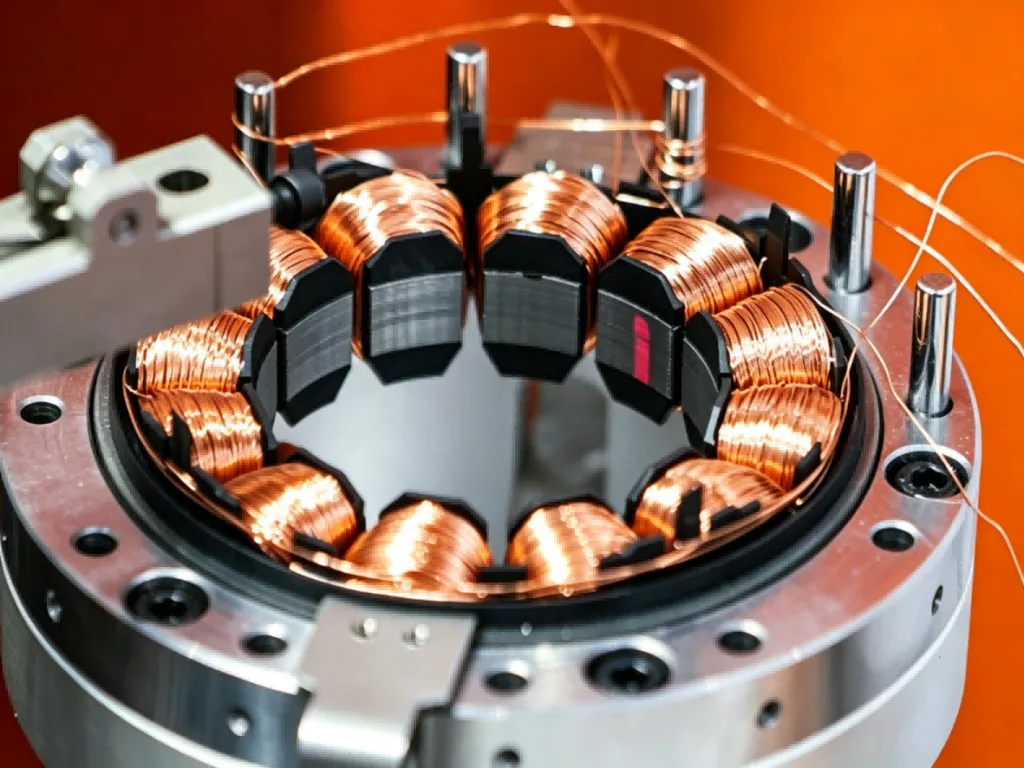
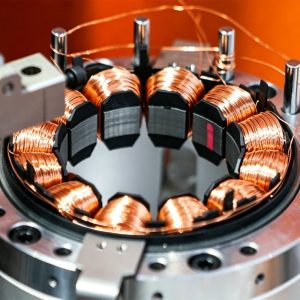
Needle-WindingNeedle winding involves using a hollow needle to guide enameled wire through the cup opening, arranging it in successive layers; this method is suitable for products with wire diameters of 0.05–0.3 mm, high turn counts, and small cup diameters; Flying fork winding, on the other hand, involves the flying fork rotating the wire cup, resulting in a faster wire speed. This method is suitable for hollow cups with slightly larger outer diameters and wider slots. We conducted a comparison: for the same φ22 mm hollow cup with 36 turns, the needle winding cycle time was approximately 12 seconds, while the flying fork method could reduce it to 7 seconds; however, the end height with the flying fork method was about 0.5 mm higher.
Precision Winding
Q: Which method uses less copper wire and results in lower copper losses?
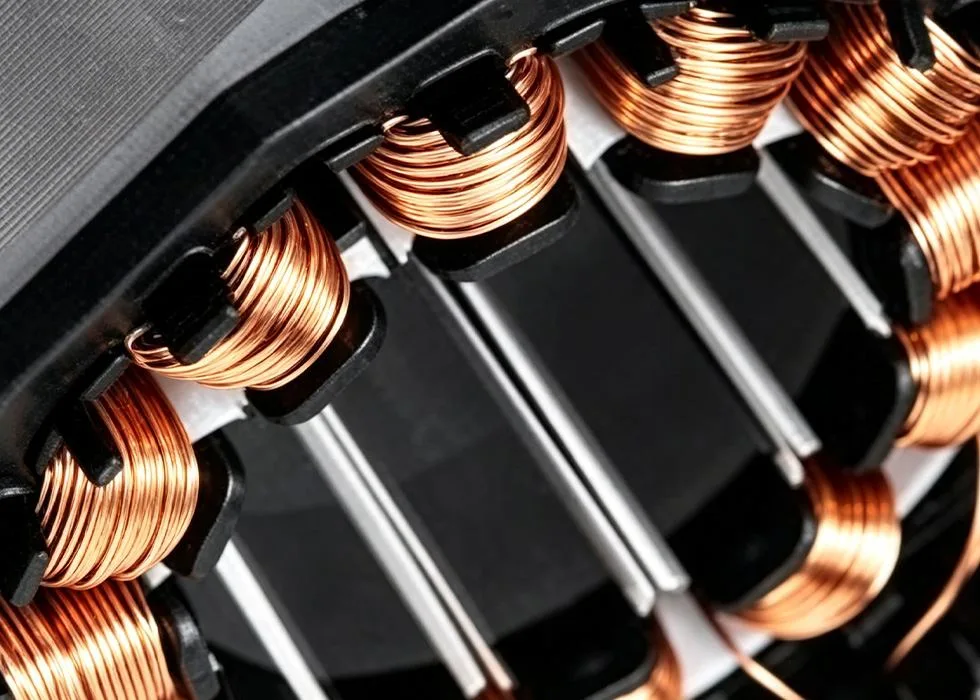
Jiuju Automation provides CNC motor winding machines and stator winding production lines suitable for brushless, servo, series-wound, and transformer coils, ensuring full slot fill and consistent turn-to-turn consistency.
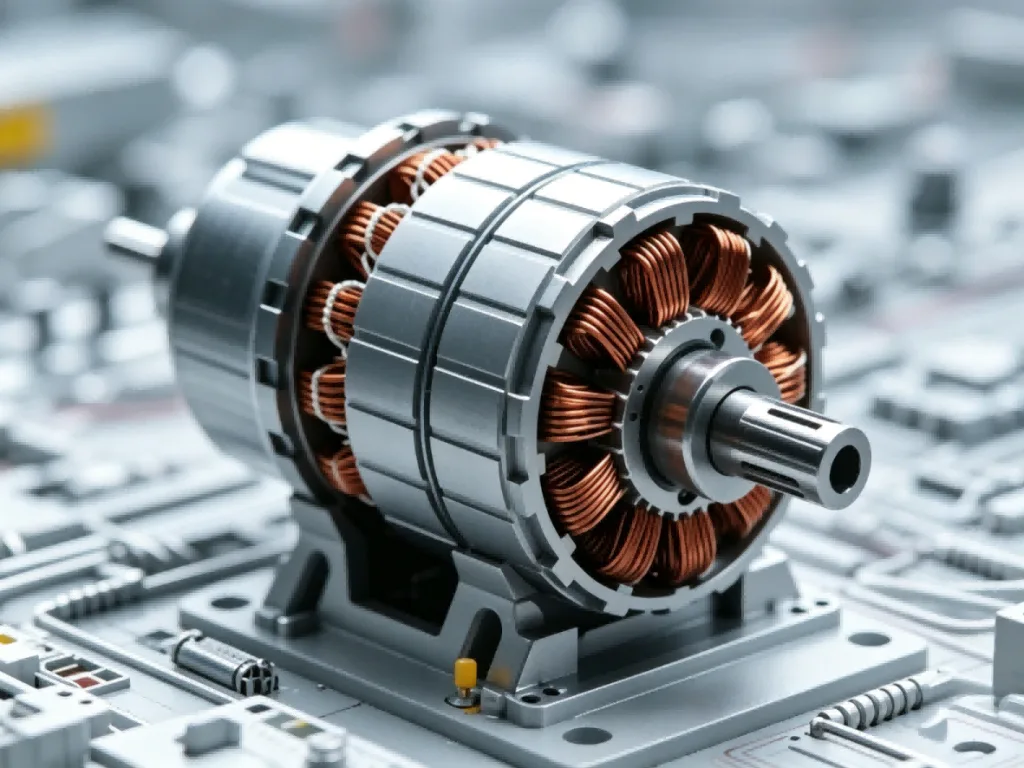
Jiuju Automation provides automated assembly solutions for drive motors in new energy vehicles, integrating key processes such as winding, magnet insertion, magnetization, and testing to ensure high efficiency, high consistency, and full traceability throughout the entire process.
Jiuju Automation provides CNC motor winding machines and stator winding production lines suitable for brushless, servo, series-wound, and transformer coils, ensuring full slot fill and consistent turn-to-turn consistency.
 Jiuju Automation



 Español
 Français
 Deutsch (Sie)
 हिन्दी