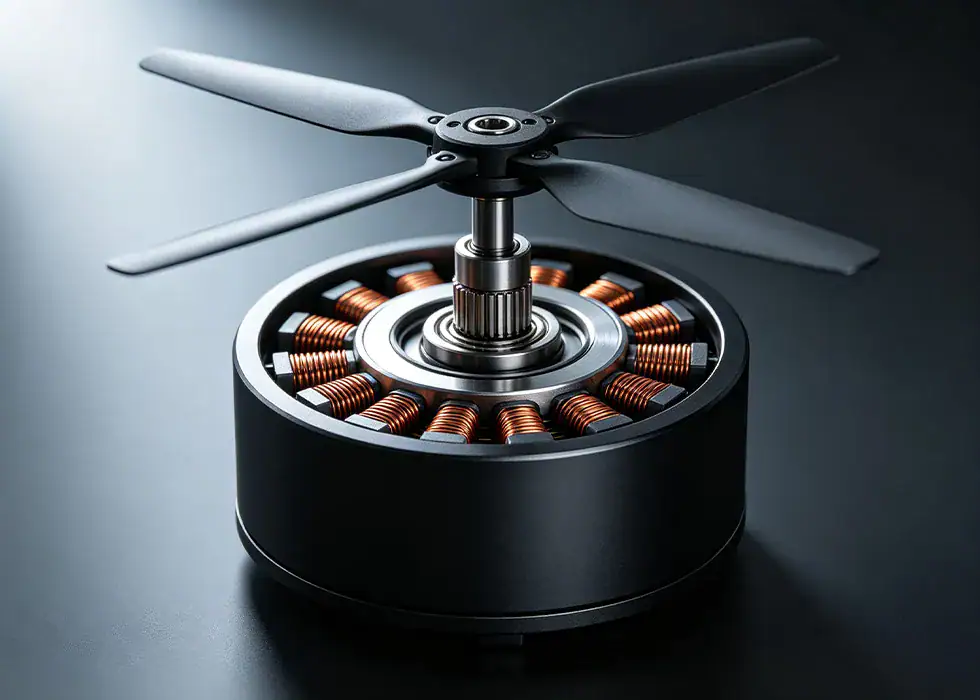
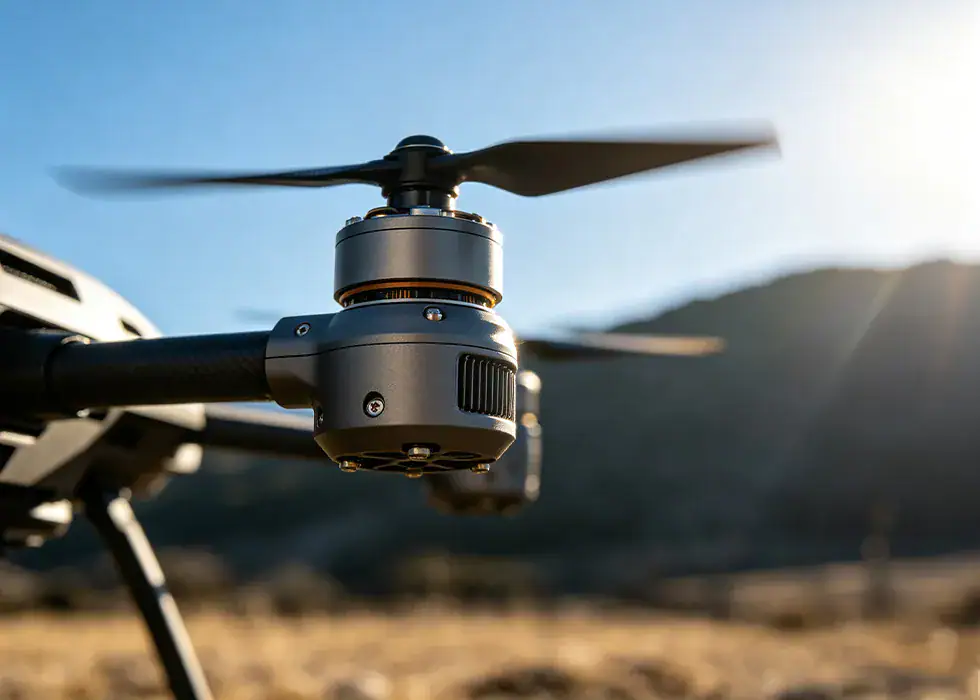
As the low-altitude economy evolves toward large-scale, commercial operations, drone endurance, payload capacity, and flight efficiency have become core metrics for improving performance. Breakthroughs in the thrust-to-weight ratio of propulsion systems are key to resolving the challenge of “not being able to have both payload capacity and endurance.” Traditional radial flux motors, constrained by their cylindrical structure, struggle to balance power density and weight, and have gradually become the primary bottleneck in performance upgrades for industrial-grade drones.
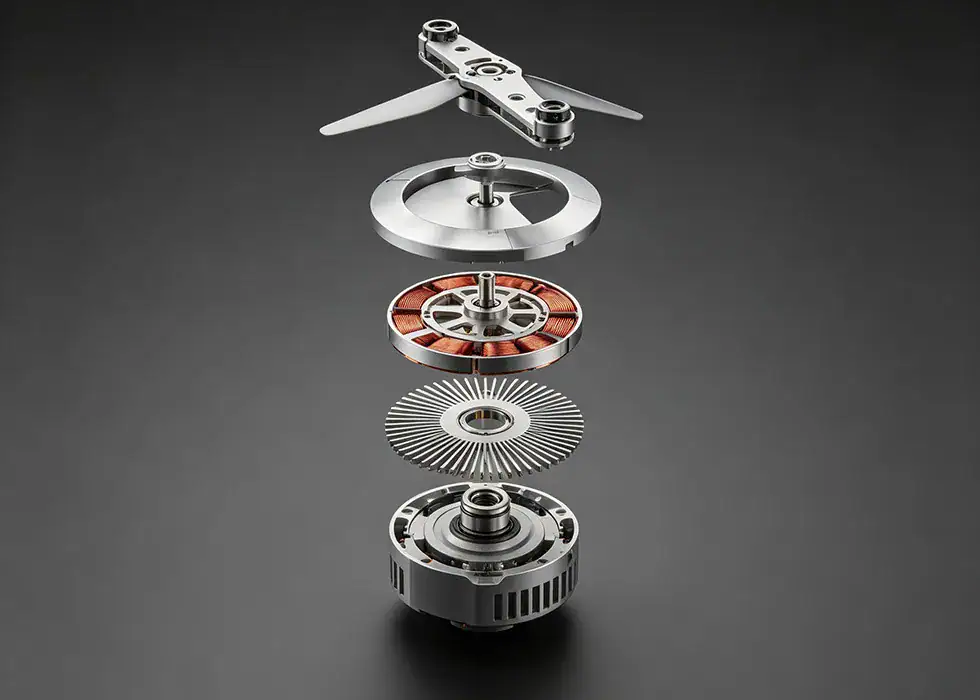
Based on the structural characteristics of axial flux motors, Jiuju has developed an automated assembly solution tailored for unmanned aerial vehicle (UAV) propulsion systems. This solution covers core processes such as precision magnet mounting, stator-rotor force-position co-assembly, and in-line performance testing. By utilizing vision-based positioning and servo force control technologies, it ensures assembly precision and ensuring consistent mass production quality and providing the necessary process and equipment support for improving quality and expanding capacity in the low-altitude economy’s power systems sector. As low-altitude application scenarios continue to expand, the coordinated upgrading of power technologies and manufacturing processes will become a crucial foundation for the industry’s high-quality development.
The effective magnetic force acts at the outer-diameter edge, so at the same speed the magnets endure far higher centrifugal stress than in a slender radial motor. Under high-speed conditions, how the magnets are firmly fixed to the rotor disc is a key point of structural design.
A multi-pole architecture brings a high-frequency fundamental; at 10,000 rpm the fundamental frequency can reach several kHz. Traditional IGBTs suffer soaring switching losses and severe heating — it is the MHz-class switching capability of SiC MOSFETs that truly matches high-frequency multi-pole axial flux motors.
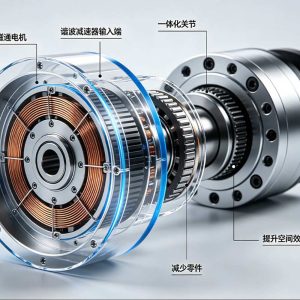
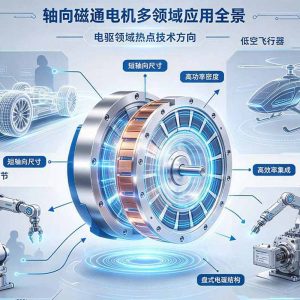
The "short and wide" disc structure is a constraint in a conventional chassis, yet becomes the key to leapfrog integration on a dedicated electrified platform. The same form, two fates - it all depends on the packaging approach.
 Jiuju Automation




 Español
 Français
 Deutsch (Sie)
 हिन्दी