That is why axial flux motors are referred to as ”old technology, new manufacturing processes”: while the underlying principle remains unchanged, what has truly brought them back into the industrial spotlight is the demand for high power density and flat layouts driven by the new energy vehicle sector, robotics, and the low-altitude economy, coupled with an overall improvement in supporting manufacturing processes. Without high-precision assembly capabilities and consistent process control, even the most impressive design parameters would make it difficult to achieve stable mass production.
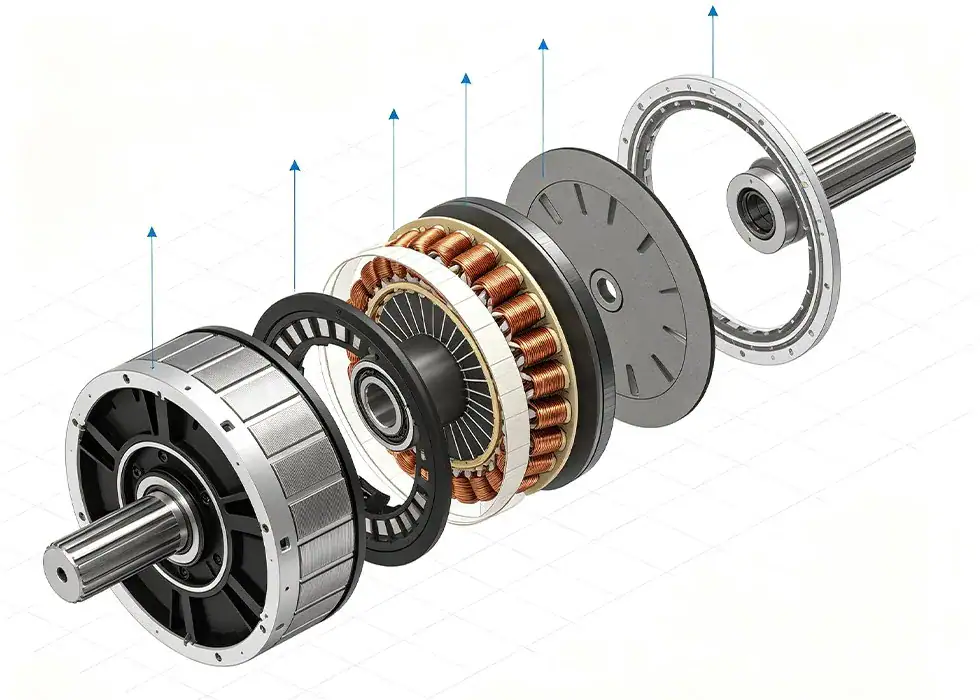
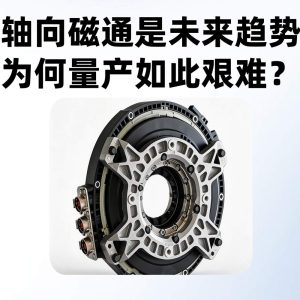
Jiuju Axial Flux Exploded View
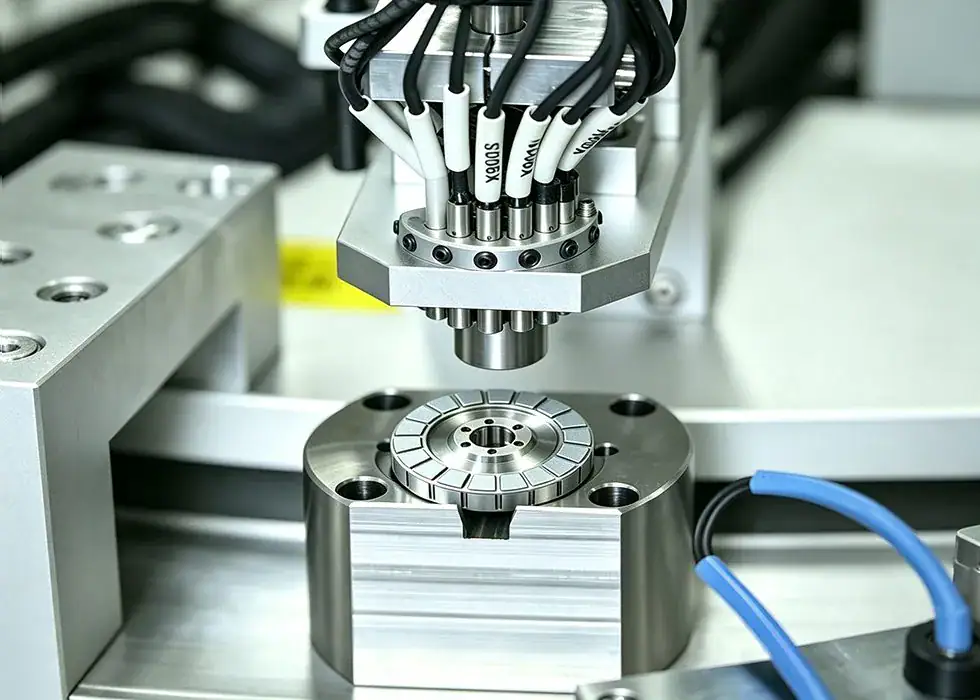
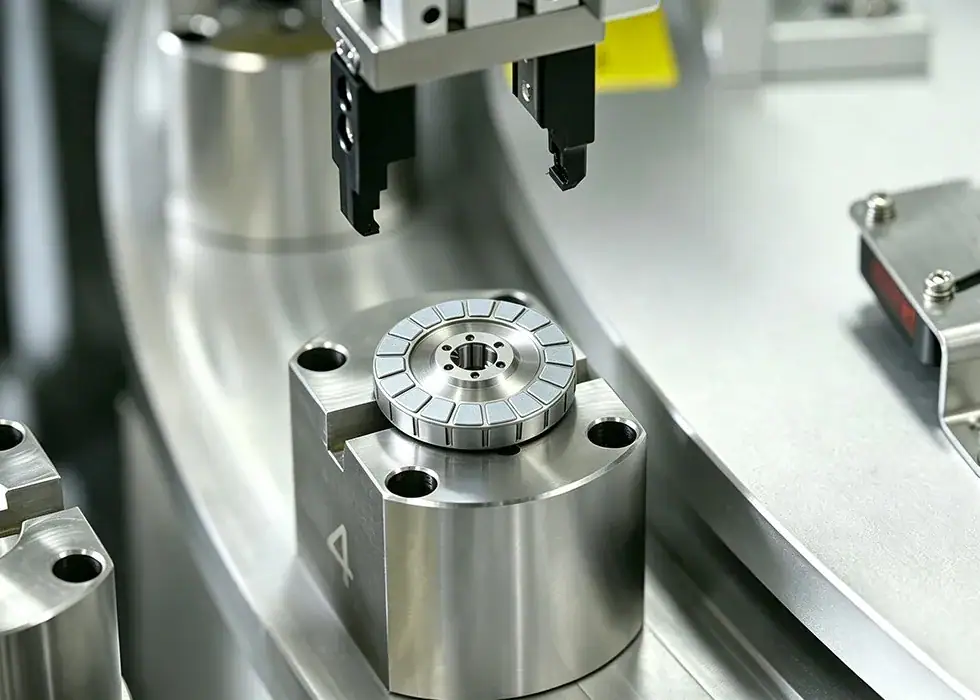
The polarity arrangement of the magnets, coaxiality during assembly, and air gap uniformity in axial flux motors place extremely high demands on the precision of the entire production line; it is difficult to control deviations using traditional manual assembly or general-purpose equipment. The automated assembly solution developed by Jiuju covers core processes such as precise magnet placement, rotor force-position assembly, and in-line performance testing, with the goal of reliably translating the advantages achieved during the design phase into consistency during mass production. The resurgence of axial flux motors is essentially the result of the synergistic evolution of design, materials, control, and manufacturing processes. Assembly is no longer merely the final step; it is now a critical factor determining the feasibility of large-scale mass production.
While new energy vehicles and robots are stealing the spotlight, industrial applications such as elevator traction machines, fans, and water pumps are quietly adopting axial flux motors. Here, the focus isn’t on flashy specifications, but on electricity bills and reliability at scale.
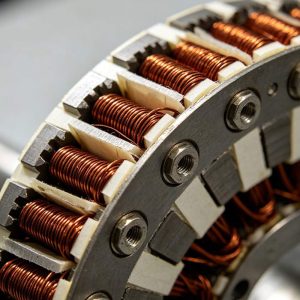
Magnetic flux must pass axially through the disc-shaped stator; traditional lamination stacking fails, and grain-oriented silicon steel ring-milled with slots destroys grain orientation. The stator and windings become the hardest nut to crack in axial flux mass production.
Jiuju Automation provides high-precision automatic assembly lines for axial flux motors, covering processes such as stator winding, magnet assembly, rotor balancing, and final product testing. These lines are suitable for applications in drones, new energy vehicles, and industrial drives. The company holds over 256 patents and is ISO 9001 certified...
While new energy vehicles and robots are stealing the spotlight, industrial applications such as elevator traction machines, fans, and water pumps are quietly adopting axial flux motors. Here, the focus isn’t on flashy specifications, but on electricity bills and reliability at scale.
 Jiuju Automation




 Español
 Français
 Deutsch (Sie)
 हिन्दी