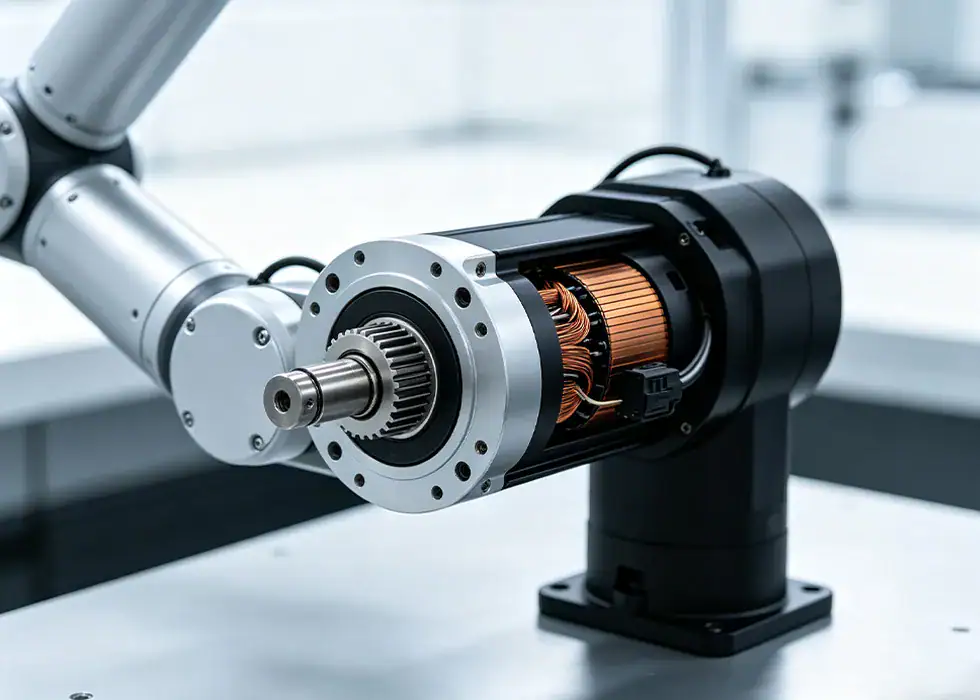
The requirements for motors in robotic joints have always been contradictory: they must deliver sufficient torque while being compact and lightweight, and they must fit into an already cramped installation space. The conventional approach for radial motors is to make the motor longer, increasing torque by extending its axial length. However, once the joint’s axial space is filled with components such as gearboxes, encoders, and bearings, this approach reaches its limit.
In its assembly work for service robots and drone motors, Jiuju has found that the challenge with these types of motors often lies not in the design itself, but in how to consistently produce the design reliably. Ensuring polarity-proof assembly of magnets, controlling coaxiality during stator-rotor assembly, and guaranteeing air gap uniformity are all steps where precision must be locked in through equipment and processes rather than manual labor. Jiuju’s assembly solution integrates these processes into an automated in-line workflow, supplemented by in-process inspection, thereby minimizing the impact of human error on consistency. While axial flux motors are not suitable for all robot joints, they are a solution worth serious consideration for applications with limited axial space and high torque density requirements.
The stator winding is exposed on a flat disc, giving a short heat path so oil or water cooling can be applied directly; however, large-diameter flat seals are more prone to leakage under hot-cold cycling, demanding higher sealing quality.
While new energy vehicles and robots are stealing the spotlight, industrial applications such as elevator traction machines, fans, and water pumps are quietly adopting axial flux motors. Here, the focus isn’t on flashy specifications, but on electricity bills and reliability at scale.
A multi-pole architecture brings a high-frequency fundamental; at 10,000 rpm the fundamental frequency can reach several kHz. Traditional IGBTs suffer soaring switching losses and severe heating — it is the MHz-class switching capability of SiC MOSFETs that truly matches high-frequency multi-pole axial flux motors.
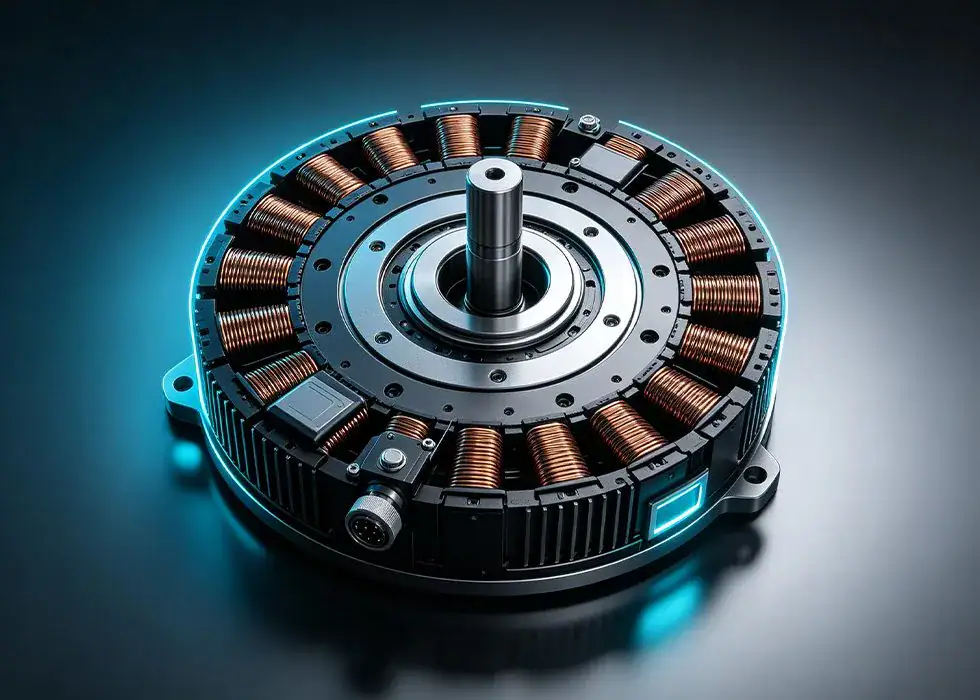
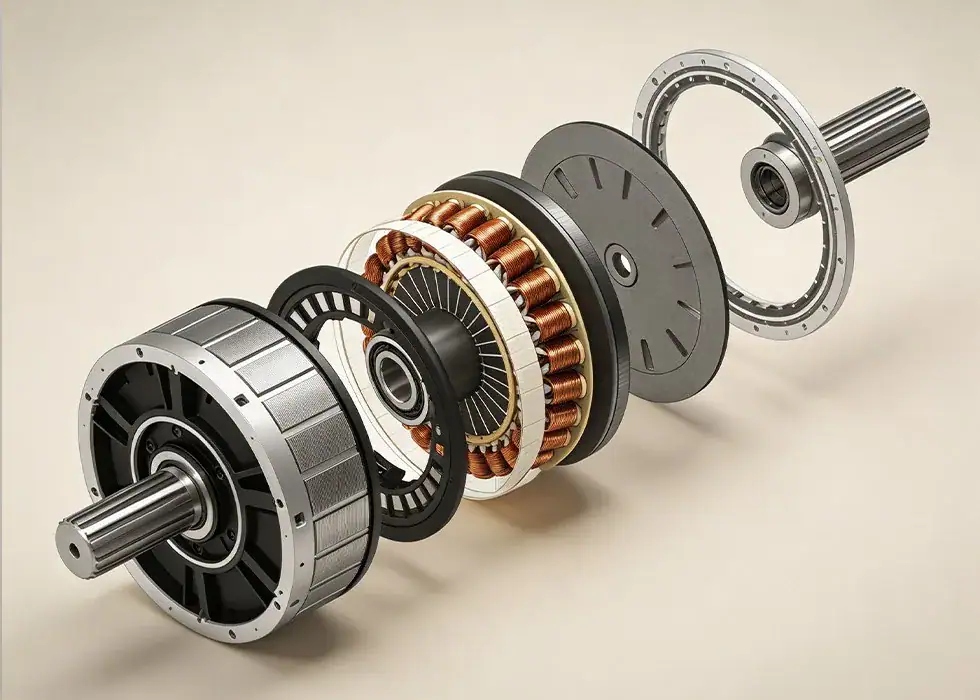
The performance of axial-flux motors is highly dependent on their spatial topology. This article analyzes four fundamental topologies—SSSR, DSSR, DRSS, and multi-disk stacking—as well as innovations in yoke-less and segmented stator designs.
 Jiuju Automation






 Español
 Français
 Deutsch (Sie)
 हिन्दी