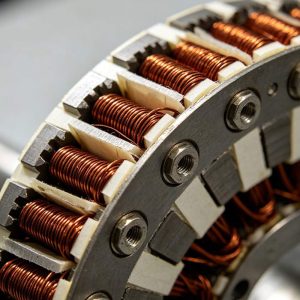
第一是绕组。传统WindingFirst is the winding. Traditional winding is still manageable for diameters in the tens of millimeters, but as the diameter decreases, the slots become narrower and the bending radius is restricted, making it difficult to ensure slot fill rate and consistency; the more manual intervention there is, the greater the variation between machines. This is also why printed copper foil stators are preferred in the micro-scale range: consistency is determined by the photolithography and etching processes, rather than by manual skill.
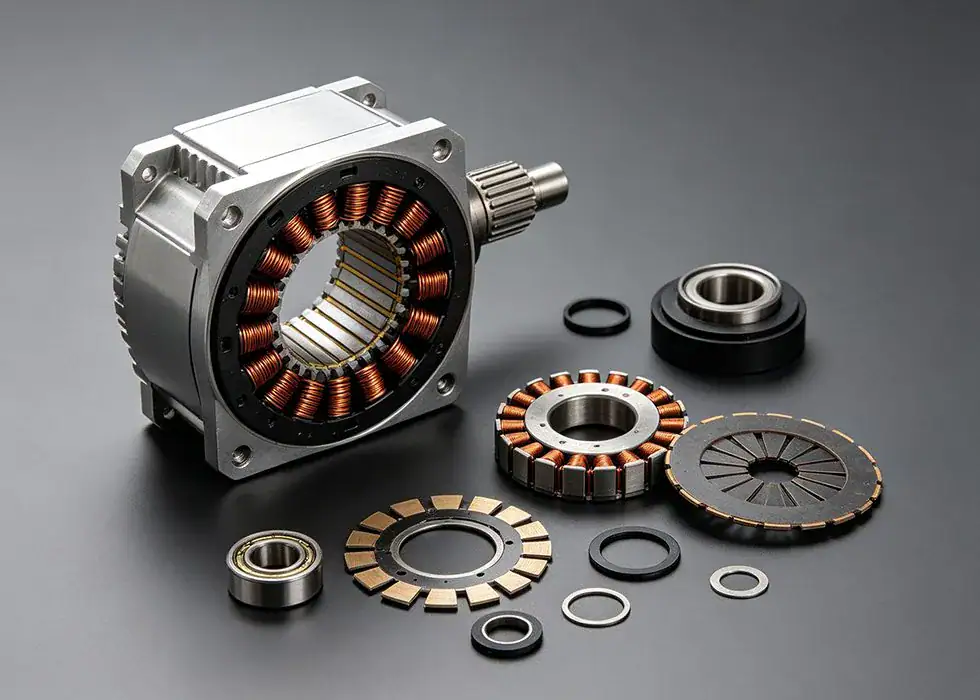
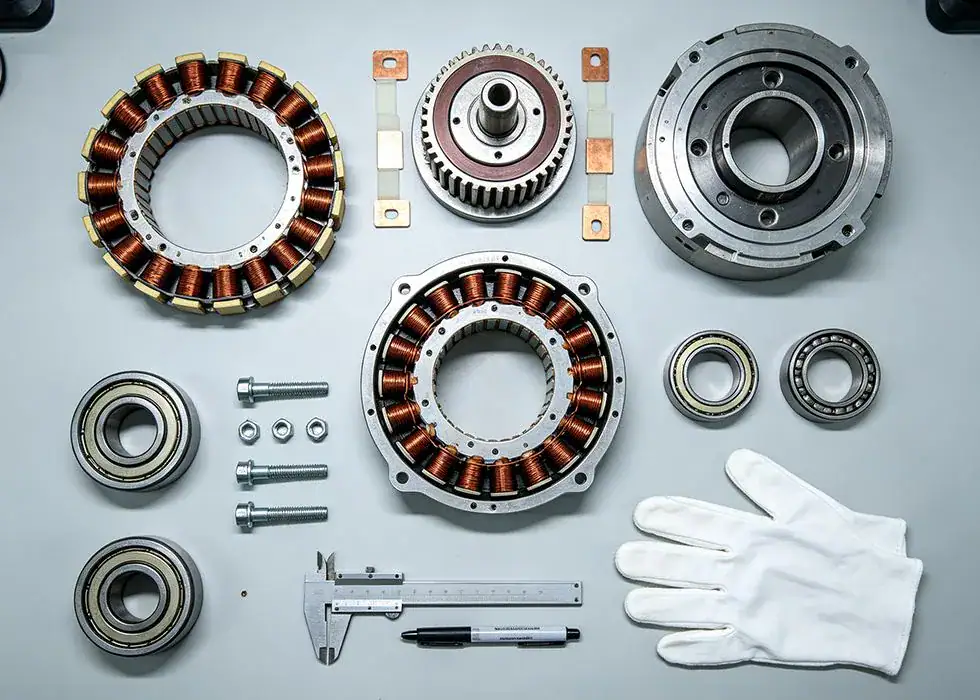
Jiuju Axial Flux Motor Assembly Drawing
第二是公差被放大。气隙Second, tolerances are magnified. The absolute deviation in the air gap does not decrease proportionally as the motor gets smaller—sources of error such as machining capabilities, bearing clearance, and assembly alignment essentially remain at the same order of magnitude. When the air gap decreases from one millimeter to a few tenths of a millimeter, the same deviation of two or three threads results in a relative proportion that jumps from a few percentage points to over 10 percent, which directly affects torque consistency and unilateral magnetic pull.
The nature of the assembly process has also changed. The parts are so light that they can’t be felt by hand, and magnetic components attract each other, so picking, placing, positioning, and press-fitting all rely on vision systems and force control. In the micro-disc motor solutions Jiuju has encountered, the trade-off between cycle time and yield typically arises at the inspection station—if the inspection is too precise, the process slows down; if it’s too fast, defects are missed. Therefore, the limits of miniaturization are largely dictated by process and measurement capabilities, rather than by the equations of electromagnetic design.
When the air gap is compressed to the millimeter level, the motor interior soars from room temperature to over 100°C during operation; aluminum housing, steel shaft, copper wire, and magnets have different expansion coefficients, and axial deformation may widen the air gap.
Robotic joints require high torque, compact size, and light weight; axial flux motors offer unique advantages in scenarios with limited axial space. This article analyzes their suitability and the challenges involved.
Magnetic flux must pass axially through the disc-shaped stator; traditional lamination stacking fails, and grain-oriented silicon steel ring-milled with slots destroys grain orientation. The stator and windings become the hardest nut to crack in axial flux mass production.
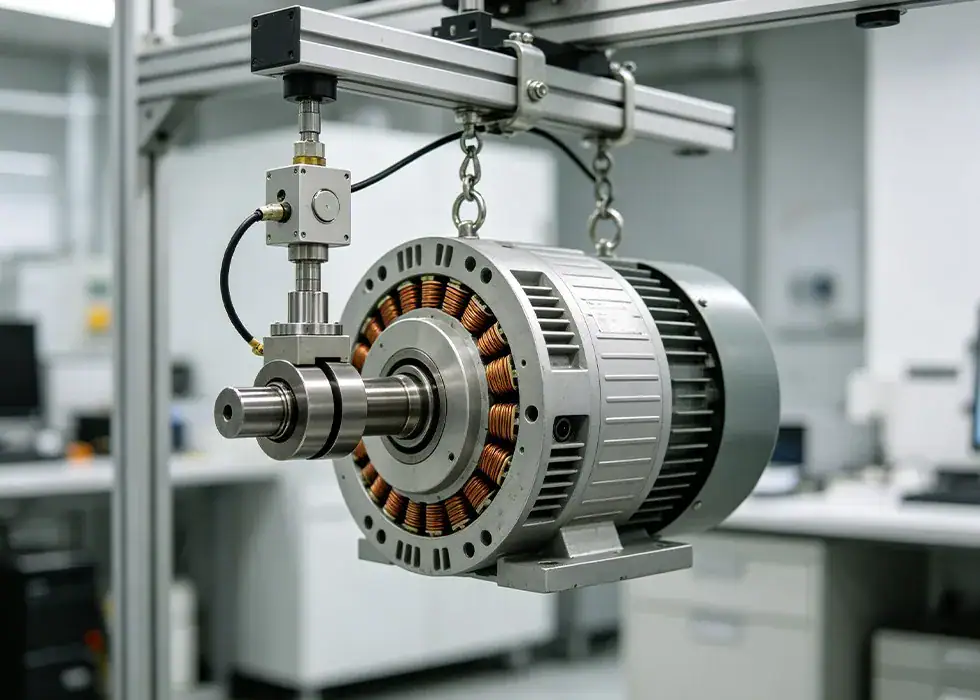
The stator and rotor are separated by a sub-millimeter air gap, and there is an axial attractive force of several metric tons between the magnets on both sides and the iron core. If the force on the air gap becomes uneven, the attractive force on one side increases exponentially, posing a severe challenge to the rigidity of the bearings and the housing.
 Jiuju Automation






 Español
 Français
 Deutsch (Sie)
 हिन्दी