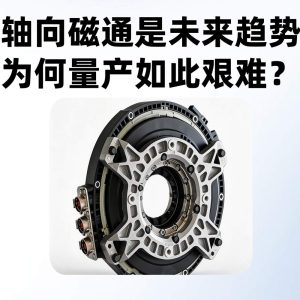
In 2026, interest in the axial flux motor sector continued to rise. Mercedes-Benz’s Berlin plant officially began production, domestic annual production capacity for in-hub motors exceeded 300,000 units, and a large number of traditional radial motor manufacturers also accelerated their expansion into disc motor projects. However, there is a widespread misconception in the industry: the successful development of a prototype does not equate to the ability to achieve mass production. The manufacturing engineering gap between the two is far greater than the technical differences presented in electromagnetic simulation reports.
The key bottleneck in the mass production of axial-flux motors lies not in electromagnetic principles, but in manufacturing processes. The silicon steel lamination process used in radial motors for over a century is mature and stable, with yield rates easily exceeding 99.1%; however, the stator of an axial flux motor features a flat disc structure, and the magnetic field propagates axially. Traditional silicon steel laminations cannot meet the three-dimensional magnetic conductivity requirements, so SMC soft magnetic composite materials must be used for molding. The final assembly stage presents an even greater challenge: when assembling the stator and rotor, technicians must counteract an axial magnetic force of nearly 9 kilonewtons while positioning the air gap within a tolerance of 0.1 millimeters; even a slight deviation can result in stator damage or a drastic drop in motor efficiency.
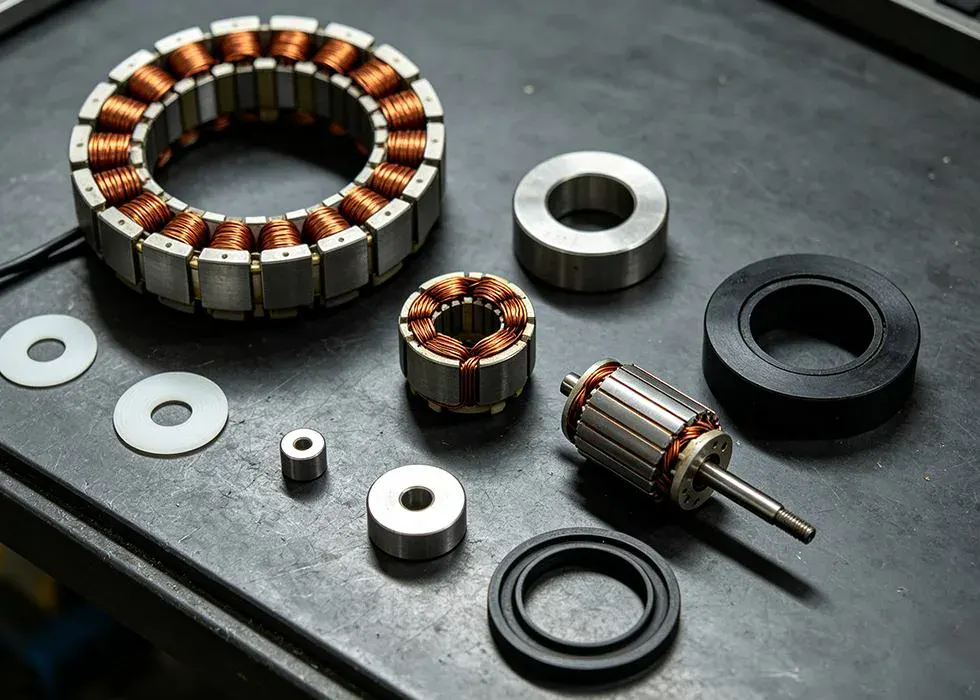
Jiuju Axial Flux Motor Automatic Assembly Line
The industry has currently diverged into two typical engineering approaches: Mercedes-Benz’s subsidiary YASA employs a yoke-less segmented stator design, in which the stator is broken down into independent tooth segments for separate manufacturing, inspection, and assembly. By decoupling the manufacturing process, it reduces the defect rate per unit and operates a mass production system comprising 98 manufacturing steps, targeting the high-performance passenger car market; Domestic manufacturer Panhu Power, on the other hand, retains the traditional yoke structure, refining and optimizing it within the existing process framework. By leveraging customized, specialized magnets and fully automated production lines, it achieves a yield rate of 98% or higher, making it better suited for high-reliability applications such as commercial vehicles and electric vessels.
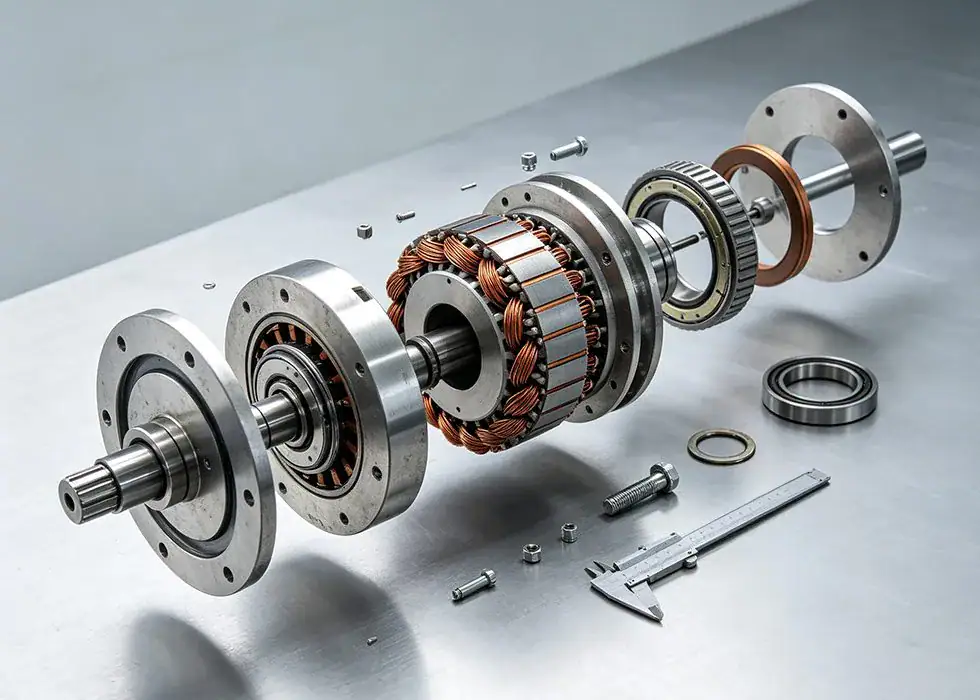
Jiuju Axial Flux Motor Assembly Drawing
SMC materials are the core foundation that determines the upper limit of industry development. Their three-dimensional isotropic magnetic permeability is a necessary prerequisite for the mass production of axial flux motors; however, their magnetic permeability and iron loss performance still lag significantly behind those of silicon steel sheets. The pace of breakthroughs in material performance directly determines the ceiling for motor efficiency. Currently, the domestic supply chain has gradually established a competitive edge in SMC production capacity and the R&D of customized magnetic materials.
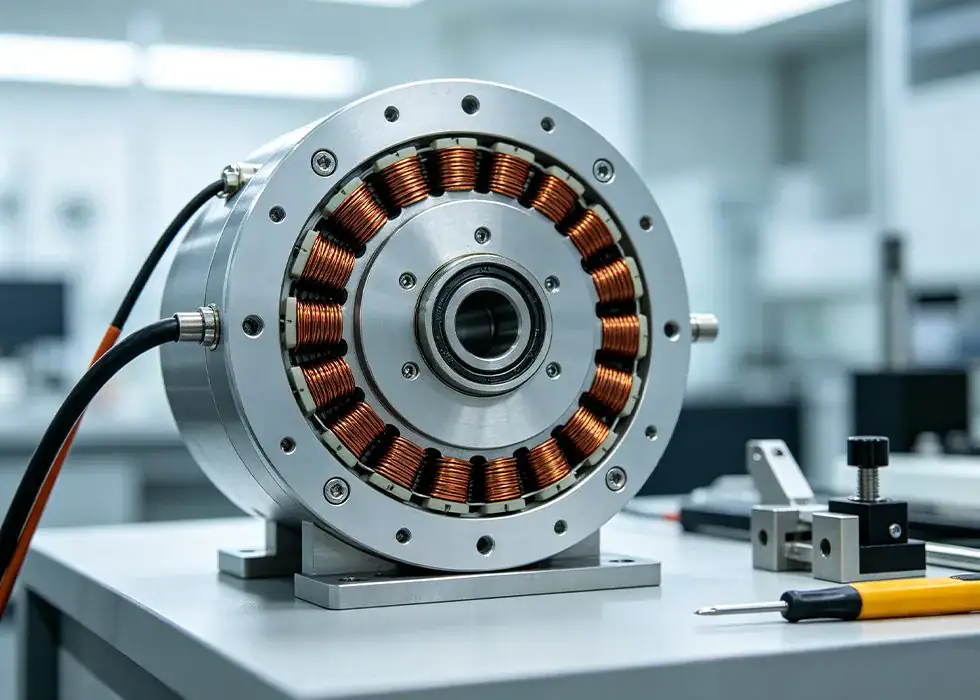
Jiuju Axial Flux Motor Automatic Assembly Line
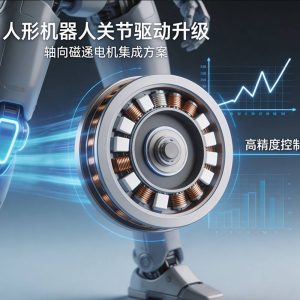
On the application side, the lower-limb joints of humanoid robots have become a key focus for commercialization, and the high torque and slim profile of disc motors perfectly match the requirements of these joints; meanwhile, disc motors have already been implemented on a large scale in commercial vehicles and electric vessels. Jiuju possesses mature technical expertise in the overall magnetization and precision assembly processes for axial flux motors, supporting core procedures such as the saturation magnetization of permanent magnets and force-controlled assembly of stators and rotors, thereby helping the industry improve mass production consistency. Overall, the global axial flux motor market is dominated by China and Germany, with domestic companies already holding a first-mover advantage in terms of mass production scale. Looking ahead, breakthroughs in SMC material performance, the widespread adoption of fully automated production lines, and the finalization of development strategies by leading automakers will be key areas to watch for the industry’s future development.
[Disclaimer] Content provided by RIO Electric Drive,Copyright belongs to the original source. This content is provided for reference only. If you believe there has been an infringement, please contact the editor to have it removed. For partnership opportunities or any questions, please leave a message via the contact form.
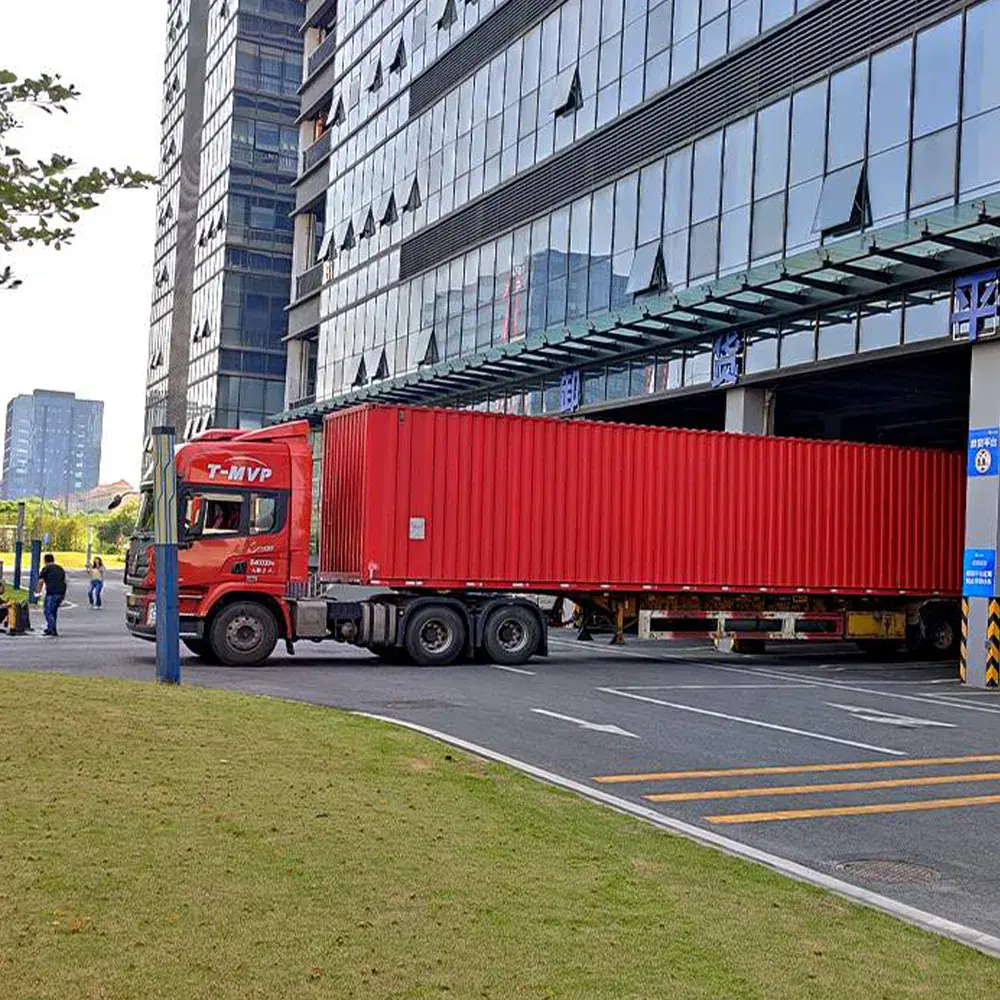
The shipping area outside the workshop was a hive of activity. After multiple rounds of full-machine commissioning, simulated mass-production validation, and factory quality inspection, a Jiuju DC motor automatic assembly line completed all factory-out procedures, was loaded onto trucks on schedule, and is about to depart for the customer's production base, helping the customer's project advance production implementation on plan.
Jiuju Automation integrates processes such as winding, magnet insertion, magnetization, balancing, and testing to provide complete automated motor assembly line solutions, helping customers maintain stable production and improve efficiency, backed by over 256 patents and the ISO 9001 quality management system.
A multi-pole architecture brings a high-frequency fundamental; at 10,000 rpm the fundamental frequency can reach several kHz. Traditional IGBTs suffer soaring switching losses and severe heating — it is the MHz-class switching capability of SiC MOSFETs that truly matches high-frequency multi-pole axial flux motors.
A multi-pole architecture brings a high-frequency fundamental; at 10,000 rpm the fundamental frequency can reach several kHz. Traditional IGBTs suffer soaring switching losses and severe heating — it is the MHz-class switching capability of SiC MOSFETs that truly matches high-frequency multi-pole axial flux motors.
Jiuju Automation provides high-precision automatic assembly lines for axial flux motors, covering processes such as stator winding, magnet assembly, rotor balancing, and final product testing. These lines are suitable for applications in drones, new energy vehicles, and industrial drives. The company holds over 256 patents and is ISO 9001 certified...
 Jiuju Automation




 Spanish
 French
 German
 Hindi