China's NEV motor technology has matured rapidly in recent years, with overall performance now ranking among the best in the world. A common question has emerged within the industry: why not take proven automotive motor designs and apply them directly to humanoid robots — cutting R&D costs and accelerating commercialization? But real-world development and testing tell a different story. Automotive motors and humanoid robot motors are not interchangeable. The operating conditions are fundamentally different, and robot motors require dedicated, purpose-built design from the ground up.
Embodied Robot Motor
Operating conditions vary greatly: Generic motors cannot adapt to the complex joints of the entire body.
Humanoid robots have numerous joints—including the knees, ankles, fingers, and lumbar spine—each of which experiences vastly different force patterns and operating conditions; a single, universal motor cannot accommodate the diverse operational scenarios across the entire body. Take Tesla’s Optimus as an example: the robot has more than 20 joints, each equipped with either a hollow-cup motor or a frameless torque motor. These two types of motors have clearly defined roles and cannot be used interchangeably. The hip and lumbar joints must possess strong load-bearing capacity to support the robot’s entire weight; lower-limb joints such as the ankles and knees must not only ensure a stable walking gait but also possess excellent impact resistance to withstand external forces caused by falls and collisions; Micro-joints such as those in the fingers and wrists require extremely high control precision to perform tasks like fine-motor grasping and flexible interaction. Motors for humanoid robots face conflicting design parameters that are difficult to reconcile: they must deliver high torque and handle heavy loads while maintaining high dynamic response, all within a compact and lightweight form factor. In contrast, automotive motors operate under single, fixed conditions, where simply increasing power and torque is sufficient to meet driving requirements; the core design philosophies of the two are completely at odds.
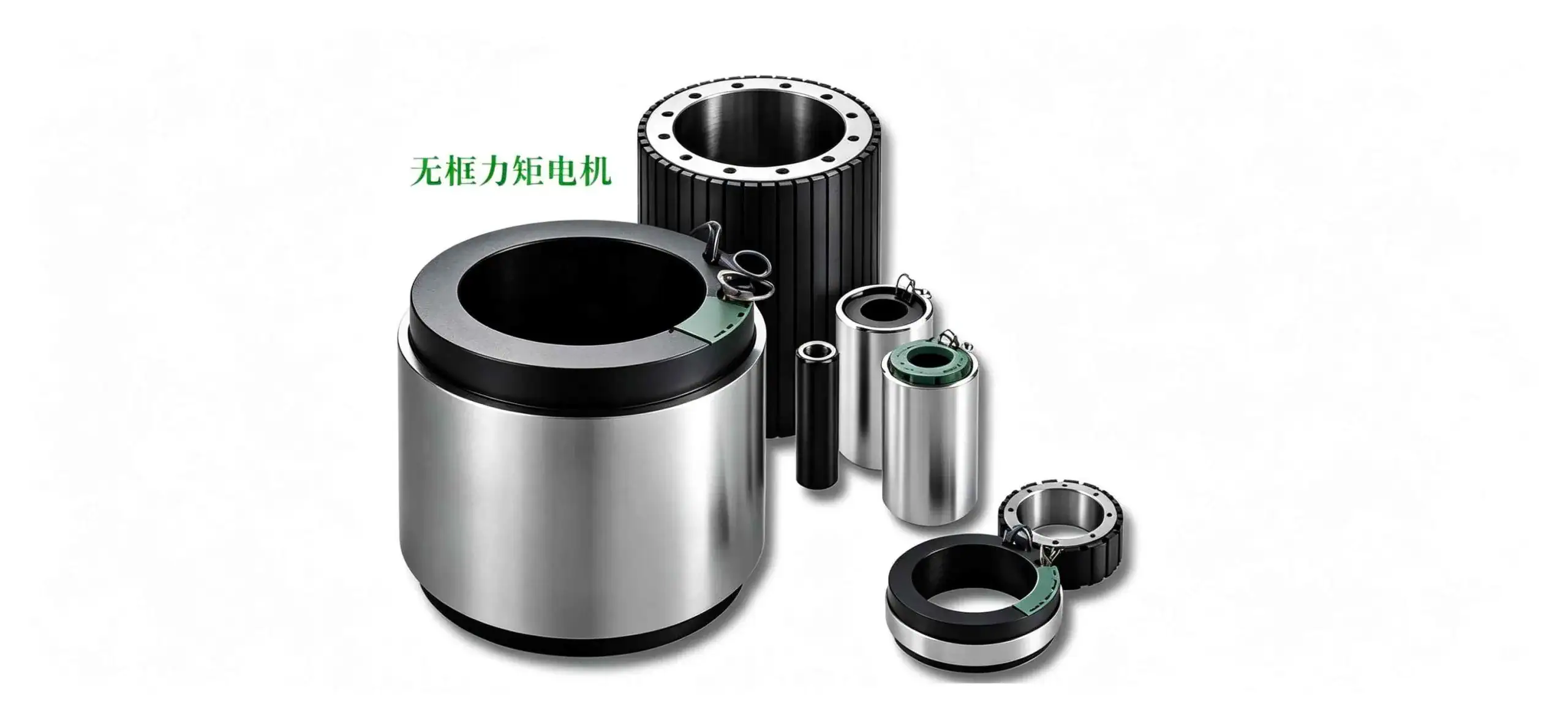
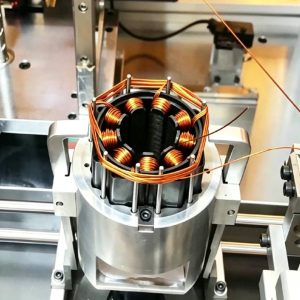
Frameless Torque Motor
The key to humanoid robots lies in their overall adaptability
When evaluating the quality of robot motors, one cannot rely solely on hardware specifications; high-performance motors that are not compatible with the overall system have no practical value. Excessively high rotational speeds in lower-limb motors can disrupt walking gait, while excessive torque in hand motors can not only damage objects being manipulated but also pose safety risks to users. Therefore, motor R&D must be developed in an integrated and coordinated manner with the robot’s body structure, electronic control system, and safety protection modules. At present, the three mainstream drive solutions in the industry all have inherent flaws: high-reduction-ratio flexible drives provide ample power but lack control precision and are prone to vibration during operation; elastic transmission, which incorporates elastic elements, offers greater shock resistance but sacrifices dynamic response speed; and low-reduction-ratio direct-drive transmission provides excellent control precision but significantly increases the overall production cost of the robot.
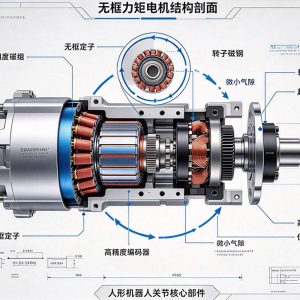
Motor Exploded View
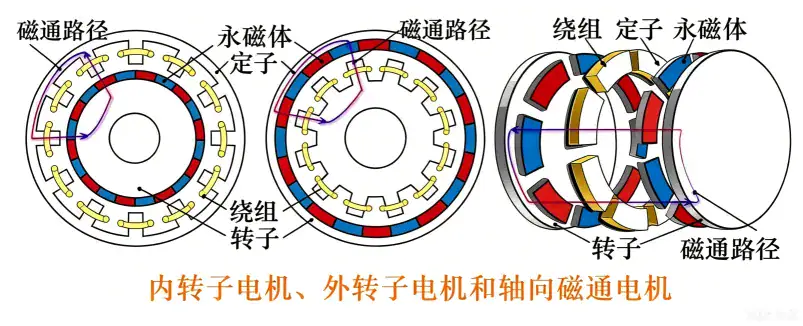
As can be seen, simply optimizing the transmission structure can only alleviate superficial issues; it cannot resolve the core challenges. Only by customizing motors according to the functional differences of each joint—equipping fingers with miniature hollow-cup motors, shoulder and hip joints with internal-rotor motors, and high-load areas of the lower limbs with external-rotor motors—and conducting targeted R&D tailored to specific needs can we chart the optimal path for humanoid robot motor development.
[Disclaimer] The content is sourced from the Motor Alliance. Copyright belongs to the original source. It is provided for reference only. If you believe your rights have been infringed, please contact the editor to have the content removed. For partnership opportunities or any questions, please leave a message via the backend.
A multi-pole architecture brings a high-frequency fundamental; at 10,000 rpm the fundamental frequency can reach several kHz. Traditional IGBTs suffer soaring switching losses and severe heating — it is the MHz-class switching capability of SiC MOSFETs that truly matches high-frequency multi-pole axial flux motors.
Jiuju Automation provides CNC motor winding machines and stator winding production lines suitable for brushless, servo, series-wound, and transformer coils, ensuring full slot fill and consistent turn-to-turn consistency.
While new energy vehicles and robots are stealing the spotlight, industrial applications such as elevator traction machines, fans, and water pumps are quietly adopting axial flux motors. Here, the focus isn’t on flashy specifications, but on electricity bills and reliability at scale.
Jiuju Automation provides automated assembly solutions for drive motors in new energy vehicles, integrating key processes such as winding, magnet insertion, magnetization, and testing to ensure high efficiency, high consistency, and full traceability throughout the entire process.
 Jiuju Automation



 Spanish
 French
 German
 Hindi