The most headache-inducing mechanical problem of an axial-flux motor lies between the stator and the rotor. The two are separated only by an air gap of one millimetre or even thinner, and between the magnets and the iron core on both sides is an axial attraction of several tonnes. It is like two strong magnets suspended facing each other: with the slightest deviation, the attraction on the closer side rises sharply.
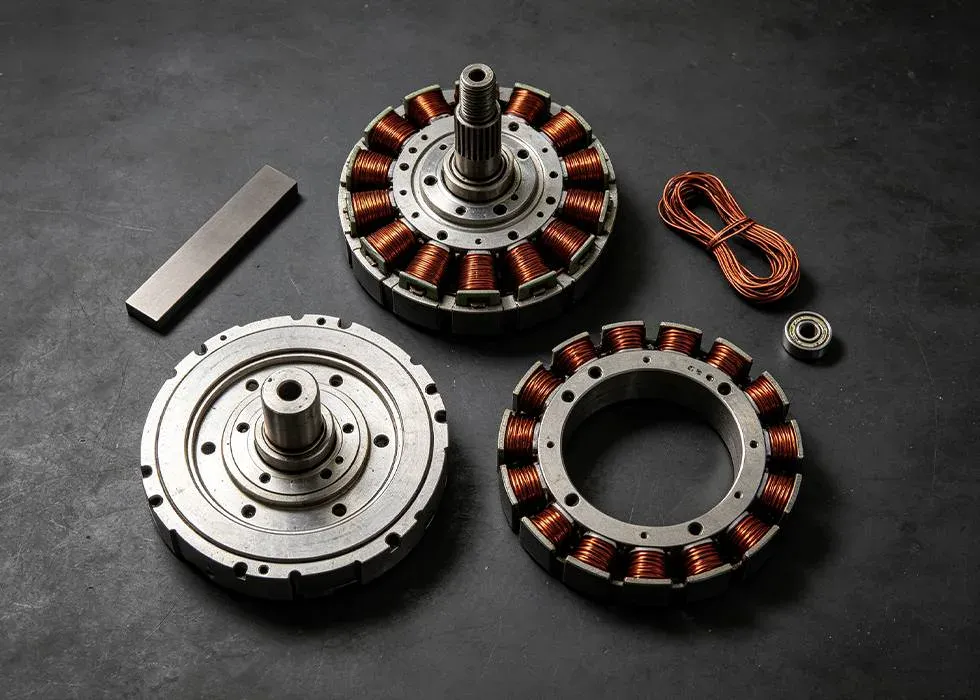
Axial-Flux Motor Products
If the air gap is uneven by even tens of microns, the force on one side rises exponentially — at best the rotor disc bends and deforms, at worst it "sticks" and the rotor hits the stator. Attraction of this magnitude simply cannot be detected by eye or hand, and by the time abnormal noise is heard it is often too late. So the bearings and housing here are not supporting players but life-saving structures. For the bearings, ordinary deep-groove ball bearings cannot take this kind of axial thrust; usually angular-contact ball bearings that can carry high axial loads are used instead, or double-row tapered roller bearings, using greater load capacity to hold that pull.
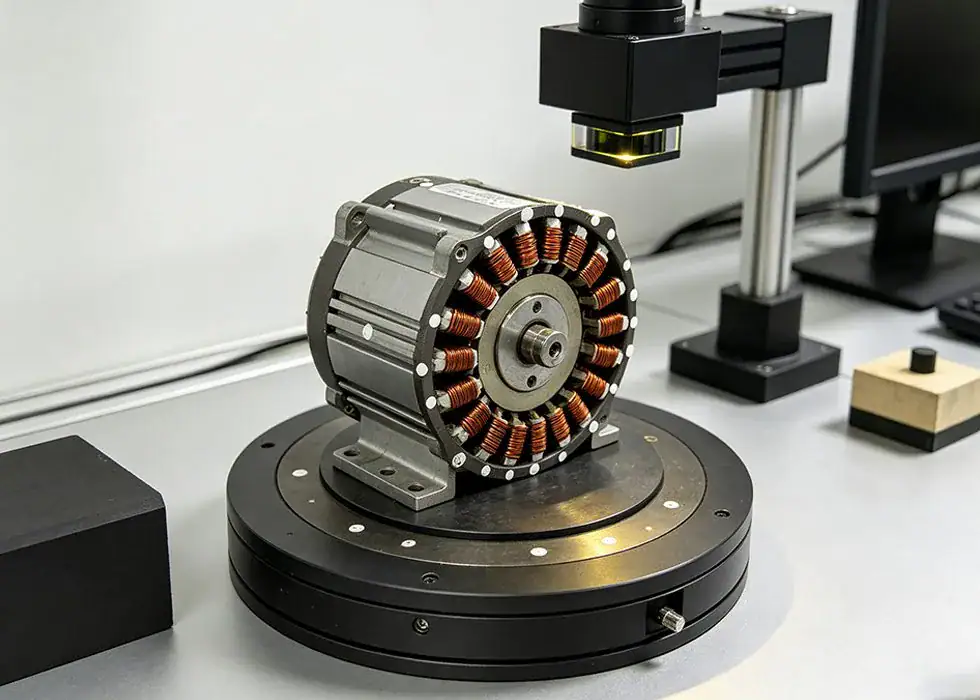
Motor Detail View
The housing must be even tougher. In operation, that axial attraction becomes a continuous bending moment acting on the housing; ordinary stamped parts simply cannot withstand it, so high-strength aviation-grade aluminium alloy or topology-optimized cast structures must be used to keep deformation within an acceptable range. It can be said that more than half the effort in the mechanical design of an axial-flux motor goes into fighting this attraction, and the choice of bearings and housing directly determines how much power and how high a speed the motor can withstand.
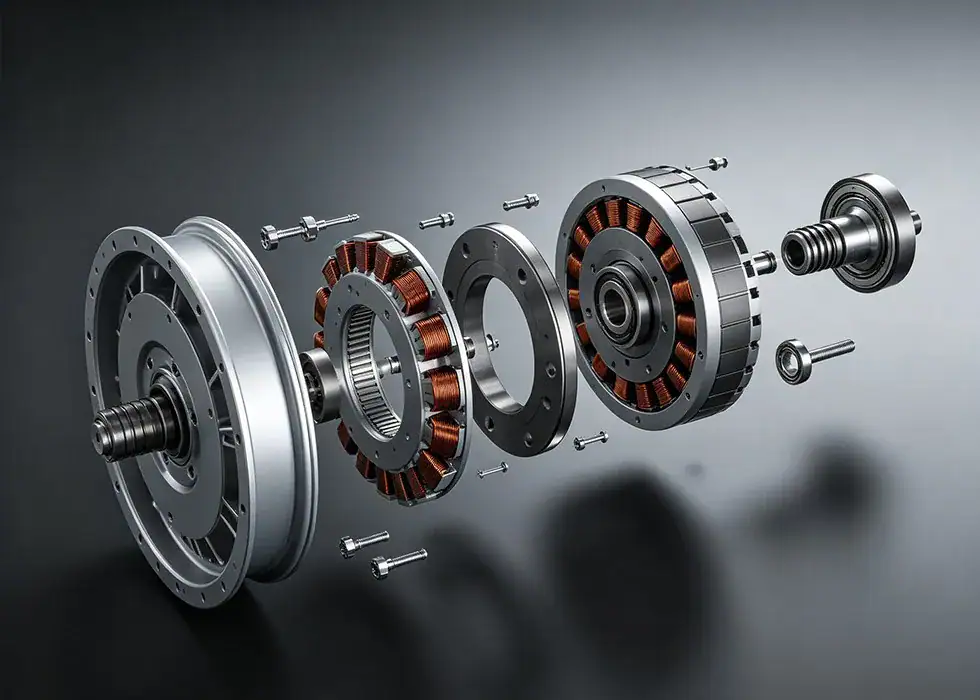
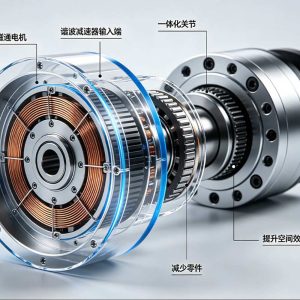
Axial-Flux Motor Exploded View
Money spent on this layer of structure cannot be saved. When joining such motors, Jiuju lists the symmetry of the air gap as a mandatory inspection item — uneven clearance on the two sides is not a question of whether it will turn, but of whose account it lands on when it seizes. What the assembly tooling must do is ensure both sides' air gaps land evenly from the moment of joining, before stability can even be discussed.
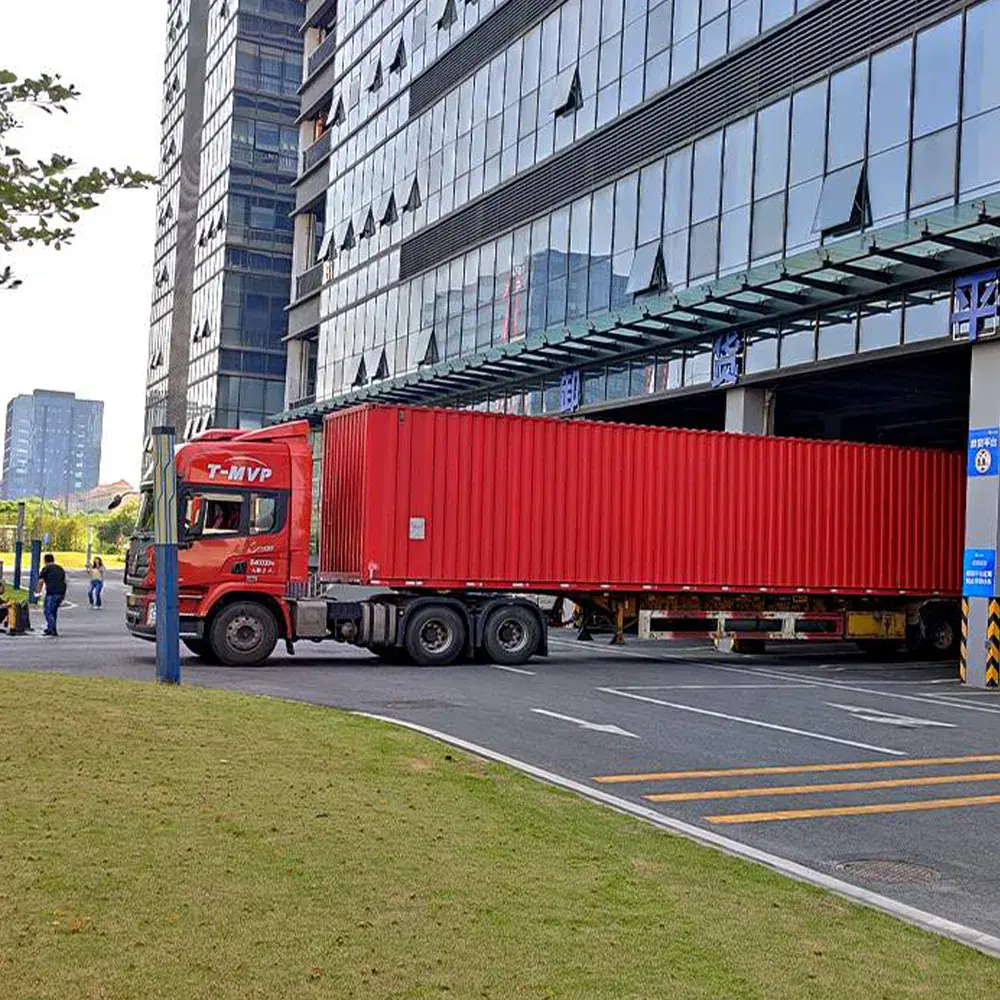
The shipping area outside the workshop was a hive of activity. After multiple rounds of full-machine commissioning, simulated mass-production validation, and factory quality inspection, a Jiuju DC motor automatic assembly line completed all factory-out procedures, was loaded onto trucks on schedule, and is about to depart for the customer's production base, helping the customer's project advance production implementation on plan.
Jiuju Automation provides high-precision automatic assembly lines for axial flux motors, covering processes such as stator winding, magnet assembly, rotor balancing, and final product testing. These lines are suitable for applications in drones, new energy vehicles, and industrial drives. The company holds over 256 patents and is ISO 9001 certified...
A multi-pole architecture brings a high-frequency fundamental; at 10,000 rpm the fundamental frequency can reach several kHz. Traditional IGBTs suffer soaring switching losses and severe heating — it is the MHz-class switching capability of SiC MOSFETs that truly matches high-frequency multi-pole axial flux motors.
The "short and wide" disc structure is a constraint in a conventional chassis, yet becomes the key to leapfrog integration on a dedicated electrified platform. The same form, two fates - it all depends on the packaging approach.
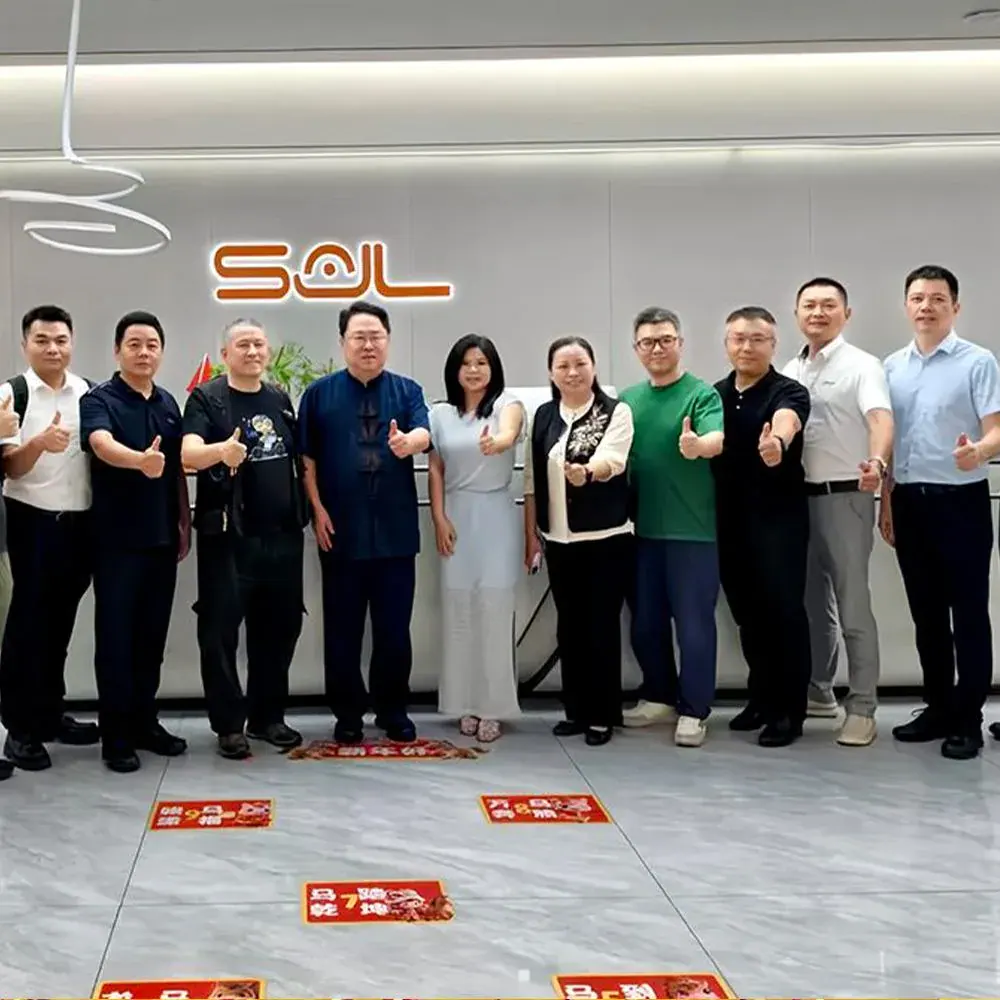
 Jiuju Automation





 Spanish
 French
 German
 Hindi